

Turkana County and UNHCR Sign Landmark Deal to Secure Water and Food for Refugees and Local Communities
Kakuma, 12 June 2026
A new agreement between Turkana County and UNHCR, signed on 11 June 2026, puts the long-awaited Tarach Dam project centre stage — a potential lifeline for tens of thousands of refugees and host community members facing acute water scarcity.
A Formal Commitment in Lodwar
On 11 June 2026, Turkana County Governor Dr. Johnstone Lomorukai hosted UNHCR Country Representative Fatima Mohamed at the County Headquarters in Lodwar, where both parties signed a Memorandum of Understanding (MoU) formally titled ‘Achieving Self-Reliance and Protection through Integrated Resilience and Empowerment’ — known by its acronym, ASPIRE [1]. The ceremony, attended by senior county officials including County Secretary Dr. Richard Ekai, County Attorney Ruth Emanikor, County KISEDP Coordinator Peter Yoromoe, and Chief of Staff Peter Loyapan, marks a notable formalisation of the relationship between the Turkana County Government and the United Nations refugee agency [1]. Also present was the Head of the UNHCR Sub-Office in Kakuma, Nanduri Sateesh, and County Executive Committee Member for Health, Joseph Epem, alongside Turkana Central Deputy County Commissioner Joseph Kipkorir [1]. The breadth of representation at the signing reflects the cross-sectoral ambition of the agreement, which spans water infrastructure, road connectivity, livelihoods, health, and economic resilience [1][4].
What ASPIRE Actually Means for People on the Ground
At its heart, the ASPIRE MoU is designed to shift both refugee and host communities away from dependency and towards sustainable self-reliance [1][4]. The framework is implemented under the Kakuma Integrated Socio-Economic Development Programme (KISEDP), a long-running development plan that positions strategic investments as ‘peace dividends’ — tangible benefits intended to reduce the resource-based tensions that can arise when large displaced populations and host communities share limited land, water, and services [1]. Governor Lomorukai was direct in his assessment of the pressure now bearing down on Kakuma Municipality, acknowledging that the area’s growing population is ‘increasingly straining available resources and the environment’ [1]. Turkana is Kenya’s second-largest county, covering approximately 77,000 square kilometres, and is located in the country’s north-western corner — a geography that makes external supply lines costly and unreliable, amplifying the importance of locally sourced water and food [1].
The Tarach Dam: A Project Both Sides Are Calling For
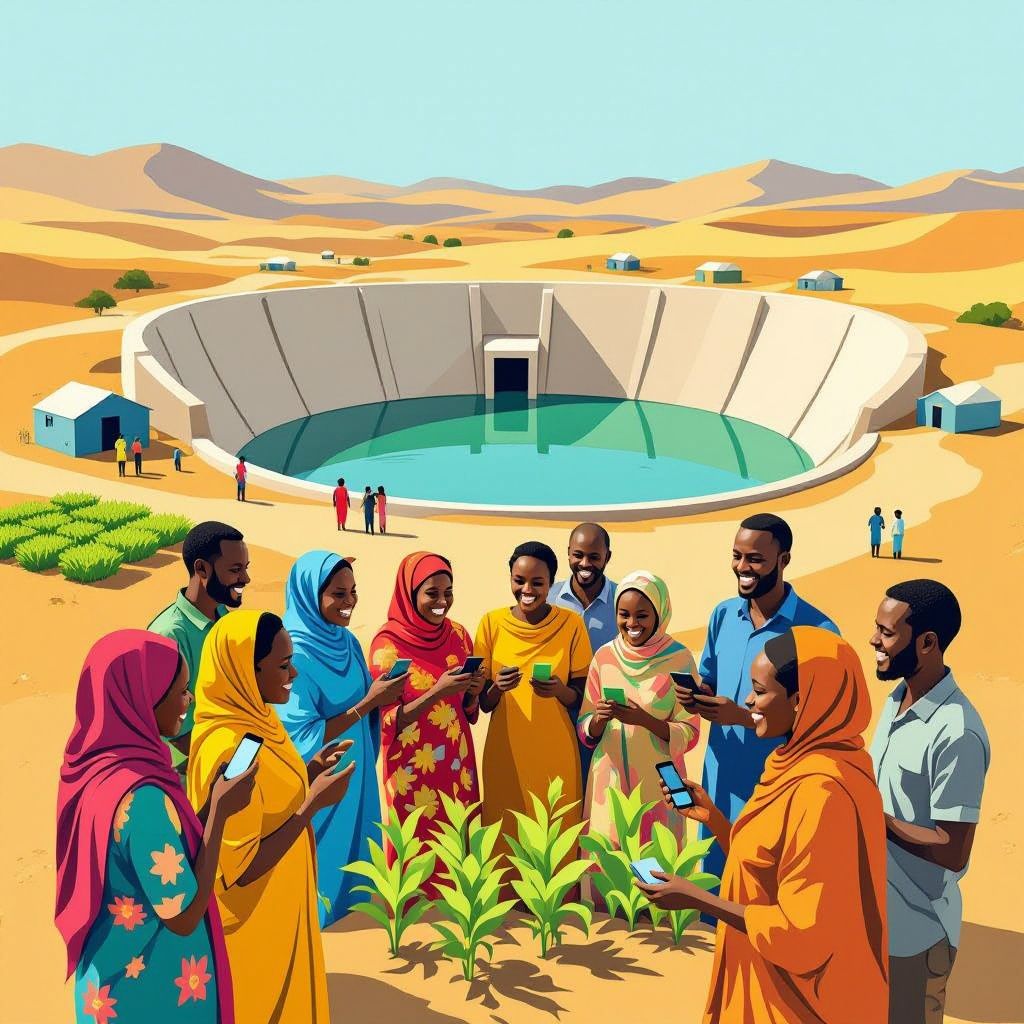
Perhaps the most concrete infrastructure ask to emerge from the signing ceremony is the Tarach Dam project. Governor Lomorukai explicitly appealed for UNHCR’s collaboration in implementing the dam, describing it as the key mechanism for addressing water scarcity while simultaneously expanding irrigated food production in the region [1]. Significantly, UNHCR Country Representative Fatima Mohamed echoed this call, affirming her agency’s support for the initiative and underlining its importance in tackling the challenges facing both communities [1]. The dam has not yet been built [alert! ‘No construction start date or funding commitment figure for the Tarach Dam is confirmed in available sources’], but the explicit endorsement from both the county governor and the UNHCR representative in a formally signed agreement gives the project a clearer institutional footing than it has had previously. For refugees and host community residents in Kakuma and Kalobeyei, the practical implications would be significant: irrigated agriculture can provide food security independent of seasonal rainfall, which in an arid county like Turkana is an unreliable resource [1][GPT].
Health Integration and Security: Parallel Commitments
Beyond water and food, the MoU signing served as a platform for commitments across other critical sectors. County Executive Committee Member for Health, Joseph Epem, confirmed that the health department has already gazetted health facilities and deployed Community Health Promoters (CHPs) within refugee camps as part of a broader roadmap towards integrating refugee and host community health services [1]. This is a notable operational step, not merely a policy ambition, and it signals that some elements of the integration agenda are already in motion rather than pending future funding cycles. On the security front, Turkana Central Deputy County Commissioner Joseph Kipkorir gave a public assurance that the government would continue providing security for both host community members and refugees — a statement that carries particular weight given the cross-border dynamics of the wider Ateker region, which the MoU explicitly references in relation to conflict prevention and cross-border cooperation [1].
Looking Ahead: KISEDP’s Next Phase and the Shirika Plan
The MoU is not a standalone document but part of a longer programmatic arc. Head of UNHCR’s Kakuma Sub-Office, Nanduri Sateesh, confirmed that the next phase of KISEDP is scheduled to commence in 2028, and that it will align with Kenya’s Shirika Plan — a national-level framework designed to create sustainable economic opportunities within Kakuma Municipality by further integrating refugees into local development structures [1]. Governor Lomorukai also used the occasion to call on other development partners to sign similar MoUs with the County Government, stressing the need for alignment with the County Integrated Development Plan (CIDP) and the elimination of duplicated projects — a long-standing challenge in humanitarian settings where multiple agencies can inadvertently fund overlapping interventions [1]. UNHCR Country Representative Fatima Mohamed, in closing remarks, lauded the people of Turkana for their generosity and hospitality towards refugees, and reaffirmed UNHCR’s commitment to supporting communities’ transition from dependency to economic self-reliance [1][4]. For the tens of thousands of people living and working in and around Kakuma — both those displaced and those who have called Turkana home for generations — the ASPIRE MoU represents a formal promise that their shared struggles over water, food, and economic opportunity are now embedded in a binding institutional framework, with the next milestone set for 2028 [1].
Bronnen
- turkana.go.ke
- www.facebook.com
- www.facebook.com
- www.dawan.africa
- www.facebook.com
- www.facebook.com
- www.facebook.com