

America Closes Its Doors: Trump's Indefinite Refugee Ban Leaves Thousands Stranded in Kakuma
Kakuma, 3 June 2026
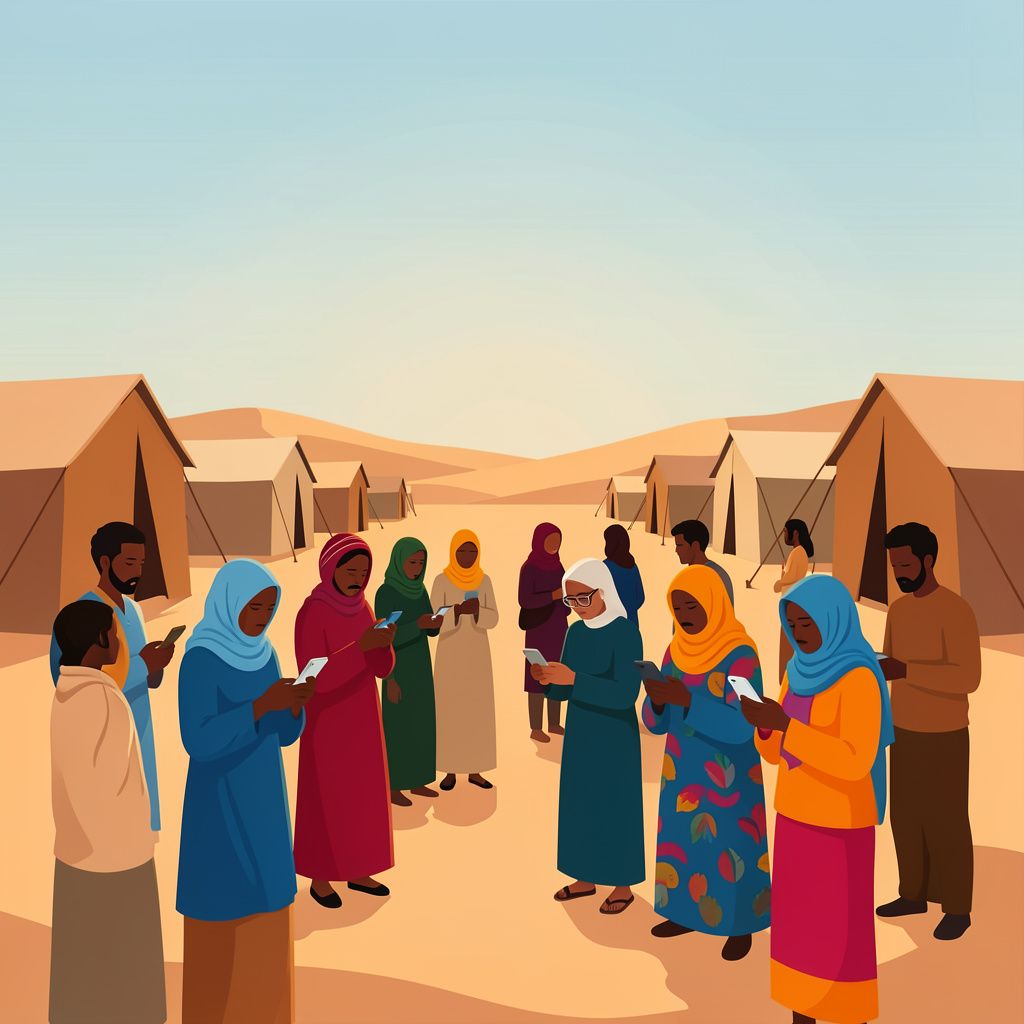
Thousands of refugees in Kenya’s Kakuma camp, some waiting over a decade for resettlement, now face an uncertain future as the Trump administration’s indefinite ban on refugee admissions has frozen the entire US resettlement programme.
A Lifeline Cut Off
For South Sudanese, Somali, Congolese, and Ethiopian refugees living in Kakuma and the neighbouring Kalobeyei settlement, resettlement to the United States has long represented one of the few viable exits from years — sometimes more than a decade — of camp life [GPT]. That pathway has now been effectively severed. The Trump administration’s indefinite ban on refugee admissions, accompanied by stop-work orders issued to resettlement agencies and prolonged delays in reimbursing those agencies for work already completed, has frozen the US Refugee Admissions Program (USRAP) in its entirety [1].
Agencies Forced to Suspend Operations
The consequences of the ban have been immediate and severe for the organisations that manage the resettlement pipeline. Agencies including Church World Service (CWS) and the International Rescue Committee (IRC), which facilitate US-bound resettlement processing, have been forced to suspend operations following stop-work orders and a halt to funding [1]. The disruption is not limited to Kenya. As of early June 2026, the ban has already resulted in the cancellation of resettlement flights for refugees stranded across multiple countries — among them Loni, a Congolese mother of six who was left stranded in Malawi, and the Sung family, refugees from Myanmar who had been separated from relatives already settled in Texas [1].
Who Is — and Is Not — Being Admitted
Critically, the ban has not been applied uniformly. Under the terms of the ongoing indefinite suspension, USRAP has almost exclusively granted exceptions to white Afrikaners from South Africa [1]. This selective application has drawn sharp criticism from refugee advocates and members of Congress, who have raised concerns about the administration’s use of congressionally appropriated humanitarian funds [1]. For residents of Kakuma and Kalobeyei — the overwhelming majority of whom are Black African refugees — there is no comparable exception pathway currently available [alert! ‘No official US government statement specifically addressing Kakuma or Kalobeyei residents by name has been confirmed in the provided sources’].
Congressional Scrutiny Mounts
On 1 and 2 June 2026, Secretary of State Marco Rubio and Secretary of Homeland Security Markwayne Mullin were scheduled to testify before multiple House and Senate committees to defend their agencies’ proposed budgets [1]. On 1 June 2026 specifically, Secretary Rubio was scheduled to appear before the Senate Foreign Relations Committee at 10:00 and before the House Appropriations Committee at 14:00, while Secretary Mullin was scheduled to testify before the Senate Appropriations Committee at 14:00 [1]. Congressional officials had planned to question both secretaries on stranded refugee populations, ICE detention and deportation efforts, third-country removals, and the potential misuse of congressionally appropriated humanitarian funds [1]. [alert! ‘The provided source flags these hearings with a deadline check and does not confirm whether the testimony was delivered as scheduled’].
New Regulations Would Further Reduce Protections
Beyond the ban itself, the Trump administration is developing additional policy measures that would reduce procedural protections for asylum seekers more broadly. A planned regulation would allow asylum applications to be rejected without an interview for certain applicants, specifically those who filed their claims more than one year after arriving in the United States [1]. Under the proposed rule, US Citizenship and Immigration Services (USCIS) officers would be empowered to rapidly reject such applications, and would be required to proactively determine whether any statutory exceptions apply [1]. Separately, on 31 May 2026, Judge Dolly Gee held a status hearing in the longstanding Flores case — a settlement agreement that has protected children in federal immigration custody since 1997 — following new filings that detailed devastating conditions for immigrant children, including prolonged detention, lack of safe drinking water, and inadequate hygiene products [1].
What Kakuma and Kalobeyei Residents Should Do Now
For refugees in Kakuma camp and Kalobeyei settlement with pending US resettlement cases, no timeline has been provided for when the ban may be lifted [GPT]. Residents in both locations are advised to remain in contact with UNHCR Kenya and the Department of Refugee Services (DRS) for updates on the status of their individual files [GPT]. In Kakuma, those with active USRAP cases should continue to preserve all documentation and respond promptly to any correspondence from resettlement agencies, even where operations are currently suspended [GPT]. In Kalobeyei, where many residents hold similarly pending cases, the same guidance applies — though residents should note that Kalobeyei operates under a slightly different administrative structure to Kakuma, and inquiries should be directed specifically to the UNHCR Kalobeyei field office [GPT][alert! ‘Specific procedural distinctions between Kakuma and Kalobeyei UNHCR operations are based on general knowledge and not confirmed by the provided sources’]. As of 3 June 2026, there is no confirmed alternative resettlement country that has stepped in to fill the gap left by the US suspension at scale [alert! ‘No source provided confirms alternative resettlement commitments to Kakuma or Kalobeyei residents specifically’].