

Europe's New Asylum Rules Leave Kakuma Refugees Facing an Uncertain Future
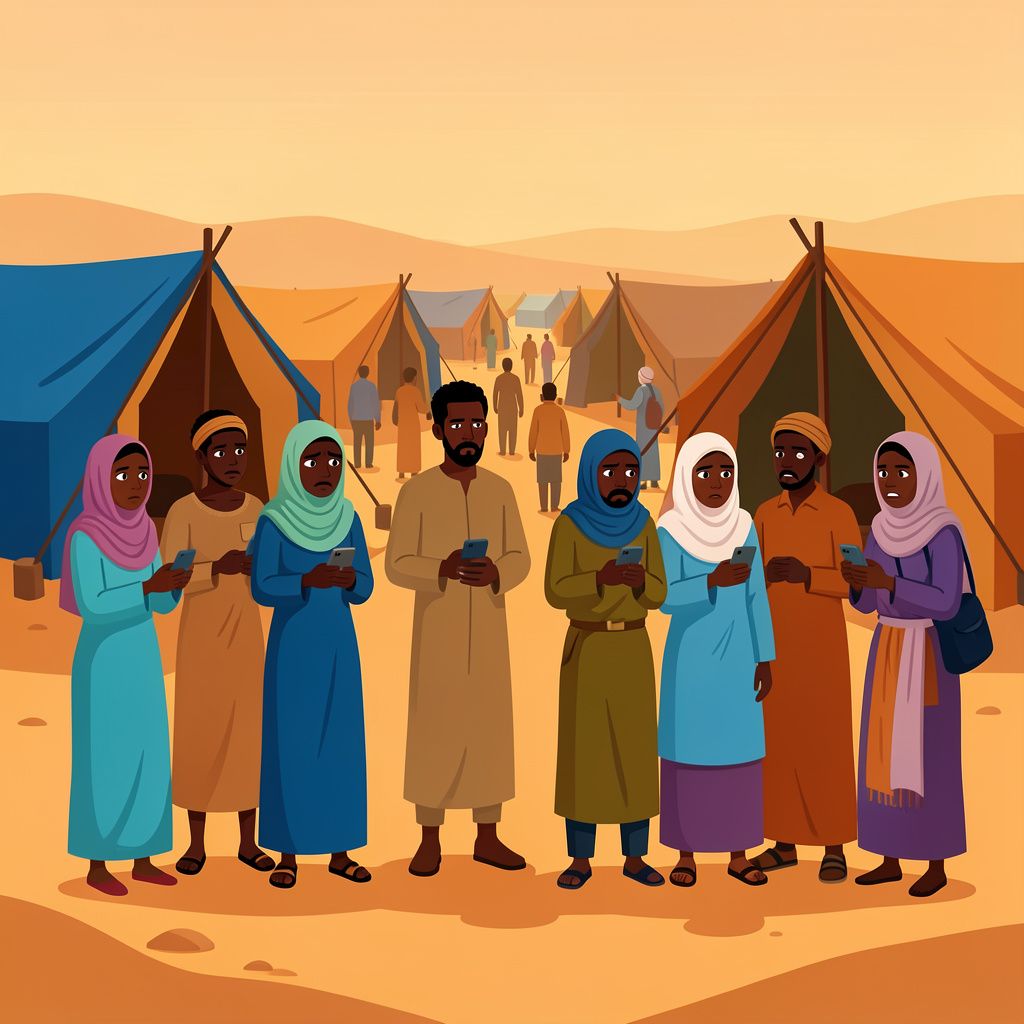
Kakuma, 3 June 2026
The EU’s sweeping asylum reforms, now being implemented in June 2026, are fuelling deep anxiety among refugees in Kenya’s Kakuma camp — with aid groups warning that tighter borders and offshore processing could shut the door on over 117 million displaced people worldwide.
A System Designed to Deter
The Common European Asylum System (CEAS), which entered its implementation phase in June 2026, represents the most significant overhaul of EU migration policy in a generation [1][2]. Experts, including Professor Petra Bendel of the University of Erlangen-Nürnberg, have warned that the reforms risk compounding the suffering of the world’s most vulnerable people rather than addressing the structural causes of displacement [1][2]. At its core, the new framework accelerates border procedures, expands the use of detention-like facilities at the EU’s external frontiers, and introduces so-called ‘Return Hubs’ — processing centres located outside the EU to which asylum seekers can be transferred [2]. For the tens of thousands of people sheltering in Kenya’s Kakuma and Kalobeyei refugee settlements, many of whom have family members currently navigating asylum processes in Europe, these changes are not abstract policy shifts. They are a direct threat to survival and family unity [GPT].
The Numbers Behind the Policy
The political backdrop to these reforms is a dramatic decline in asylum applications in Germany, the EU’s largest economy and historically its most significant recipient of asylum seekers. First-time applications in Germany fell from more than 330,000 in 2023 to approximately 113,000 in 2025 — a drop of -65.758 per cent — before falling further to just approximately 22,000 applications in the first three months of 2026 alone [1][2]. Proponents of the CEAS reforms have cited such declining numbers as evidence that stricter deterrence measures are working. Critics, however, argue that falling application numbers do not indicate that the global displacement crisis has eased — only that the doors have become harder to reach. Globally, more than 117 million people remain displaced from their homes as a result of conflict and climate-related disasters [1][2], a figure that underscores the scale of human need that tightened European borders will not make disappear.
Kakuma: Where European Policy Has Real Consequences
Kakuma refugee camp in north-west Kenya is home to communities from South Sudan, Somalia, Ethiopia, the Democratic Republic of Congo, and Burundi, among others [GPT]. For many residents, legal resettlement to Europe or North America represents the only realistic long-term solution after years — sometimes decades — of displacement. The CEAS reforms, by accelerating deportation procedures and externalising asylum processing, risk closing off those pathways entirely [1][2]. Aid organisations have raised particular alarm about the proposal for Return Hubs outside the EU, which critics argue would effectively allow member states to outsource their legal obligations under international refugee law [2][alert! ‘No named aid organisation operating in Kakuma is directly quoted in the provided sources; this reflects the broader expert warnings cited in the DW reporting’]. The concern is not hypothetical: the pattern of wealthy nations tightening borders while displacement numbers rise has already been documented in other parts of the continent. In South Africa, anti-migrant violence erupted in late May and early June 2026, with five Mozambican nationals reported killed in the coastal town of Mossel Bay, and groups issuing a 30 June 2026 deadline for undocumented foreigners to leave [3]. Ghana repatriated hundreds of its nationals from South Africa in the week prior to 3 June 2026 [3], and Malawi announced on 3 June 2026 that it too would join repatriation efforts for citizens wishing to leave [3].
Libya’s Shadow: The Deadly Cost of Closed Routes
The dangers created by restricted legal pathways are starkly illustrated by what continues to unfold in Libya. A report by the UN’s Office of the High Commissioner for Human Rights (OHCHR) has described the trafficking of Black African migrants in the Libyan city of Tobruk as ‘business as usual’ [4]. According to reporting published on 1 June 2026, people intercepted during failed desert crossings — in industrial areas and fields where they hide — are being sold on to the highest bidder [4]. The OHCHR’s characterisation of this as routine rather than exceptional reflects how entrenched these networks have become when legal routes are foreclosed [4][alert! ‘The Instagram source citing the OHCHR report does not provide the specific OHCHR report title, date, or direct URL; the claim is attributed to diasporatz_ on Instagram, posted 1 June 2026’]. For refugees in Kakuma who might consider the Mediterranean route as an alternative if European resettlement pathways close further, Libya represents not a transit country but a potential trap.
Shrinking Safety Nets on Multiple Fronts
The CEAS reforms do not exist in isolation. They arrive at a moment when international humanitarian funding is contracting sharply, compounding the pressure on refugees in camps such as Kakuma [1][2]. Analysts and aid workers have warned that a reduction in donor contributions to humanitarian programmes will increase the push factors driving displacement — creating a cruel paradox in which the very conditions that force people to flee are worsened at the same moment that the legal avenues to safety are being narrowed [1][2]. In Syria, for example, large-scale return of refugees remains impossible due to the destruction of infrastructure, widespread poverty, and ongoing insecurity, meaning that millions of Syrians who might otherwise go home remain in protracted displacement [1][2]. Meanwhile, approximately four million Ukrainians have been able to return home [1][2], highlighting that voluntary return as a durable solution is highly context-specific and cannot be assumed as a universal alternative to resettlement. Germany has also faced criticism for suspending some of its programmes to relocate vulnerable individuals from Afghanistan — a step described by observers as a retreat from the country’s protection obligations [1][2]. For Kakuma residents from conflict-affected nations where return is equally impossible, these developments collectively paint a picture of a global protection system under severe and simultaneous stress.
A Critical Moment for International Refugee Protection
What the convergence of these events in June 2026 reveals is a global protection architecture that is being tested from multiple directions at once. The EU’s CEAS implementation tightens legal entry from the north [1][2]. Xenophobic violence in South Africa [3] restricts safety in the south of the continent. People-trafficking networks exploit those stranded in transit [4]. And funding cuts erode the support systems that sustain displaced communities in countries like Kenya [1][2]. For the South Sudanese mother in Kakuma who has waited years for a resettlement interview, or the Congolese teenager whose uncle is seeking asylum in Germany, the EU’s new rules are not distant policy — they are the difference between a future and its absence. Experts have consistently argued that the answer lies not in building new barriers but in investing in peace, development, and protection for those at risk [1][2]. Whether European governments will heed that argument, or continue to prioritise restriction over responsibility, will define the trajectory of global refugee protection for years to come.