

Turkana West's 60 Kilometres of New Roads Will Transform Life for Refugees and Local Communities Alike
Kakuma, 5 June 2026
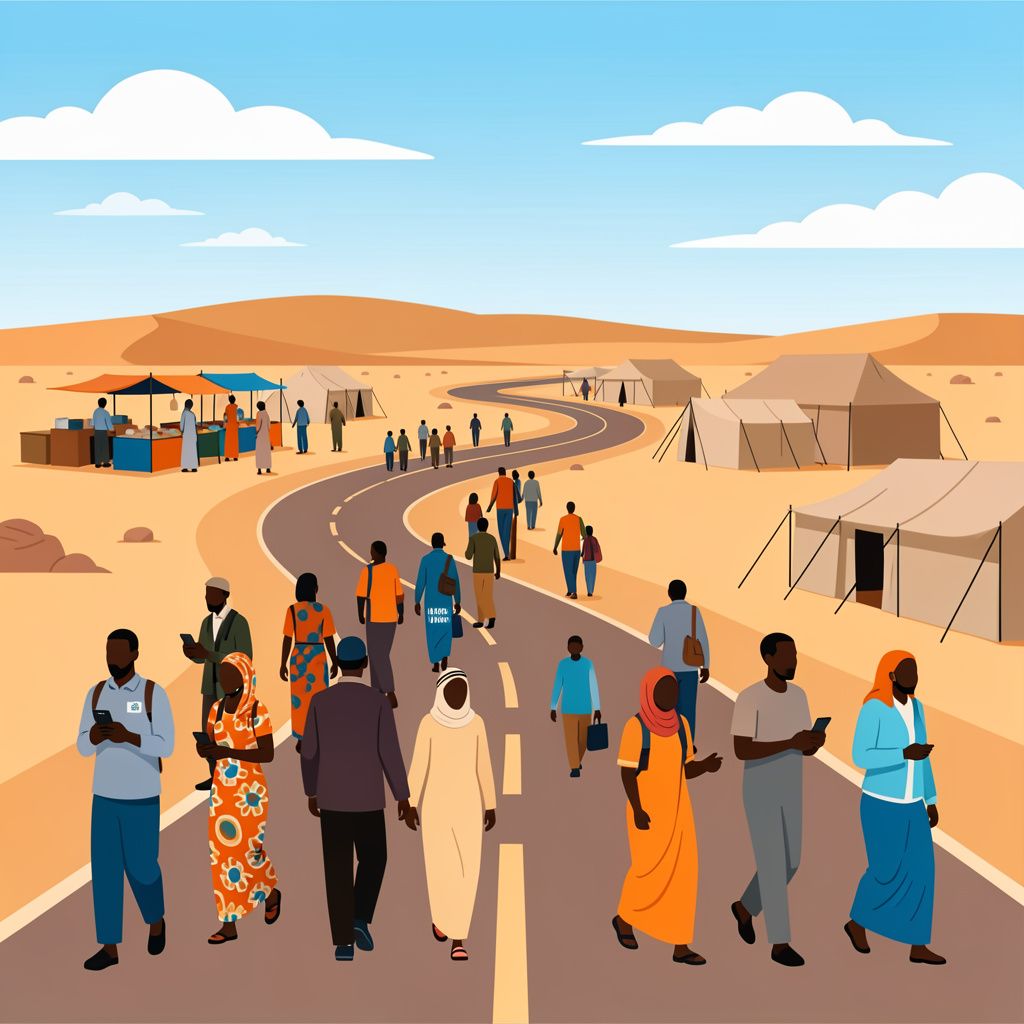
Construction has begun on three road projects totalling 60 kilometres in Turkana West, Kenya, backed by over KSh 15 million. Better roads mean market access and reliable humanitarian routes for Kakuma’s refugee population.
Three Projects, One Goal: Opening Up Turkana West
On 2 June 2026, the County Government of Turkana formally handed over three road maintenance and upgrade projects in Turkana West Sub-County, marking the official start of construction activity across a combined 60 kilometres of road [1]. The three corridors are the 25-kilometre Kakuma–UNHCR–Pokotom–Letea Road, the 15-kilometre Lopuski Junction–Lodakach Road, and the 20-kilometre Nakoyo–Kare Road in Lopur Ward [1]. Together, they represent a total investment of over KSh 15 million, funded through the County Government of Turkana and the Ward Development Fund [1].
What the Roads Mean for Kakuma’s Refugee Population
The most consequential of the three projects for the refugee community is the 25-kilometre Kakuma–UNHCR–Pokotom–Letea Road, which directly links Kakuma Municipality with the UNHCR camp area and onward routes to Pokotom and Letea [1]. For the tens of thousands of refugees living in and around Kakuma camp [GPT], the condition of this road has a direct bearing on daily life: access to markets, health facilities, and the movement of humanitarian supplies all depend on its passability. During the rainy season, unpaved roads in the region frequently become impassable, cutting off communities from essential services [GPT]. An upgraded, properly graded road surface is therefore not merely a convenience — it is a lifeline.
Economic and Social Ripple Effects Across the Region
Beyond the immediate humanitarian dimension, the county government has framed all three projects as economic development initiatives [1]. Once completed — no specific completion date has been publicly announced [alert! ‘The source document does not provide a project completion timeline or construction duration’] — the roads are expected to improve access to schools and government services, facilitate the movement of people and goods, stimulate local trade, and unlock new social and economic opportunities across Turkana West Sub-County [1]. The Kakuma–UNHCR–Pokotom–Letea corridor in particular connects the relatively active commercial centre around Kakuma camp with more remote villages, meaning that improved road quality could directly expand market reach for small traders in both the refugee and host communities [1].
A Broader Pattern of Infrastructure Investment in Kenya
The Turkana West projects are part of a wider pattern of road infrastructure activity taking place across Kenya in mid-2026. Separately, the Kenya National Highways Authority (KeNHA), represented by Resident Engineer Maxwell Kamwana, held a public participation forum at the Deputy County Commissioner’s Office in Githunguri Town regarding the proposed construction of the Uplands–Githunguri–Ruiru (B116) Road [2]. At that forum, Kamwana called on residents encroaching on the road reserve to voluntarily vacate affected areas, while Gathoni Wamuchomba, the area Member of Parliament, advocated for the inclusion of pedestrian walkways and adequate drainage infrastructure [2]. No specific construction start date for that project was provided [2].