

Turkana County Invests in Roads to Connect Its Most Isolated Communities
Kangatotha, 6 June 2026
A 57-kilometre road project worth KSh 5.6 million is set to transform life in Turkana’s remote Kangatotha Ward, boosting trade, healthcare access, and fishing networks.
Two Projects, One Goal
On 3 June 2026, the Turkana County Department of Roads formally handed over two road maintenance projects in Kangatotha Ward, setting in motion what local officials describe as a transformative step for one of the county’s most underserved areas [1]. The first and larger of the two projects covers the 57-kilometre Kangatotha–Naoros–Naipa–Akatotuman–Lokipetot–Eliye Road, valued at KSh 5.6 million [1]. The second project addresses the Loyoro–Nabulon–Rikoo Namakat Road corridor [1]. Together, the two schemes are designed to stitch together communities that have long been cut off from reliable transport links, markets, and public services [1].
What the Works Actually Involve
The scope of the road works is practical and wide-ranging. Contractors are tasked with bush clearing, topsoil stripping, grading, and the erection of road signage to improve both safety and accessibility along the routes [1]. County Surveyor Janet Bosibori directed contractors to adhere strictly to all procedures and to involve local communities throughout the implementation process, underscoring the county government’s emphasis on accountability and transparency [1]. A second County Surveyor, Ekope Meshack, reinforced this message, stressing strict compliance with Bills of Quantities (BoQ) requirements and close collaboration with all area administrators to ensure smooth project execution [1].
A County Defined by Scale and Isolation
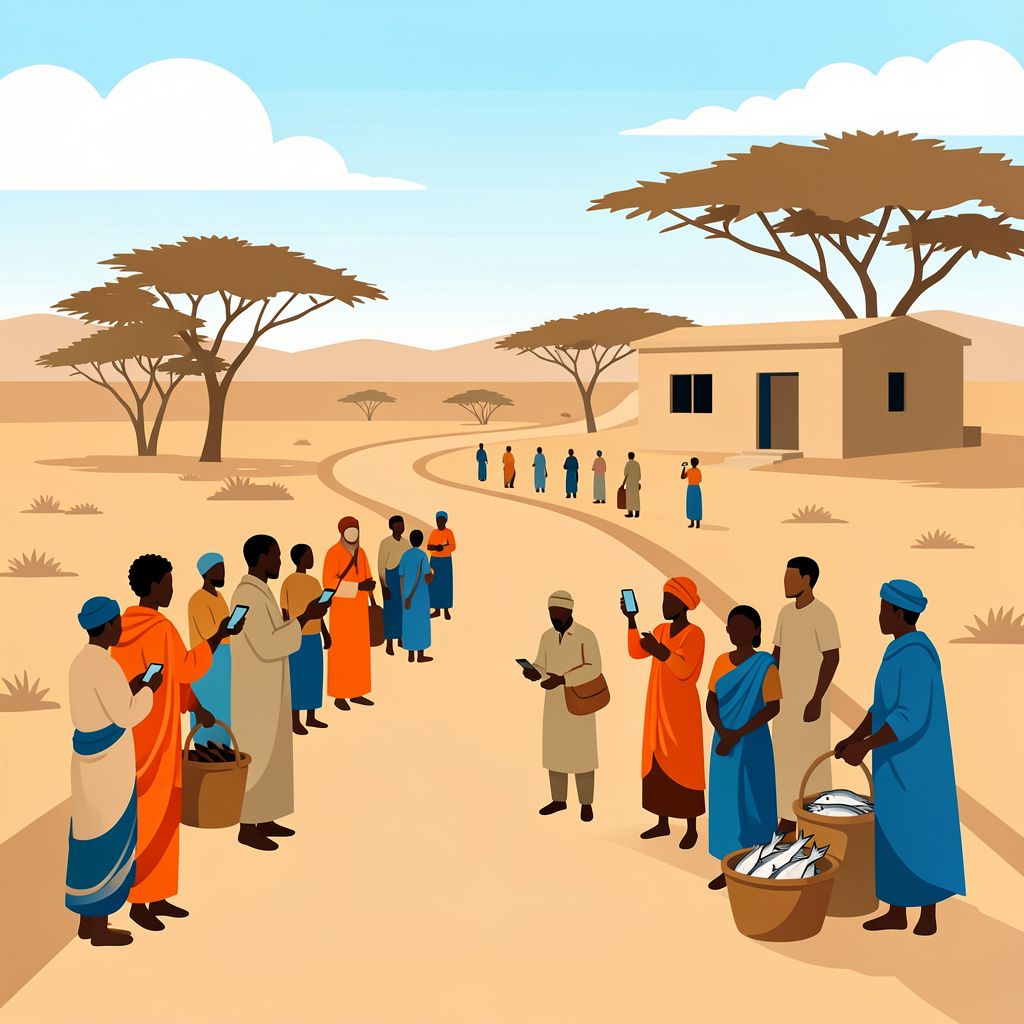
To appreciate why these road projects matter, it helps to understand just how vast and challenging Turkana County is. At approximately 77,000 square kilometres, Turkana is the second largest county in Kenya and sits in the country’s north-western corner [1]. Its terrain — a mix of arid plains, rocky outcrops, and seasonal riverbeds — has historically made road construction and maintenance both costly and logistically complex [1][GPT]. For communities in areas such as Kangatotha Ward, this geography has translated directly into limited access to healthcare, education, and economic opportunity [1]. The ward’s fishing economy, which draws on the resources of the surrounding landscape, has equally suffered from poor connectivity, hampering the movement of catch to larger markets [1].
Local Leaders Push for Speed and Impact
Area Member of the County Assembly (MCA) Mathew Alany did not mince words when addressing contractors at the handover event on 3 June 2026. He urged them to expedite the works so that residents can begin benefiting from improved transport links, easier access to markets, healthcare facilities, and educational institutions as quickly as possible [1]. The MCA’s call reflects a broader frustration among residents who have waited for meaningful infrastructure investment in the ward [alert! ‘No specific timeline or completion date for the projects has been stated in the source’]. County officials echoed this urgency, noting that once completed, the projects are expected to significantly enhance mobility, support the fishing economy, and strengthen access to vital services across Kangatotha Ward [1].
What This Means for Refugees in Kakuma and Kalobeyei
Kangatotha Ward sits within the broader Turkana County ecosystem that also hosts the Kakuma refugee camp and the Kalobeyei Integrated Settlement, two of East Africa’s most significant refugee hosting areas [GPT]. Improved roads in the surrounding host community carry direct consequences for refugees and humanitarian operations alike. Better road infrastructure in the region facilitates the movement of food supplies, medical equipment, and emergency response teams, all of which are critical for the welfare of refugee populations [GPT]. It also eases the day-to-day movement of refugees and host community members between settlements and service points, reducing both time and cost barriers [GPT]. Critically, investments of this kind reinforce the principle that development in host communities and improved conditions for refugees are not competing priorities — they are, in practice, deeply interconnected [GPT].
A Small Budget With Outsized Ambitions
At KSh 5.6 million for 57 kilometres of road — a cost per kilometre of approximately 98245.614 KSh — the project is notable for the scale of ambition it attempts to deliver on a modest budget [1]. Whether that budget proves sufficient for durable, all-weather road improvement across such a distance in a challenging terrain remains to be seen [alert! ‘The source does not specify the road surface type, construction standards, or expected lifespan of the completed works’]. What is clear is that the formal handover to contractors on 3 June 2026 marks the starting gun for works that Turkana’s county government, local elected officials, and the communities of Kangatotha Ward are all watching closely [1]. For a region where distance has long been both a geographical and economic burden, even incremental improvements in road quality can translate into meaningful gains in livelihoods, safety, and access to opportunity [1][GPT].