

Kenya Puts Frontline Health Workers Through Ebola Drills as Outbreaks Close In from Neighbouring Countries
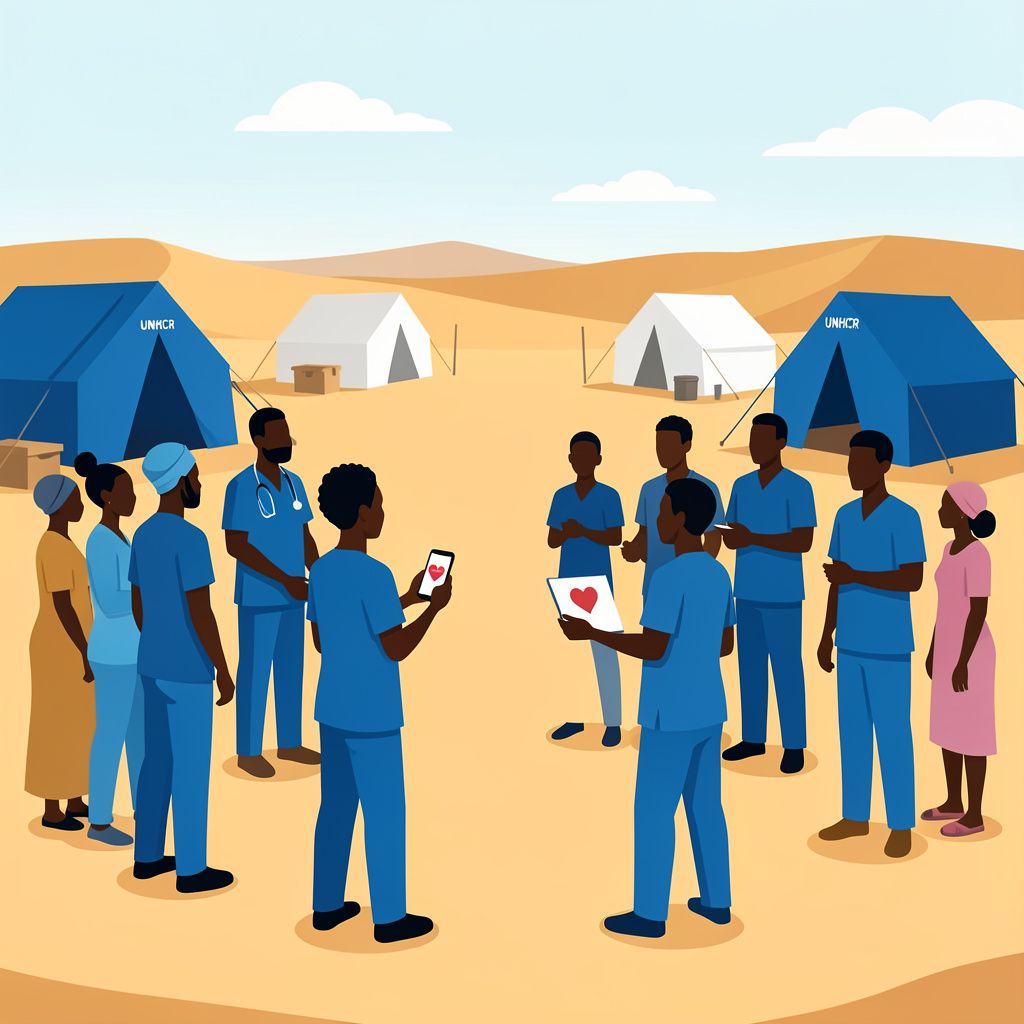
Lodwar, 5 June 2026
Turkana County, bordering Uganda and South Sudan, has trained 70 frontline health workers in Ebola detection and response — directly protecting hundreds of thousands of refugees at Kakuma and Kalobeyei camps.
Seventy Workers, Four Days, One Critical Mission
On 3 June 2026, the Turkana County Government launched a four-day, county-wide training programme in Lodwar, bringing together 70 frontline healthcare workers to build practical skills in Ebola preparedness and response [1]. The training, which was still under way as of 5 June 2026, is equipping participants with competencies spanning early detection, screening, triage, isolation, case notification, and infection prevention and control — all measures designed to reduce the risk of transmission within health facilities and across communities [1]. Participants are also receiving hands-on instruction in the correct use of personal protective equipment (PPE), hand hygiene protocols, environmental cleaning, waste management, and safe patient handling procedures [1]. The exercise brings together healthcare workers drawn from referral hospitals, sub-county hospitals, and health facilities at points of entry across the county — the full breadth of the county’s public health infrastructure [1].
A County on the Frontline of Regional Disease Risk
Turkana County’s geography makes this training far more than a routine capacity-building exercise. Kenya’s second largest county at 77,000 square kilometres [1], Turkana shares borders with Uganda, South Sudan, and Ethiopia [GPT], placing it at the intersection of several active cross-border movement corridors. The training comes directly against the backdrop of ongoing Ebola outbreaks in neighbouring countries, including the Democratic Republic of Congo and Uganda, and the persistent movement of people across the Kenya-Uganda border — factors that county health authorities have explicitly identified as placing Turkana at heightened risk [1]. Daniel Esimit, Director of Preventive and Promotive Health for Turkana County, made the stakes plain: “By strengthening the skills of our frontline healthcare workers in infection prevention and control, early detection, and emergency response, we are enhancing our capacity to protect communities and contain any potential threat before it escalates” [1]. The Kenya National Public Health Institute (KNPHI) is also involved at the national level, conducting its own Integrated Rapid Response Team (RRT) training for frontline healthcare workers in Turkana County, led by Dr Samuel Kadivane, covering surveillance, case investigation, risk communication, contact tracing, sample management, and coordinated emergency response [6].
What This Means for Kakuma and Kalobeyei Refugees
For the hundreds of thousands of refugees living in Kakuma and Kalobeyei — two of East Africa’s largest refugee settlements, both situated within Turkana County [GPT] — the implications of this training are immediate and concrete. Camp health facilities fall within Turkana County’s health jurisdiction [alert! ‘specific administrative health jurisdiction arrangements for Kakuma and Kalobeyei camp clinics relative to Turkana County health structures not explicitly confirmed in provided sources’], meaning that the workers now being trained in Ebola detection and emergency response are, in practice, the same workers who would be first to identify and respond to a suspected case among the refugee population. Through simulations and practical exercises, participants are enhancing their ability to promptly identify, report, and respond to suspected Ebola cases while safeguarding patients, colleagues, and the wider community [1]. Residents of Kakuma and Kalobeyei are urged to report any sudden illness involving fever, vomiting, or bleeding to camp clinics immediately and to avoid handling sick individuals without medical guidance [GPT based on standard public health guidance consistent with the training objectives described in source 1].
Kenya’s Broader National Ebola Preparedness Picture
Turkana’s training effort does not exist in isolation. Across Kenya, the national health system has been expanding its Ebola response infrastructure at pace. As of early June 2026, Kenya already operates 23 dedicated Ebola screening, isolation, and treatment facilities, including at the Kenyatta National Hospital, Nairobi Police Hospital, Moi Teaching and Referral Hospital in Eldoret, Kenyatta Hospital in Thika, and Alupe Hospital in Busia [3]. A proposed 24th facility — an Ebola centre to be built by the United States government at Laikipia Air Base at no cost to Kenya — has generated significant domestic political debate, with street protests, opposition criticism, and pushback from civil society groups [3]. President William Ruto, speaking from South Africa on 4 June 2026, defended the decision, arguing: “The US people and government have been partners with us in matters of health for close to 30 years. It would be the greatest misfortune if, for one request by Americans to set up a facility at their cost, we refused” [3]. Health Cabinet Secretary Aden Duale separately confirmed on 4 June 2026 that his ministry does not require public participation to establish the Laikipia Ebola centre, and specifically named Turkana among 12 counties considered to be at high risk, alongside Nairobi, Mombasa, Uasin Gishu, Busia, Kisumu, Bungoma, Trans Nzoia, West Pokot, Homa Bay, and Migori [3]. Meanwhile, Jaramogi Oginga Odinga Teaching and Referral Hospital in Kisumu announced on 4 June 2026 that it has established quarantine facilities and strengthened surveillance in Kisumu County, signalling that Ebola readiness measures are now being activated across multiple parts of the country simultaneously [2]. Participants in the Turkana KNPHI training described the exercise as timely and essential in enhancing Kenya’s readiness to detect, investigate, and respond effectively to potential Ebola cases [6].