

Free Mental Health Support Is Available to Refugees in Kenya's Kakuma Camp — Here Is How to Access It
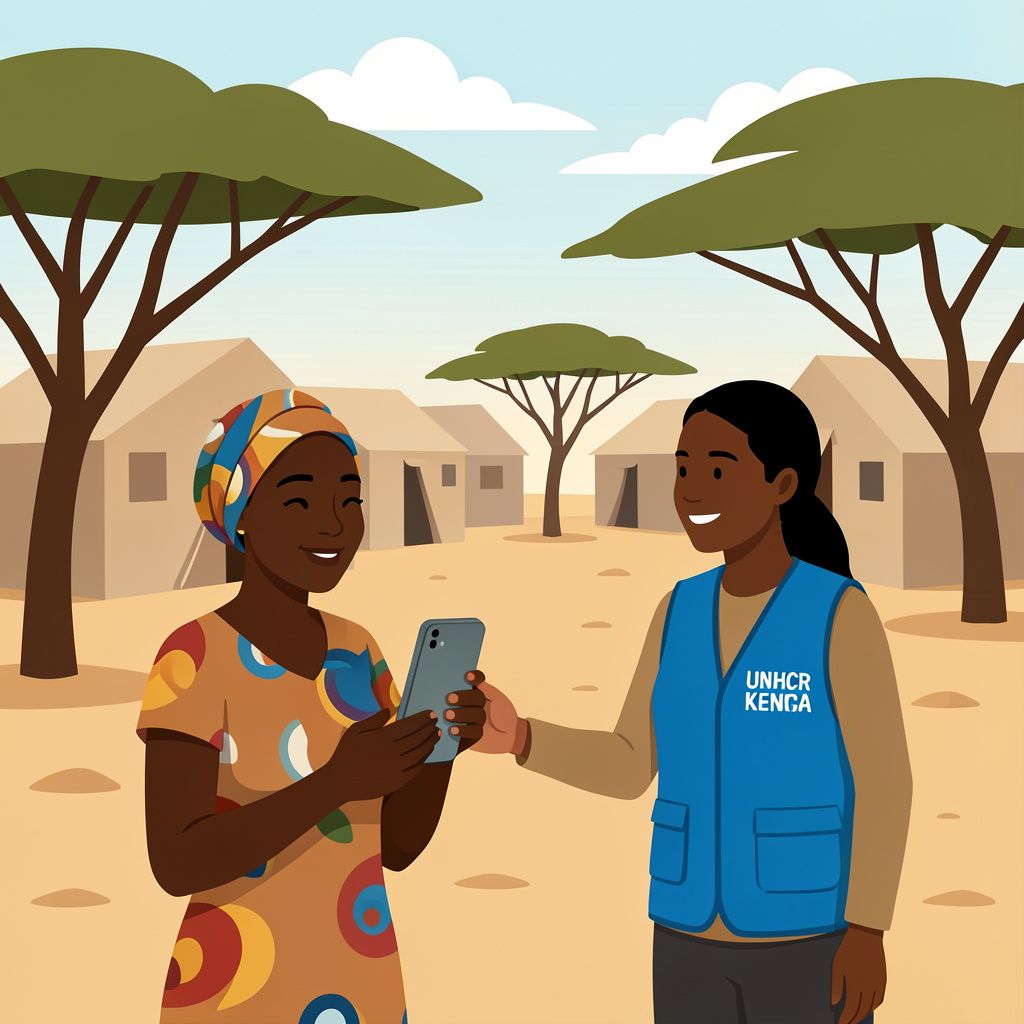
Kakuma, 5 June 2026
Thousands of refugees in Kakuma and Kalobeyei can access free, confidential mental health support right now. For those fleeing violence and trauma, help is closer than many realise.
Why Mental Health Support Matters in Kakuma
Life in a refugee camp is extraordinarily difficult. Many residents of Kakuma camps 1–4, Kalobeyei Villages 1–3, and the Nadapal area have survived violence, witnessed the loss of family members, endured dangerous journeys, and now face the daily pressures of displacement [1]. These experiences — which are far outside what most people will ever encounter — can lead to depression, anxiety, grief, and trauma-related conditions [1]. UNHCR is clear on one important point: these feelings are a normal human response to abnormal circumstances, and reaching out for help is a sign of strength, not weakness [1]. As of Friday, 5 June 2026, free and confidential mental health and psychosocial support (MHPSS) services are actively available to all refugees in the area, regardless of nationality [1]. Residents from South Sudan, Somalia, Ethiopia, the Democratic Republic of Congo, and every other country are eligible and welcome [1].
Who Is Eligible and What Services Are Offered
Eligibility is straightforward: any refugee or displaced person living in Kakuma camps 1–4, Kalobeyei Villages 1–3, or Nadapal can access MHPSS services [1]. There are no fees and no requirement to explain yourself in detail before receiving support [1]. Services range from one-to-one counselling and group psychotherapy sessions to physical therapy, psychosocial first aid, and community-based support programmes [1]. Trained staff and community volunteers deliver these services [1]. Special attention is given to women, children, survivors of gender-based violence (GBV), unaccompanied elderly individuals, persons with disabilities, and those with serious mental illness [1]. If a community member notices that a neighbour, friend, or family member is in distress, they are encouraged to guide that person to the nearest MHPSS point [1]. No referral letter or appointment is always required — many services accept walk-in visits, though some providers do work by appointment, as detailed below [1].
Which Organisations Provide Support and How to Reach Them
Several specialist organisations are currently operating across Kakuma and Kalobeyei, each covering specific locations and types of need. Understanding which organisation to contact can save time and ensure the right kind of help is received [1]. Primary healthcare and general psychosocial services in Kalobeyei are delivered by the Africa Inland Church (AIC) — reachable on the toll-free number 0800720845 — as well as through two dispensaries: Nalemsekon Dispensary (0702637769) and Naregae Dispensary (0745330015) [1]. The Kenya Red Cross Society (KRCS) also operates in Kalobeyei Villages 1, 2, and 3, and can be contacted for ambulance or family tracing support on 0707173515 [1]. The International Rescue Committee (IRC) provides pharmacological treatments for neurological, mental health, and substance use disorders across five health facilities in Kakuma 1, 3, and 4, and also offers psychological counselling by appointment — contact them free of charge on 0800720605 [1]. Notably, IRC’s Drop-in Centre (DiCE) model, implemented in partnership with UNHCR, has demonstrated measurable impact: service reach for adolescent girls and young women grew from 127 individuals in 2023 to 348 in 2025, representing a growth of 174.016 per cent over that period, according to Kenya Health Information System (KHIS) data [4]. The Centre for Victims of Torture (CVT) provides in-person group psychotherapy and physical therapy specifically for survivors of torture and war trauma, currently operating in Kalobeyei Villages 2 and 3 [1]. The Danish Refugee Council (DRC) supports children, adults, GBV survivors, and persons with specific needs across all of Kakuma camps 1–4 and Kalobeyei Villages 1–3 — call them free on 0800720414 [1]. Humanity & Inclusion (HI) focuses on persons with disabilities, providing rehabilitation, mobility assistance, and psychosocial support across Kakuma camps 1–4, Kalobeyei Villages 1–3, and the host community — contact: 0740875416 [1]. The Lutheran World Federation (LWF) offers counselling for youth in both Kakuma and Kalobeyei, as well as psychosocial support for learners in Kakuma, host communities, and Nadapal [1]. IsraAid provides a minimum of three sessions of psychosocial first aid to caregivers and children in Kakuma camps 1–4 and Kalobeyei Villages 1–2 — contact: 0712827444 [1]. Windle International Kenya (WIK) provides psychosocial support to students in Kakuma camps 1–4 and Kalobeyei Villages 1–3 — contact: 0800720386 [1]. AAR Japan offers psychosocial support in two secondary schools in Kalobeyei and one host community secondary school, reachable on 0800720697 [1].
How to Access Services: A Step-by-Step Guide
Accessing mental health support in Kakuma and Kalobeyei does not require complicated paperwork or a formal referral in most cases. The following steps explain the process clearly [1]. First, identify the area where you live — whether that is Kakuma 1, 2, 3, or 4, or Kalobeyei Village 1, 2, or 3 — as different organisations operate in specific zones [1]. Second, choose the type of support that feels most appropriate. For general emotional distress, anxiety, or grief, AIC health facilities or LWF counselling services are a good starting point [1]. For those who have experienced torture, war trauma, or extreme violence, CVT in Kalobeyei Villages 2 and 3 is specifically equipped to help [1]. For children in school or young people, LWF, AAR Japan, or WIK are active in educational settings [1]. For persons with disabilities, HI is the dedicated provider [1]. Third, use the contact numbers listed above to call ahead if possible, particularly for IRC services which operate on an appointment basis [1]. All numbers marked 0800 are toll-free [1]. Fourth, if it is not possible to call, walk to the nearest health facility or community centre and ask staff to direct you to the MHPSS point [1]. Services are confidential, meaning that what a person shares with a counsellor will not be passed on without consent [1]. There are no nationality restrictions — people of all backgrounds are eligible [1]. There are currently no announced deadlines or end dates for these services, meaning they are ongoing as of 5 June 2026 [1]. Anyone who is concerned about another person — particularly a woman, a child, an elderly person, or a GBV survivor — is urged to accompany or refer that person to the nearest provider without delay [1].
Bronnen
- help.unhcr.org
- www.instagram.com
- www.facebook.com
- www.linkedin.com
- www.instagram.com
- www.facebook.com
- unjobs.org
- data.unhcr.org