

Free Disability Services Now Available to Refugees and Local Residents in Kenya's Kakuma and Kalobeyei Settlements
Kakuma, 5 June 2026
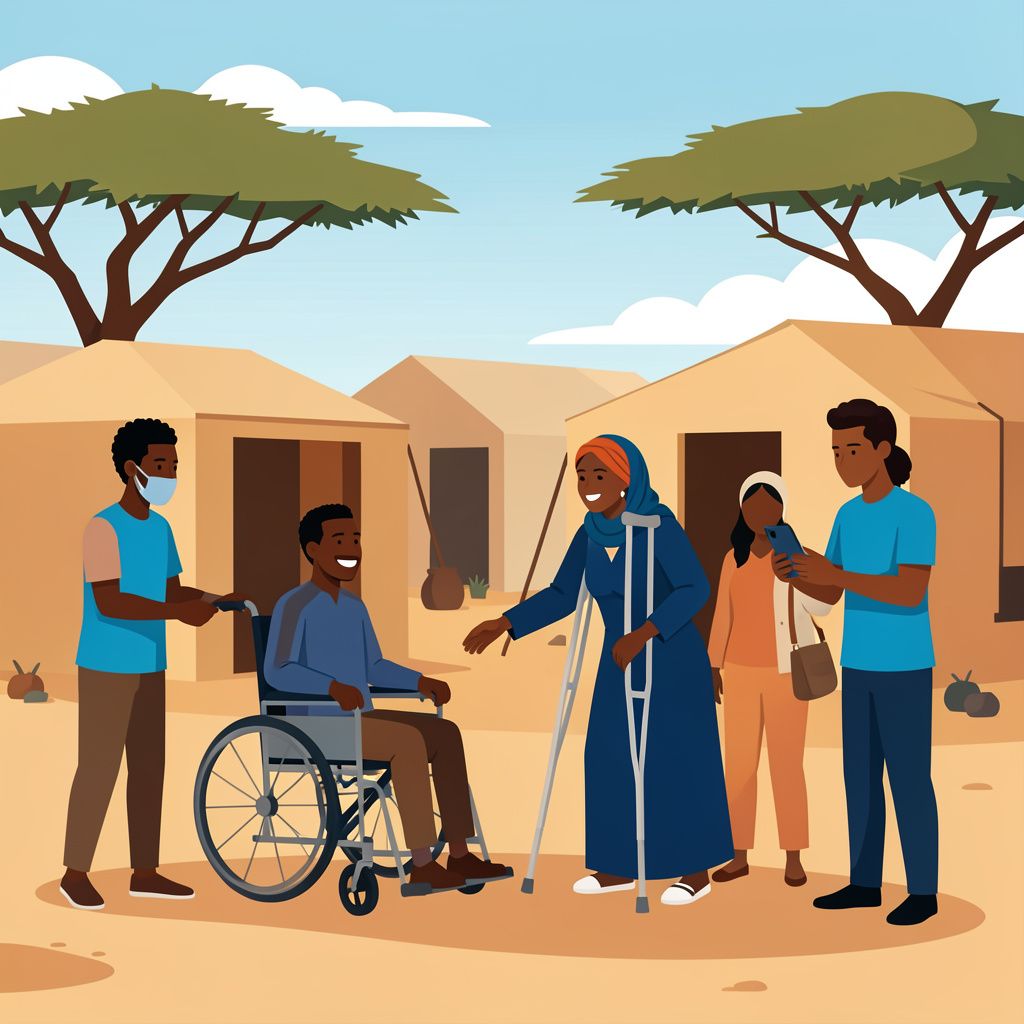
Refugees and host community members with disabilities in Kakuma and Kalobeyei can access free rehabilitation, assistive devices, and home-based care through UNHCR partners.
Who Can Access These Services?
The services are open to everyone living in Kakuma and Kalobeyei — both refugees and members of the Turkana host community — who have a disability or who care for a family member with a disability [1]. There is no requirement to be a registered refugee to enquire about the programme. Both children and adults are eligible [1]. Persons who are unable to travel to a centre due to the severity of their condition are also catered for through dedicated home-based rehabilitative services, which are provided to the most vulnerable individuals in both Kakuma and Kalobeyei [1]. No deadline for registration has been published as of Friday, 5 June 2026 [alert! ‘No closing date for registration is stated in the source material; the programme appears to be ongoing’].
What Services Are on Offer?
Two organisations — Humanity and Inclusion (HI), formerly known as Handicap International, and the Jesuit Refugee Service (JRS) — run the specialised services under the coordination of UNHCR [1]. HI provides rehabilitative therapy, mobility assistance such as wheelchairs and other assistive devices, and psychosocial support services to persons with disabilities across Kalobeyei settlement, Kakuma camp, and the surrounding host community [1]. HI also delivers inclusive education programmes in both Kakuma and Kalobeyei, and supports disability-inclusive development by creating livelihood linkages for persons with disabilities [1].
JRS: Education and Outreach for Children With Disabilities
JRS operates five inclusive education facilities across Kakuma and the Turkana host community, offering children with disabilities access to both regular schooling and specialised education [1]. Alongside classroom learning, JRS provides psychosocial services and auxiliary support to the children, as well as counselling and training for their parents or carers [1]. For children who are unable to attend a centre, JRS conducts community outreach to identify and reach homebound children with disabilities, providing them with rehabilitation services, psychosocial support, and non-formal education directly at home [1]. This outreach model ensures that even the most isolated children are not left behind. The broader context of inclusion across Kakuma and Kalobeyei has drawn international attention: during the week of 25 May 2026 to 31 May 2026, representatives from the Swedish Embassy in Kenya visited both settlements and observed first-hand how education, documentation, and livelihoods programmes are being integrated across refugee and host communities [2].
Where to Go and How to Register
HI centres where rehabilitative therapy services can be accessed are located in Kakuma 1, Kakuma 2, Kakuma 3, Kakuma 4, and Kalobeyei Village 1 [1]. These centres are open Monday to Friday, from 08:00 to 17:00 [1]. Residents who wish to register, or who want to find out more before visiting a centre, are encouraged to contact HI or JRS directly at their nearest location in Kakuma or Kalobeyei [1]. For those who prefer to reach UNHCR first, three contact options are available. The toll-free helpline can be reached by calling 1517 — this call is free and available to anyone in Kenya [1]. Alternatively, enquiries can be sent by email to [email protected] for general Kenya matters, or to [email protected] specifically for Kakuma [1]. UNHCR’s online help portal for Kakuma also provides further guidance on health services and additional support programmes available in the area [1]. The SHIRIKA Plan — a framework bringing together the Kenyan government, development partners, local communities, and refugees — continues to underpin the delivery of inclusive services such as these across both settlements, with partners including Sweden and Sida reinforcing their commitment to self-reliance and inclusion as recently as early June 2026 [2].