

Somalia's Shilling Becomes Worthless as Traders Reject National Currency
Mogadishu, 11 May 2026
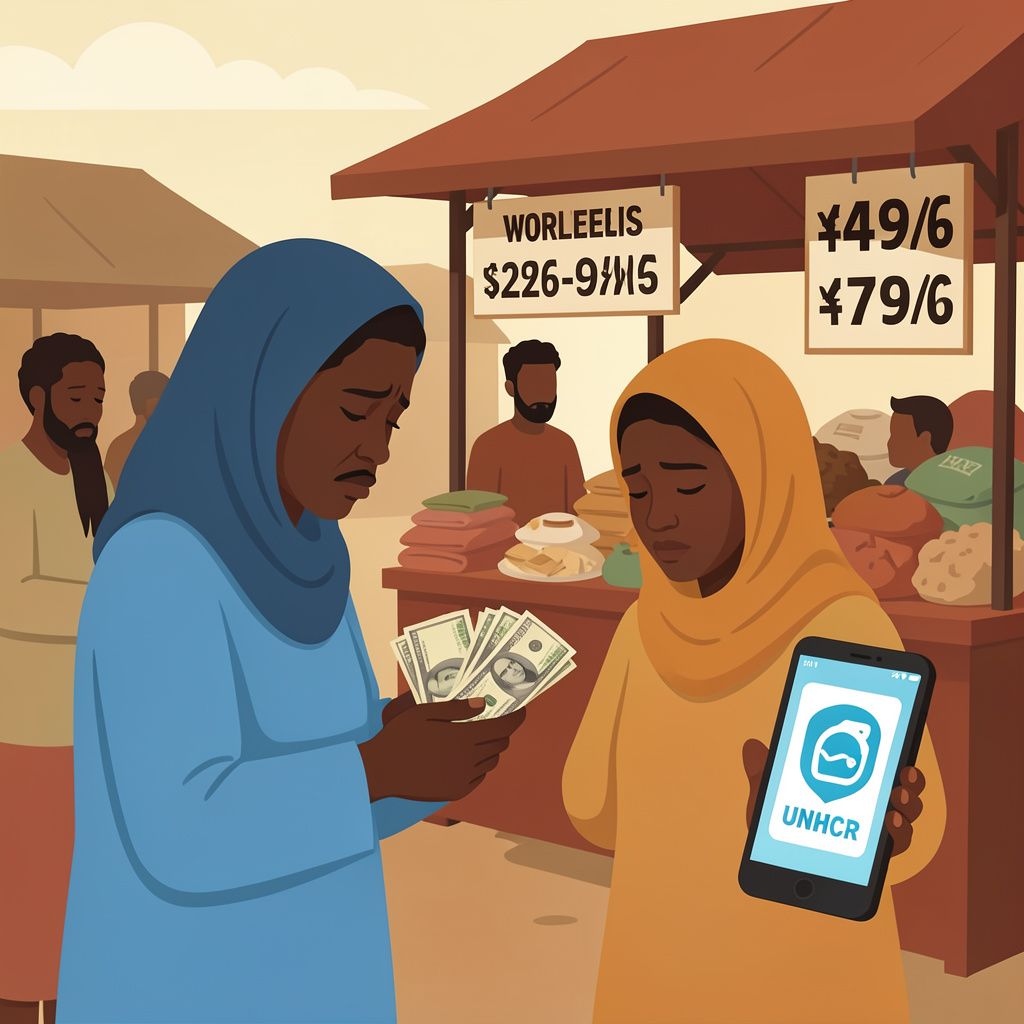
Somalia’s economy faces collapse as traders nationwide refuse to accept the national shilling, forcing families into poverty overnight. Since April 2026, businesses from Mogadishu to rural areas have rejected the tattered banknotes, with a small bag of powdered milk more than doubling in price. The crisis stems from Somalia’s inability to print new currency since 1991, leaving citizens with deteriorating notes that even buses won’t accept. Exchange trader Muse Omar Jama described the devastating impact: ‘It’s like we went bankrupt overnight.’ The government has declared rejecting shillings a crime, but with 6.5 million facing severe hunger and mobile money systems beyond reach for the poorest, families watch their life savings become meaningless paper.
Desperate Protests as Currency Rejection Spreads
The currency crisis escalated dramatically on 4 May 2026, when exchange traders took to the streets of Mogadishu in protest [1]. The demonstration highlighted the desperation felt by those whose livelihoods depend on currency exchange as the shilling’s rejection spread beyond the capital to regions across Somalia [1]. The federal government responded swiftly to the protests, announcing that rejecting the national currency would be classified as a criminal offence and ordering all businesses to accept shillings [1]. However, this legal mandate has done little to restore confidence in banknotes that have become so deteriorated that basic transport services refuse them [1].
A Financial System Broken by Decades of Conflict
Somalia’s currency crisis has roots stretching back over three decades to 1991, when the country last printed official banknotes [1]. This printing freeze coincided with the collapse of central government authority and the onset of prolonged factional conflict that has plagued the nation ever since [1]. The situation was further complicated when the breakaway territory of Somaliland launched its own version of the shilling, creating additional monetary fragmentation [1]. The absence of new currency production has left Somalis relying on increasingly tattered notes that deteriorate with each transaction, creating a vicious cycle where physical degradation undermines economic confidence [1].
Dollar Dependency Leaves Poorest Behind
Somalia’s heavy reliance on remittances, primarily sent in US dollars, has created a two-tier economy that excludes the most vulnerable [1]. The widespread adoption of US dollars and mobile phone transfer systems emerged as practical solutions to the challenges posed by ongoing factional conflict and monetary instability [1]. However, this digital and dollarised economy has effectively locked out poor families who lack access to smartphones or foreign currency, forcing them to rely on the increasingly worthless shilling [1]. Vegetable seller Asha Ali Ahmed captured the plight of small traders when she explained: ‘The rejection of the shilling only exacerbated our situation’ [1].
Humanitarian Crisis Deepens Economic Despair
The currency collapse compounds an already dire humanitarian situation, with the World Food Programme reporting that 6.5 million people in Somalia face severe hunger [1]. Additionally, 2 million children under the age of five are experiencing acute malnutrition, highlighting the vulnerability of Somalia’s youngest population [1]. The timing of the currency crisis could not be worse for families already struggling to afford basic necessities, as the rejection of shillings has made even simple purchases like powdered milk prohibitively expensive [1]. This convergence of monetary collapse and humanitarian need creates a perfect storm that threatens to push Somalia’s most vulnerable populations deeper into poverty and food insecurity [1].