

US Steps In to Mediate Somalia's Electoral Crisis as Presidential Term Expires in Days
Mogadishu, 11 May 2026
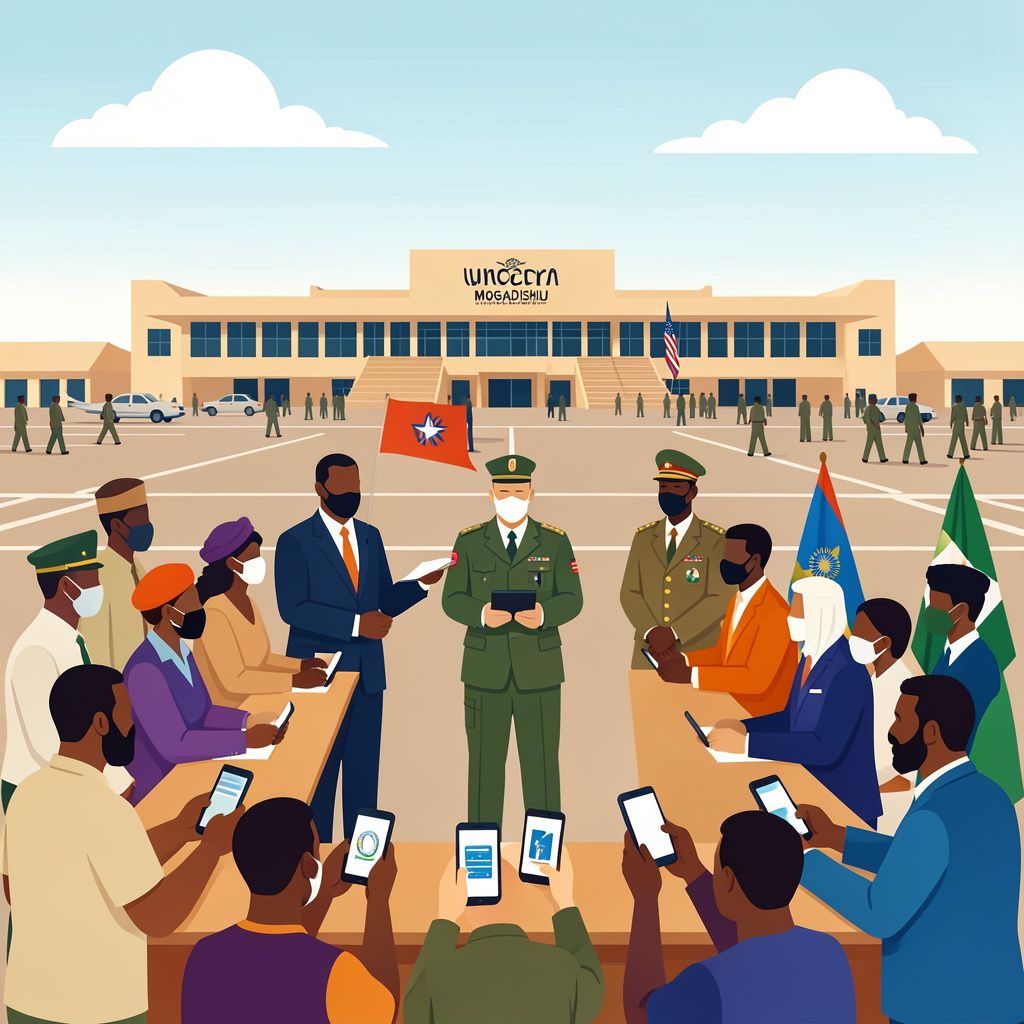
With President Hassan Sheikh Mohamud’s mandate ending on 15 May, the United States will mediate crucial talks between Somalia’s government and opposition on 13 May at Mogadishu airport. The intervention highlights international fears that political deadlock could reverse years of state-building efforts and undermine the fight against Al-Shabaab, as security forces deploy across the capital to prevent opposition rallies.
Critical Mediation Timeline as Constitutional Crisis Looms
The situation builds upon recent electoral progress in Somalia’s South West State, where direct ‘one person, one vote’ elections were successfully conducted on Sunday, 10 May 2026, marking a significant milestone in the country’s democratic transition [1]. However, this achievement is overshadowed by the escalating political crisis at the federal level, where President Hassan Sheikh Mohamud questioned the timing of opposition protests scheduled to coincide with these historic local elections [2]. The US intervention, announced on 10 May 2026, reflects international alarm over the political impasse that threatens to derail Somalia’s democratic progress [1]. With the presidential mandate expiring in just four days on 15 May, the mediation talks scheduled for 13 May at the Halane compound within Mogadishu’s Aden Adde International Airport represent a last-ditch effort to prevent constitutional crisis [1].
Security Deployments and Opposition Tensions
The deteriorating political situation has prompted significant security measures across Mogadishu, with government forces deployed at key junctions throughout the capital as of 8 May to prevent planned opposition rallies [1]. President Hassan Sheikh Mohamud has accused opposition groups of displaying heavy weapons during protest-related activities, claiming that authorities intervened to prevent security threats [2]. The president defended the security response, stating that whilst protests are a constitutional right, ‘there is no need for demonstrations behind which dangerous elements can hide’ [2]. These developments echo the dangerous precedent of April 2021, when divisions within Somali security forces led to gunfire in Mogadishu during a previous political standoff [1]. The opposition had formally requested Washington’s involvement in mediating the crisis in April 2026, highlighting their lack of confidence in domestic resolution mechanisms [1].
Electoral Model Dispute at Heart of Crisis
The fundamental disagreement centres on Somalia’s electoral future, with President Hassan Sheikh Mohamud supporting the transition to a comprehensive ‘one person, one vote’ system that would allow Somalis to directly elect their leaders [1][2]. In contrast, the opposition prefers a return to the traditional indirect electoral model that has characterised Somali politics since the country began rebuilding its institutions [1]. This dispute has already had serious consequences, with constitutional talks collapsing on 6 March 2026, leaving the country without a clear path forward [3]. The federal government has now announced ambitious plans to conduct direct elections not only nationwide but also in the breakaway regions of Puntland and Somaliland, despite these territories operating outside federal government control [4]. Federal Electoral Commission Chairman Abdulkarim Ahmed Hassan declared that whilst local council elections had previously been held in these regions, presidential elections would now be added to the agenda [4].
International Stakes and Refugee Implications
Regional analysts warn that the stakes extend far beyond Somalia’s borders, with one Mogadishu-based expert noting that ‘Somalia cannot afford another prolonged political standoff’ due to fears that renewed instability would ‘reverse years of Somali state-building efforts and distract from the fight against Al-Shabaab’ [1]. International partners, who met in Mogadishu around 3 May and urged dialogue, have invested billions of dollars in rebuilding Somali institutions since the central government’s collapse in 1991 [1]. The US and its allies are reportedly prepared to deploy sanctions, visa bans, and travel restrictions to compel compromise between the feuding parties [1]. For the hundreds of thousands of Somali refugees in camps across the region, including those in Kakuma and Kalobeyei, the outcome of these mediation talks will directly impact future repatriation programmes and safety assessments for potential return to their homeland. Prime Minister Hamza Abdi Barre emphasised the government’s commitment to strengthening security and implementing democratic governance, stating that Somalia requires ‘consultation and cooperation that builds, appropriate solutions and national unity’ during this critical nation-building phase [5].
Bronnen
- www.somaliguardian.com
- www.garoweonline.com
- www.africa-confidential.com
- horseedmedia.net
- shabellemedia.com