

Free Eye Camp in Kenya's Turkana Region Restores Sight for Over 400 People, Surpassing All Targets
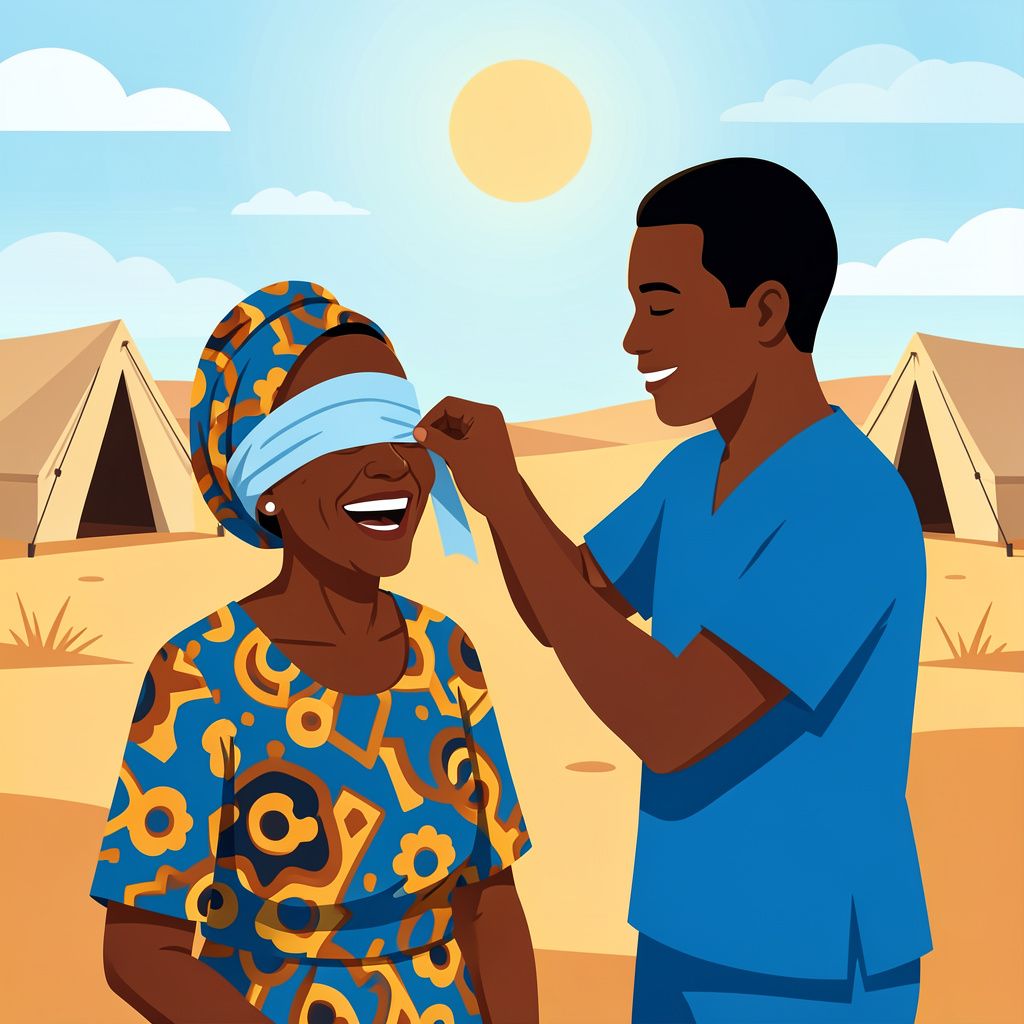
Lokichar, 1 June 2026
In a region where blindness rates are more than double Kenya’s national average, over 100 cataract surgeries gave patients like an 80-year-old woman, blind since 2025, the gift of sight.
A Camp That Exceeded Every Expectation
On 29 May 2026, a four-day free eye medical camp concluded in Turkana South, having treated over 400 residents from Lokichar and Kalapata wards [1]. The camp was organised by the County Government of Turkana in partnership with the Fred Hollows Foundation, an international organisation with a long-standing record of combating avoidable blindness across Africa [1]. The original target had been set at 300 patients — a figure that was not only met but surpassed [1]. Anne Louyei, the Sub-County Eye Coordinator, confirmed the outcome directly: “Our target was to attend to at least 300 patients, and I am proud to say we achieved and surpassed that. We recorded over 100 successful cataract surgeries” [1]. That means the camp delivered more than 33.333% of its surgical target in cataract operations alone.
Who Was Treated — and Where They Came From
The reach of the camp extended well beyond the immediate wards of Lokichar and Kalapata. Patients travelled from remote and underserved communities including Loperot, Napusmoru, Lochwaa, Locheremoit, Lodwar, and Lokori to access care that would otherwise be entirely out of reach [1]. Among those treated was Akuwom Margaret, an 80-year-old woman from Lokori who had been completely blind since March 2025 — meaning she had lived without sight for over a year before receiving surgery at this camp [1]. Also treated was Lomongin Ipalio, a 60-year-old beadwork artisan from Tonyoutu village, who had lost both her sight and her livelihood approximately three years prior, around May 2023 [1]. For Ipalio and others like her, the surgery was not merely a medical intervention — it was the restoration of economic independence.
The Human Cost of Avoidable Blindness
The stories of those treated at the camp illustrate a wider public health crisis. Turkana County records an avoidable blindness prevalence rate of 6.2%, compared to Kenya’s national average of 2.85% [1]. That gap — 3.35 percentage points — reflects the compounding impact of environmental and structural factors unique to the region. Oscar Montana, an Ophthalmic Clinical Officer working at the camp, explained: “Eye complications in Turkana remain high due to prolonged exposure to dust from an early age, harsh climatic conditions, solar effects, and old age” [1]. Turkana is Kenya’s second largest county by area, covering 77,000 square kilometres, and sits in the country’s north-western corner — a geography that places communities far from the specialist healthcare services available in urban centres [1].
Lives Restored: What Recovery Looks Like
The testimonies from patients who received surgery around 28 May 2026 — three days before the camp’s formal conclusion — offer a vivid picture of what successful treatment means in practice [1]. An unnamed female beadwork artisan, one of the beneficiaries, described her experience: “Three days after surgery, I can now clearly see the Kalong’ot Hills from where I am seated. I can fetch my own water again because I am not too old to depend entirely on others” [1]. Loriongoreng Epuu, a 74-year-old pastoralist from Nakwakitela village in Lokichar, was equally direct: “I can see everything again. I am eager to reunite with my goats, especially my favourite coloured ones. Guidance from others was never enough for me, but now I can resume my livelihood independently” [1]. These are not abstract outcomes — they represent the return of the ability to work, to move, and to live without depending on others.
What Comes Next — and How to Access Help
The Turkana County Government has confirmed that this camp is not a one-off event. Two further outreach programmes have been announced. The next free eye clinic is scheduled to take place at Kainuk Sub County Hospital, targeting residents from Kaputir and Lobokat wards — communities that have historically faced difficulties accessing healthcare due to long-standing insecurity in parts of Turkana South [1]. In addition, a second camp is scheduled to be held in Aroo Sub County during the week of 7 June 2026 [1]. Louyei stated plainly: “Next week, we are taking the camp to Aroo Sub County as part of our continued efforts to reach underserved populations and reduce avoidable blindness in Turkana” [1]. For residents of Kakuma, Kalobeyei, and surrounding areas who are experiencing eye problems — including blurred vision, difficulty seeing in bright light, or gradual loss of sight — the most practical first step is to visit a local health facility. Clinics operated by organisations such as MSF and IRC within the Kakuma camp complex can provide referrals to county health services or advise on upcoming outreach programmes [alert! ‘MSF and IRC referral pathways are mentioned in the editorial brief but are not confirmed in the primary source; readers should verify directly with those facilities’]. There are no fees associated with these county-run eye camps, and no formal eligibility criteria beyond being a resident of the targeted wards have been stated in the available information [1]. Those living in wards not yet scheduled should register their interest with their nearest Sub County Health office so that demand data can inform future camp locations [alert! ‘Registration process not confirmed in primary source; this is a practical recommendation based on standard county health outreach procedure [GPT]’].