

Belgium Steps In as 2.1 Million Kenyans Face Food Crisis Through September
Nairobi, 30 April 2026
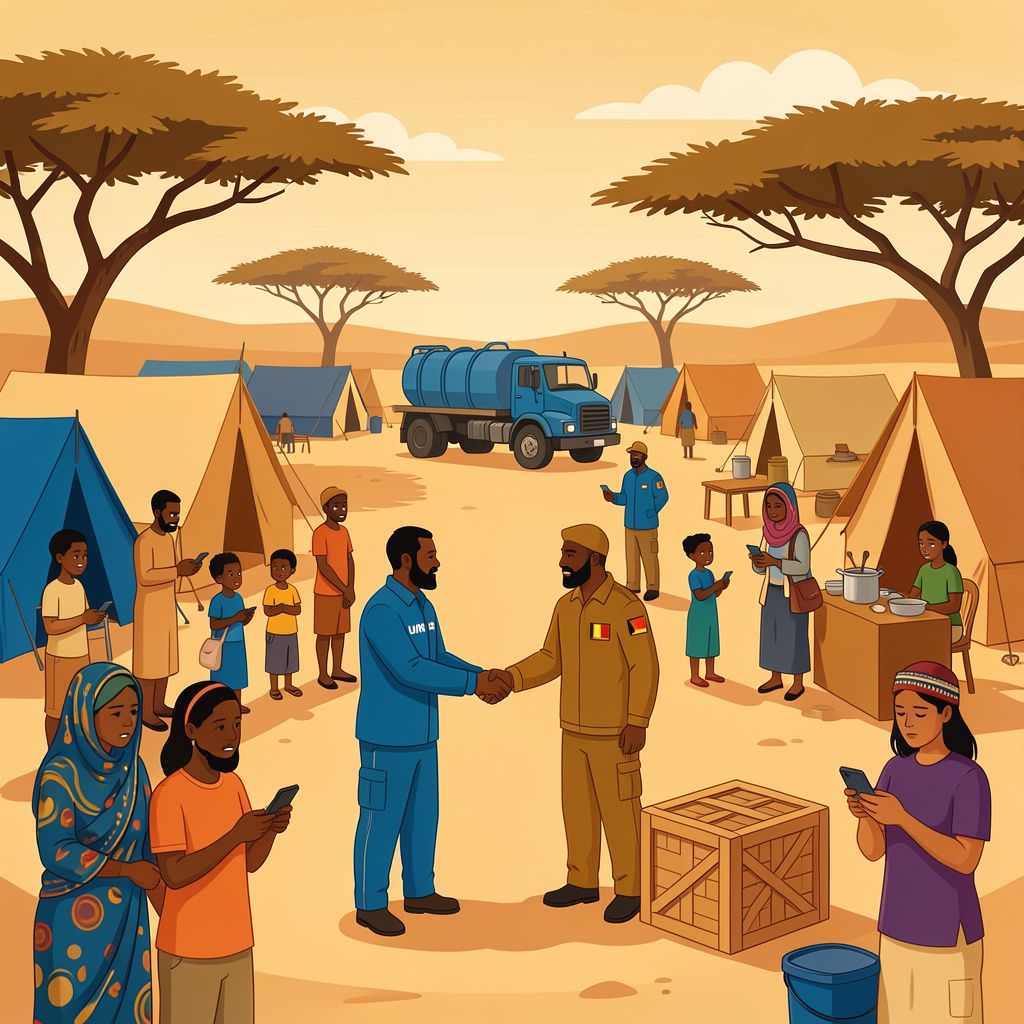
Belgium has provided emergency funding to Kenya as an alarming 2.12 million people confront severe food insecurity that analysts predict will persist through September 2026. The crisis affects both local communities and refugees, with some camps experiencing Emergency-level conditions where households struggle to meet basic needs. Despite expected improvements from upcoming long rains, widespread Crisis-level food insecurity will continue across the country. The Belgian contribution targets vulnerable populations grappling with prolonged drought and economic pressures, highlighting the international response needed to address Kenya’s mounting humanitarian challenge.
Refugee Camps Bear Brunt of Crisis
The food security crisis has hit Kenya’s refugee populations particularly hard, with Kakuma and Dadaab refugee camps along with Kalobeyei refugee settlement experiencing Crisis-level outcomes classified as IPC Phase 3, whilst some households face Emergency conditions at IPC Phase 4 [2]. These dire circumstances stem from refugees’ severely limited access to food production opportunities and income-generating activities, leaving them heavily dependent on external assistance [2]. The situation in these camps exemplifies how displacement compounds food insecurity, as refugees lack the traditional coping mechanisms available to settled communities.
WFP Scales Up Assistance Amid Growing Need
Recognising the severity of the crisis, the World Food Programme has increased its assistance levels from February through September 2026, providing 80 per cent of the Minimum Food Basket for Category 1 households deemed highly vulnerable, and 60 per cent for Category 2 households with limited ability to meet basic needs [2]. The assistance structure reveals the scale of vulnerability amongst refugee populations: approximately 30 per cent of refugee households fall into Category 1, whilst 39 per cent are classified as Category 2, and 24 per cent belong to Category 3, receiving cash equivalent to 20 per cent of the MFB [2]. Category 4 households, considered self-reliant, along with unclassified households, compose just 6 per cent of the total and receive no assistance [2].
Assistance Challenges Persist Despite Increased Support
However, the increased food assistance faces significant obstacles that undermine its effectiveness. The limited availability of complementary non-food items forces many households to divert portions of their food assistance to meet essential non-food needs, thereby compromising adequate food consumption [2]. This diversion highlights a critical gap in humanitarian programming, where addressing one basic need inadvertently undermines another. For Categories 1 and 2 households, the assistance comes as a combination of cash transfers accounting for 20 per cent of the MFB and direct in-kind food provision making up the balance [2].
Long-Term Outlook Remains Concerning
Despite expectations that forthcoming long rains will drive some improvement in food security conditions, analysts project that widespread Crisis-level food insecurity will persist through September 2026 [2]. This timeline underscores the protracted nature of Kenya’s food security challenge, extending well beyond immediate seasonal variations. Belgium’s contribution through UNHCR Kenya to the Special Fund for Emergency and Resilience Activities represents part of the international response required to address both immediate needs and longer-term resilience building [1]. The funding specifically targets vulnerable populations, including both refugees and host communities, acknowledging how prolonged drought and economic pressures have created shared vulnerabilities across different population groups [1].