

Kenya Launches Malaria Prevention Drive to Protect 132,000 Children in Kakuma Refugee Settlement
Kakuma, 4 June 2026
A targeted malaria prevention campaign is now underway in Turkana County, Kenya, backed by US-supplied medicine and aiming to shield over 132,000 young children before the peak transmission season hits.
A Campaign Built on Proven Results
The second round of the Seasonal Malaria Chemoprevention (SMC) campaign was officially launched on 3 June 2026 by the Turkana County Government and Catholic Relief Services (CRS), targeting the densely populated settlements of Kakuma and Kalobeyei [1]. The timing is deliberate: June marks the beginning of the June–October malaria transmission season, the period during which mosquito activity — and therefore malaria risk — is at its highest in the region [1]. With rains continuing across Turkana County, standing water accumulates rapidly, creating ideal breeding conditions for mosquitoes in areas where families live in close quarters [GPT].
This is not a first attempt. According to Dr. Edwin Mbugua, CRS Programme Manager for Health, the SMC initiative has already run successfully in Turkana Central for the past two years, and the expansion to Kakuma and Kalobeyei represents a significant scaling-up of a programme that has demonstrated measurable results on the ground [1]. That track record matters: it means the health workers, supply chains, and community outreach systems are already tested and functional.
Who Is Eligible and How to Access the Medicine
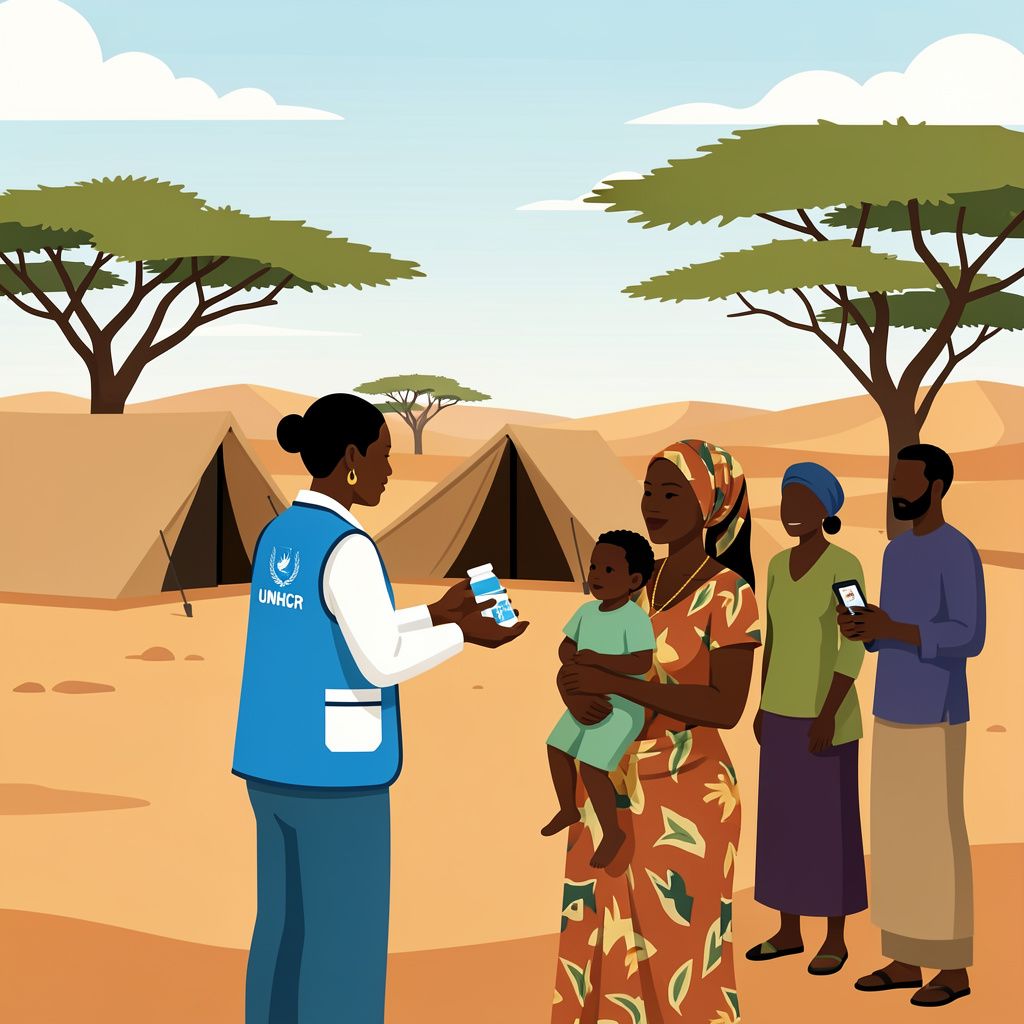
The campaign targets children under five years of age, the age group most vulnerable to severe malaria [1][GPT]. In total, the campaign aims to reach over 132,000 children across Kakuma and Kalobeyei [1]. The preventive medicine — distributed using the WHO-recommended approach, as confirmed by CRS Country Manager Margaret Kahiga during a courtesy call to the Deputy Governor’s office — has been supplied through support from the United States [1].
For families living in Kakuma or Kalobeyei, the steps to access the campaign are straightforward. Health workers and community volunteers will announce the specific distribution points and timings in each area [GPT]. Parents and guardians with children under five should listen out for these announcements and bring their children to the nearest designated distribution point. No payment is required — this is a free public health intervention [GPT]. If a child has recently been unwell or is currently sick, caregivers are advised to inform the health worker at the distribution point before the medicine is administered [GPT][alert! ‘Specific guidance on sick children was not stated in the source; this reflects standard SMC protocol and is marked accordingly’].
County Leadership Commits to Leaving No Child Behind
The launch was marked by a high-level courtesy call to the office of the Deputy Governor, Dr. John Erus, who emphasised the importance of coordination and evidence-based decision-making in public health delivery [1]. His message was clear: Turkana County is committed to equitable service delivery for both refugee and host communities, and the goal is that no child is left behind [1].
Also present at the launch were Deputy County Secretaries Dr. Albert Gamoe and Joseph Nyanga, alongside Mike Aupe, Deputy Director for Resource Mobilisation and Partnerships, and Peterson Erus, Assistant Director in the Administration Office of the Governor [1]. On the CRS side, Alfred Ireri, Head of Office Turkana, along with Branice Kisali and Margaret Kariga, were among the representatives present [1]. The breadth of officials in attendance signals the seriousness with which both the county government and its international partners are treating this intervention.
A Broader Vision for Turkana’s Children
Turkana is Kenya’s second-largest county by area, covering 77,000 square kilometres, and is situated in the north-western corner of the country [1]. Its vast geography and significant refugee population — concentrated particularly in the Kakuma and Kalobeyei settlements — make health service delivery both critically important and logistically complex [1][GPT]. The current campaign is part of CRS’s wider Child Health and WASH (Water, Sanitation and Hygiene) programme operating in the county [1].
Looking ahead, Dr. Mbugua indicated that while this round focuses on Kakuma and Kalobeyei, the longer-term plan is to eventually expand SMC coverage to the whole of Turkana County [1]. For now, the immediate priority is clear: between now and October 2026, families with young children in Kakuma and Kalobeyei should make every effort to access the free preventive medicine being distributed. Acting early — before mosquito activity reaches its peak — is the most effective way to protect a child from malaria during the months ahead [GPT].