

Nearly One Million Livestock to Be Vaccinated in Kenya's Turkana County in Major Disease Prevention Drive
Lodwar, 4 June 2026
A landmark EU-funded campaign targets 975,000 animals against deadly cross-border diseases, whilst an alarming new joint disease called ‘Lokungin’ emerges, threatening herds across the region.
A Vast County, a Vulnerable Economy
Turkana County, covering approximately 77,000 square kilometres, is the second largest county in Kenya and sits at the country’s north-western edge, sharing borders with Uganda, South Sudan, and Ethiopia [1]. Its remoteness and pastoral character make it both strategically significant and acutely vulnerable to cross-border animal disease outbreaks. For the tens of thousands of residents — including refugees hosted in Kakuma and Kalobeyei — whose livelihoods depend directly on healthy livestock, a single disease outbreak can mean the difference between food security and crisis [1]. It is against this backdrop that a major new vaccination campaign, announced on 3 June 2026, carries such profound weight for the region [1].
The Scale of the Campaign
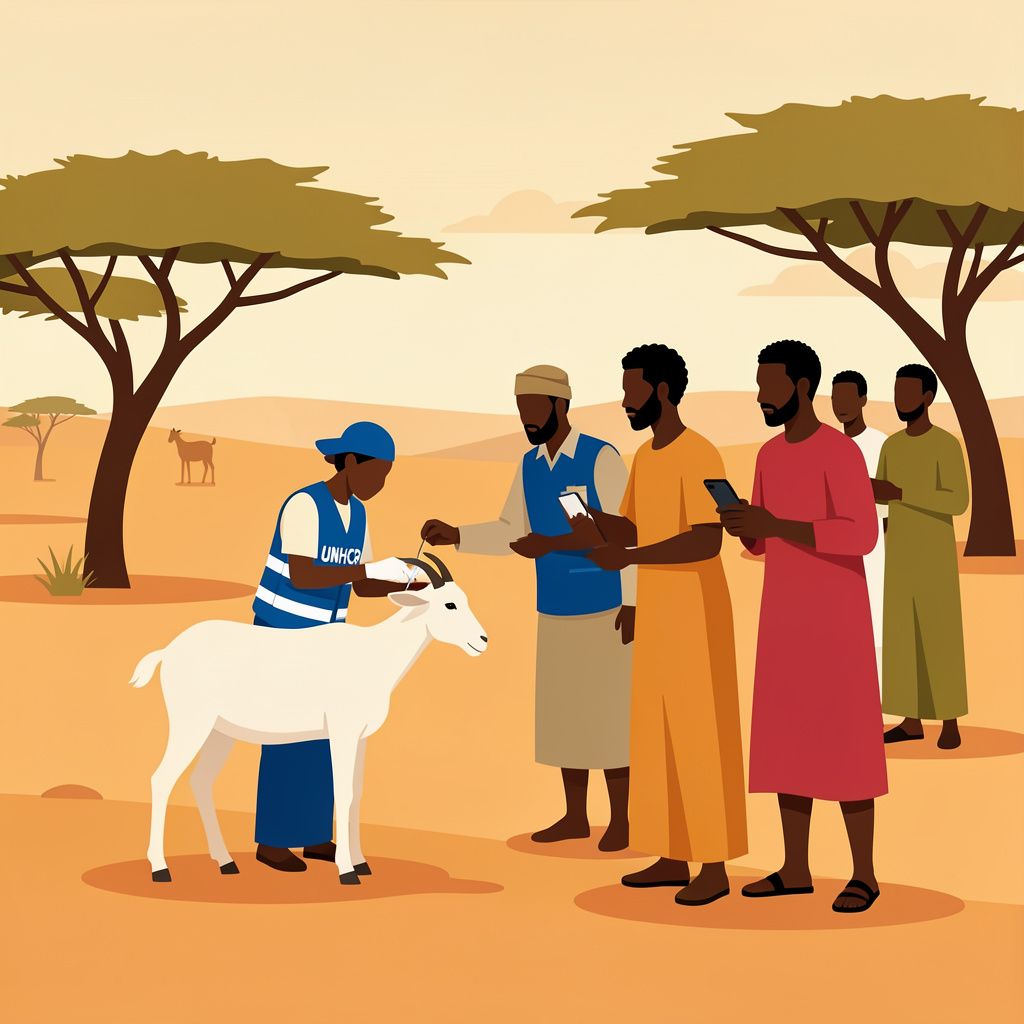
The Turkana County Government and Vétérinaires Sans Frontières Germany (VSF-G) have formally planned to vaccinate 975,000 livestock against transboundary animal diseases in Turkana’s border areas [1]. Of these, 850,000 sheep and goats will receive the Peste des Petits Ruminants (PPR) vaccine, 100,000 goats will receive the Contagious Caprine Pleuropneumonia (CCPP) jab, and 25,000 cattle will be protected against Lumpy Skin Disease (LSD) [1]. The total vaccine supply committed is substantial: the Turkana County Government will contribute 250,000 doses of PPR vaccine and 25,000 LSD vials, whilst the Food and Agriculture Organisation (FAO), through the PLACE project, will supply an additional 600,000 doses of PPR vaccine and 100,000 doses of CCPP vaccine [1]. Together, this means a combined PPR vaccine supply of 850000 doses committed to the campaign [1]. The county will also provide 200 vials of antibiotics, 400 litres of dewormers, and necessary equipment, whilst FAO will contribute a further 2,500 litres of dewormers and 500 litres of acaricides [1].
The PLACE Project: EU Funding, FAO Implementation
The vaccination drive sits within the framework of the PLACE project — a six-month initiative funded by the European Union and implemented by FAO [1]. VSF-G serves as a key partner in the effort, with Project Manager Peter Mutevu outlining the broader ambitions of the collaboration: “VSF-G will protect livestock assets, build pastoral economies, conserve biodiversity, reduce conflict, and enhance peaceful coexistence under PLACE” [1]. FAO Livestock Specialist Dr Daniel Irura reaffirmed FAO’s commitment, stating, “FAO will keep working with County Government and VSF-G to ensure the project succeeds” [1]. On the county government’s side, Chief Officer for Resource Mobilisation, Partnerships and Donor Coordination, Janerose Tioko, described the initiative as consistent with the Governor’s broader strategic agenda: “The partnership of PLACE under VSF-G and other development partners aligns to the Governor’s Agenda on collaboration and strategic partnership” [1]. Tioko added that the county is actively mapping all partners and their areas of coverage, with VSF-G forming a key part of that framework [1].
Vaccination Sites Identified Across the Border Areas
A Participatory Disease Surveillance (PDS) exercise, led by Veterinary Services Deputy Director Dr Erenius Nakadio, was completed prior to 2 June 2026 and identified the specific cross-border vaccination sites for the campaign [1]. These include Loya, Kokilokit, Urum, Nasekona/Lokipoto, Naporoto/Nawontos/Oropoi, Nakitongo/Loreng, Kapetadie, Ngipatio, Loteteleit, Natapar, Natodomeri/Kuras, Liwan, Merikuka, Nakinu/Lowoluk, and Ogelech [1]. The campaign will be rolled out across the sub-counties of Kibish, Lokichoggio, Turkana North, Turkana West, and Loima/Lokiriama [1]. During a planning meeting held on 2 June 2026, Dr Nakadio formally identified these target areas, with officials also raising concerns about the logistics of reaching such dispersed and remote communities [1]. The PLACE project will additionally fund the development of the Longiding water pan in Nanam Ward, further supporting pastoral livelihoods in the area [1].
‘Lokungin’: An Emerging Threat in the Shadows
Whilst the vaccination campaign dominates the headline, a parallel and deeply troubling development was also raised at the 2 June 2026 planning meeting: the emergence of a disease locally known as ‘Lokungin’, which is reportedly decimating livestock by severely affecting the joints of sheep and goats [1]. A recently concluded PDS report revealed a worsening situation of Lokungin specifically at Kapetadie kraals in Nanam Ward, Lokichoggio Sub-County [1]. Veterinary doctors present at the meeting noted, “Emerging from Kapetadie kraals in Nanam Ward, Lokichoggio Sub-County, the community has persistently claimed and reported that the disease is slowly decimating livestock” [1]. In response, the Veterinary Services Department has planned to dispatch a team of investigators to collect samples for confirmatory diagnosis at the Eldoret Veterinary Investigative Laboratory [1]. As of 4 June 2026, no specific date has been confirmed for this sample collection mission [alert! ‘No specific dispatch date was scheduled between 2 June and 4 June 2026 per source’], and Lokungin has not yet been formally classified or confirmed by laboratory analysis [alert! ‘Lokungin has not been confirmed by laboratory diagnosis as of the source date; its precise pathological classification is unknown’].
What This Means for Refugees and Host Communities
For refugees residing in Kakuma and Kalobeyei — many of whom engage in agropastoral activities or keep livestock as a core livelihood strategy — the significance of this campaign is direct and immediate [1]. Transboundary diseases such as PPR and CCPP can spread rapidly across borders, and outbreaks have historically triggered severe food insecurity across this region [GPT]. The proximity of Turkana’s border vaccination sites to refugee settlement areas means that the health of the wider pastoral ecosystem is inseparable from refugee welfare [1]. Livestock Development and Fisheries Chief Officer Hon Peter Ikaru was optimistic about prospects, stating, “This partnership is timely. With the cattle kraals set and adequate pasture, we will secure our livestock and hit our targets” [1]. Refugees engaged in livestock keeping are encouraged to cooperate with vaccination teams when they arrive in their areas [1]. The campaign also reinforces a broader principle: that the food security of host and refugee communities in Turkana is deeply interconnected, and that investments in animal health serve both populations simultaneously [1].