

Mogadishu on the Brink: African Union and UK Demand Calm as Somalia's Capital Descends into Armed Clashes
Mogadishu, 4 June 2026
Armed clashes erupted in Mogadishu on 2 June 2026, drawing urgent calls for restraint from both the African Union and the UK government. The violence directly threatens refugee repatriation prospects for Somalis sheltering in Kenya.
Gunfire in the Streets: What Happened on 2 June 2026
The trouble began on the evening of 2 June 2026, when sporadic armed clashes broke out across two districts of the Somali capital — Hawlwadaag and Cabdicasiis [5]. According to BBC Somali’s reporting, the fighting initially ignited around the home of former Somali Prime Minister Hassan Ali Kheyre, who at the time was meeting with elders from the Murusade clan as part of preparations for a planned peaceful protest scheduled for 3 June 2026 [5]. The situation rapidly escalated into a broader confrontation between government forces and armed groups aligned with opposition political figures [5].
International Alarm: The AU and UK Speak Out
By 4 June 2026, the crisis had drawn condemnation from beyond Somalia’s borders. The African Union Commission issued an official press release on that date calling for ‘utmost restraint’ from all parties involved in the security developments in Mogadishu [1]. The AU, whose organisational structure includes a dedicated Peace and Security Council [1], framed the appeal within its broader mandate to champion stability and integration across the African continent [1]. The call carries particular weight given that the AU Support Mission in Somalia, known as AUSSOM, has been an active stakeholder in Somalia’s security architecture, with a ministerial meeting on the mission’s progress having taken place as recently as 27 April 2025 [1].
What This Means for Somali Refugees in Kakuma and Kalobeyei
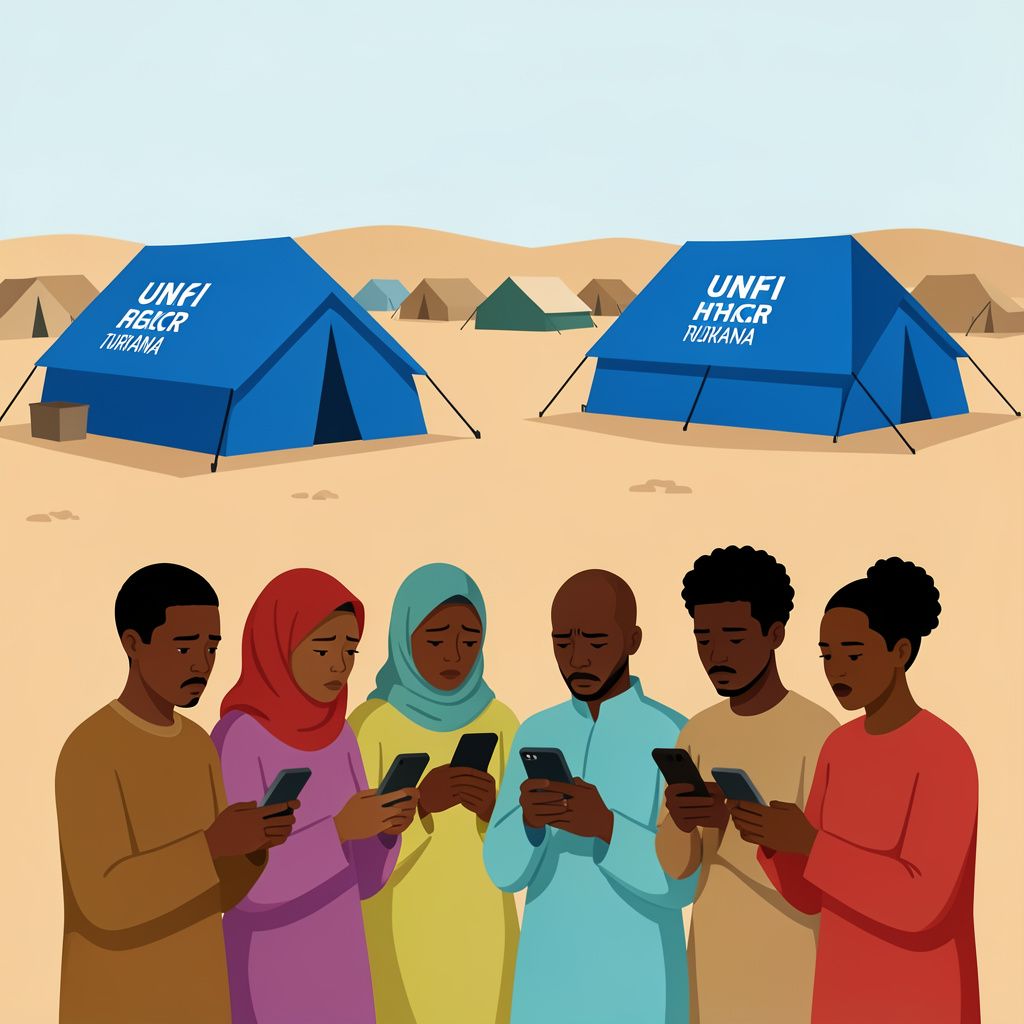
For Somali refugees currently sheltering in Kenya’s Kakuma refugee camp and the adjacent Kalobeyei settlement, the developments in Mogadishu carry an acutely personal dimension. Many residents of these camps originate from Mogadishu and southern Somalia, and retain close family ties to people still living in those areas [GPT]. The prospect of voluntary repatriation — a key pillar of durable solutions for refugees — depends fundamentally on the security situation in areas of return. When armed clashes erupt in the capital, as they did on 2 June 2026, the calculus for a refugee considering whether to go home shifts dramatically [GPT]. A Mogadishu that is unsafe does not meet the threshold for a dignified, voluntary, and sustainable return [GPT].
A Silver Lining: The 9th Livingstone Syllabus Training
Against this difficult backdrop, a more constructive development was also announced on 4 June 2026. The African Union Commission, through its Department of Health, Humanitarian Affairs and Social Development, jointly launched the 9th Livingstone Syllabus Training with the United Nations High Commissioner for Refugees (UNHCR) [2]. The Livingstone Syllabus is an Africa-wide programme designed to strengthen humanitarian governance and improve the standards of refugee protection across the continent [2]. Now in its ninth iteration, the training represents a long-term institutional investment in the capacity of African states to manage humanitarian crises — including the kind of displacement emergency that events in Mogadishu risk exacerbating [2].
The Bigger Picture: Stability Remains the Prerequisite
The events of 2 to 4 June 2026 serve as a stark reminder that humanitarian programming — however well designed — cannot substitute for political stability. The AU’s dual actions on 4 June 2026, issuing a security alert over Mogadishu while simultaneously launching a refugee protection training programme, encapsulate the difficult reality facing the continent: building better systems for managing displacement while the conditions that drive it remain dangerously unresolved [1][2]. Until the armed factions in Mogadishu heed the calls for restraint issued by the AU and the UK on 4 June 2026, the roughly quarter of a million Somali refugees in Kenya [alert! ‘Exact current figure for Somali refugees in Kenya not confirmed in provided sources; figure based on general knowledge’] will continue to weigh a return home against a security environment that remains, at best, deeply uncertain [1][8][GPT].