

Somalia Advances Historic Universal Suffrage Plans Despite Intense Opposition Resistance
Mogadishu, 2 November 2026
Somalia has officially opened party registration for its planned 2027 one-person, one-vote elections, pressing ahead with historic democratic reforms despite fierce opposition pushback over contested constitutional frameworks.
The Electoral Timetable Takes Shape
Somalia’s National Independent Electoral and Boundaries Commission officially launched the political party registration window on Sunday, 1 November 2026, setting a critical benchmark in Mogadishu for the planned 2027 national polls [1][4]. The registration period is scheduled to run for three weeks, concluding on 22 November 2026, which also serves as the final deadline for political parties to submit their parliamentary candidate lists [1][4]. The commission formally announced the measures on 31 October 2026, citing legal backing under Articles 7 and 10 of the National Electoral Law and the Commission Establishment Act [4]. Following the closure of the registration window, official election campaigns are slated to launch on 27 February 2027 [1].
Milestones Toward One-Person, One-Vote
The established electoral roadmap schedules federal parliamentary elections to take place on 15 April 2027, followed exactly one month later by presidential elections on 15 May 2027 [1][6]. This ambitious schedule seeks to transition Somalia away from indirect, clan-based political mechanisms toward a direct, universal suffrage one-person, one-vote system [1][6]. However, the framework faces steep domestic resistance, as key opposition coalitions have rejected both the timeline and the unilateral implementation of universal suffrage rules without prior political consensus on contentious constitutional provisions [1].
Direct Ramifications for Displaced Populations
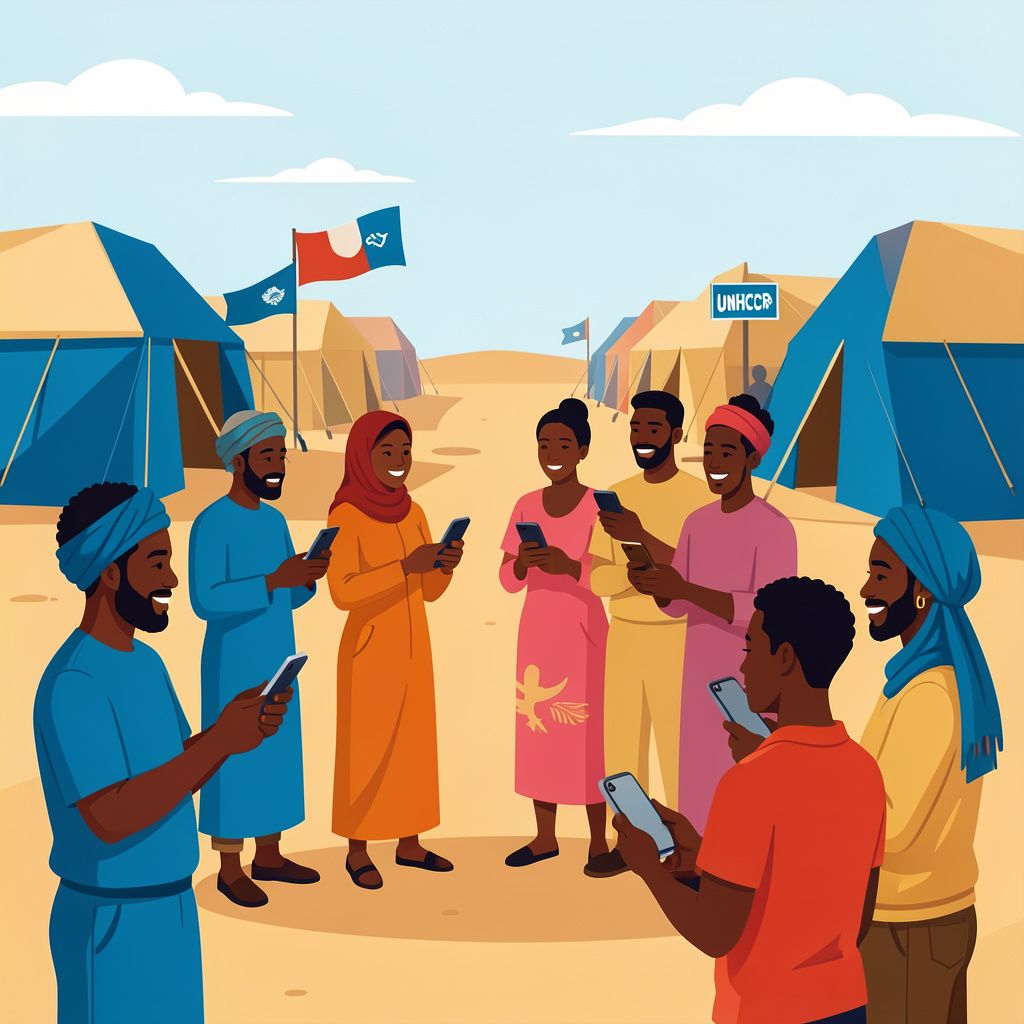
The heightened political friction in Mogadishu carries direct ramifications across East Africa, particularly for hundreds of thousands of Somali refugees residing in Kenya’s Kakuma refugee camp and the Kalobeyei integrated settlement [GPT]. Protracted political disputes in the capital frequently risk reigniting localised instability or security vacuums, which directly influence border controls, cross-border security conditions, and voluntary repatriation programs [GPT]. For both refugee populations and host communities in Turkana County, shifts in Somalia’s political trajectory dictate whether border corridors remain secure or face fresh humanitarian pressures resulting from renewed friction at home [GPT].
Bronnen
- www.hiiraan.com
- www.facebook.com
- en-gb.facebook.com
- horseedmedia.net
- www.facebook.com
- www.instagram.com
- www.facebook.com
- www.facebook.com