

Why African Football Cannot Afford to Abandon Its Premier Commercial Engine
Cairo, 2 November 2026
CAF has reinstated the biennial Africa Cup of Nations, abandoning a four-year cycle after realising replacement tournaments cannot yet match the competition’s vital, self-sustaining financial returns.
Strategic Reversal and the Commercial Engine
On 29 October 2026, the Confederation of African Football (CAF) Executive Committee unanimously reversed its December 2025 resolution to transition the Africa Cup of Nations (AFCON) into a quadrennial tournament [1]. The initial proposal sought to align the continental championship with a four-year cadence beginning from 2028 [GPT]. However, football administrators acknowledged that African football cannot afford to substitute its primary commercial asset with unproven alternatives [1]. The proposed replacement format, the Africa Nations League Pan-African Competition, was designed to take place every two years to fill intermediate scheduling voids, yet financial evaluations indicated that establishing its commercial viability would require an extended period [1][2]. CAF President Dr Patrice Motsepe highlighted that several years of development would be necessary before such an alternative competition could deliver the substantial revenue required to keep continental football globally competitive and self-supporting [1][2].
Calendar Stability and International Dynamics
The shift back to a two-year rhythm addresses both institutional solvency and athlete exposure, although it reintroduces familiar friction with overseas employers [1][2]. Dr Motsepe confirmed that the decision was taken with the interests of African players contracted to overseas clubs in mind [2]. Nevertheless, European sides continue to face the recurring prospect of releasing key squad members mid-season every two years rather than every four [2]. The revised calendar maps the upcoming tournament cycle across the next decade: co-hosted by Kenya, Tanzania, and Uganda in 2027, the subsequent tournaments are slated for 2028, 2031, and 2033 [2][5]. Motsepe noted that the three-year hiatus between the 2028 and 2031 editions accounts for the FIFA World Cup taking place in 2030, adhering to FIFA regulations that prevent continental national team competitions from sharing the same calendar year as the global tournament [2].
Grassroots Resonance and Refugee Camp Cohesion
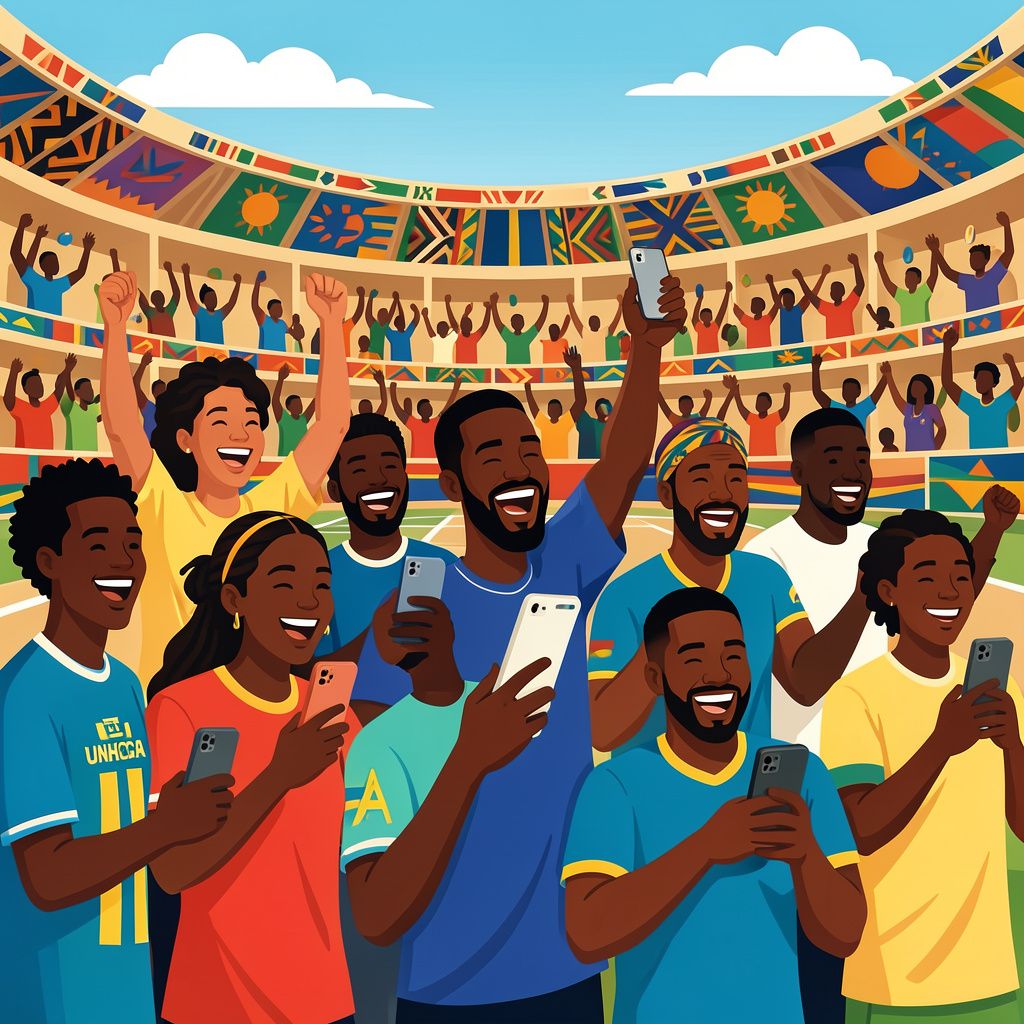
Beyond high-level corporate governance and broadcasting rights, the retention of the biennial cadence delivers profound social and communal dividends across displaced and host populations [GPT]. In settlement hubs such as Kakuma and the Kalobeyei integrated development settlement in northwest Kenya, continental football functions as a cornerstone of communal solidarity [GPT]. Across youth centres and communal viewing screens, the regular staging of AFCON guarantees sustained engagement, uniting diverse diaspora populations through shared sporting ambition [GPT]. For young aspiring athletes residing in these camps, the regular two-year rhythm offers consistent visibility and inspiration, amplifying local grassroots sports initiatives and fostering inter-communal cooperation among young people from across the region [GPT].
Regional Infrastructure and East Africa 2027
The retention of the two-year timetable coincides with rigorous preparations across East Africa for the 2027 showpiece [4][5]. On 31 October 2026, a CAF delegation led by General Secretary Samson Adamu inspected key sporting facilities in Dar es Salaam, including the Benjamin Mkapa Stadium and complementary training sites [4]. Adamu expressed satisfaction with the ongoing infrastructure renovations and training pitch upgrades, noting high confidence in Tanzania’s ability to host international fixtures alongside Kenya and Uganda [4]. The tournament timeline requires national associations to submit final blueprints and renovation schedules by 15 November 2026 ahead of the scheduled competition launch on 1 June 2027 [4]. For local sports programmes, camp youth venues, and regional associations alike, a dependable biennial cycle maintains the infrastructure pipeline, tournament sponsorship visibility, and the enduring vitality of African sporting heritage [1][4].
Bronnen
- www.instagram.com
- sportsmatters.ie
- www.facebook.com
- www.instagram.com
- www.instagram.com
- www.instagram.com
- globalpublishers.co.tz
- www.instagram.com