

Seven Million South Sudanese Face Starvation as UN Food Agency Runs Out of Money
Juba, 2 June 2026
More than half of South Sudan’s 13 million people face severe food shortages, yet the World Food Programme can only reach 4.2 million of the 7.8 million who urgently need help.
A Crisis Hidden in Plain Sight
As of 1 June 2026, the scale of South Sudan’s food emergency has been laid bare in stark figures: more than 56% of the country’s 13 million residents are experiencing severe food insecurity, according to the latest United Nations estimates [1][2]. The World Food Programme (WFP), the UN agency charged with delivering food aid to those most in need, has openly acknowledged that it simply does not have the capacity to meet the demand [1][5]. This is not a crisis that crept up quietly — it is the cumulative result of renewed armed conflict, the collapse of the 2018 peace agreement, devastating flooding, and a catastrophic funding shortfall that has left millions exposed [1][2].
The Numbers Behind the Hunger
The arithmetic of this crisis is as painful as it is precise. WFP spokesperson for South Sudan, Tomson Phiri, confirmed in a statement reported on 1 June 2026 that approximately 7.8 million South Sudanese are in need of humanitarian food assistance [1][2]. Yet due to insufficient capacity and funding, WFP is only able to target 4.2 million of those people — leaving a gap of 3.6 million individuals who are not being reached at all [1][2]. That gap — 3.6 million people — represents a failure of international humanitarian funding on a staggering scale. Even among those who are being targeted, Phiri warned that without additional financing, the agency faces the prospect of making what he described as ‘difficult decisions’ — a diplomatic phrase that, in practice, means further cuts to already inadequate rations [1][2].
Four Counties on the Edge of Famine
Phiri was unambiguous about the gravity of conditions in four specific counties within South Sudan, stating on 1 June 2026 that there is a ‘real risk of famine’ if the situation continues to deteriorate [1][2]. These counties have experienced unrelenting conflict in recent months, and their populations are caught in a double bind: trapped between frontlines on one side and severe flooding on the other [1][2]. In response, WFP has been attempting to deliver assistance through a combination of river transport, road access, and air operations — a logistical operation that is both expensive and precarious [1][2]. The agency’s own spokesperson described staff as ‘working hard to find solutions,’ an acknowledgement that the agency is operating at, or beyond, its operational limits [1].
Global Conflicts Pile Pressure onto a Broken Budget
The funding crisis afflicting WFP in South Sudan does not exist in isolation. The agency has explicitly stated that it is bearing a heavy financial burden as a direct consequence of the ongoing US-Iran conflict and the blockade of the Strait of Hormuz, which has driven up fuel costs sharply [1][2]. According to WFP’s South Sudan operation, these rising fuel prices are generating an additional cost of $3.2 million per month for the agency — on top of an already severe funding shortfall [1][2]. To put that figure in context, WFP has stated it requires $266 million in total to prevent the crisis from worsening further [1][2]. The combination of geopolitical disruption thousands of kilometres away and donor fatigue at home is producing a cascading effect on communities that had no part in creating either problem.
What This Means for Refugees in Kakuma and Kalobeyei
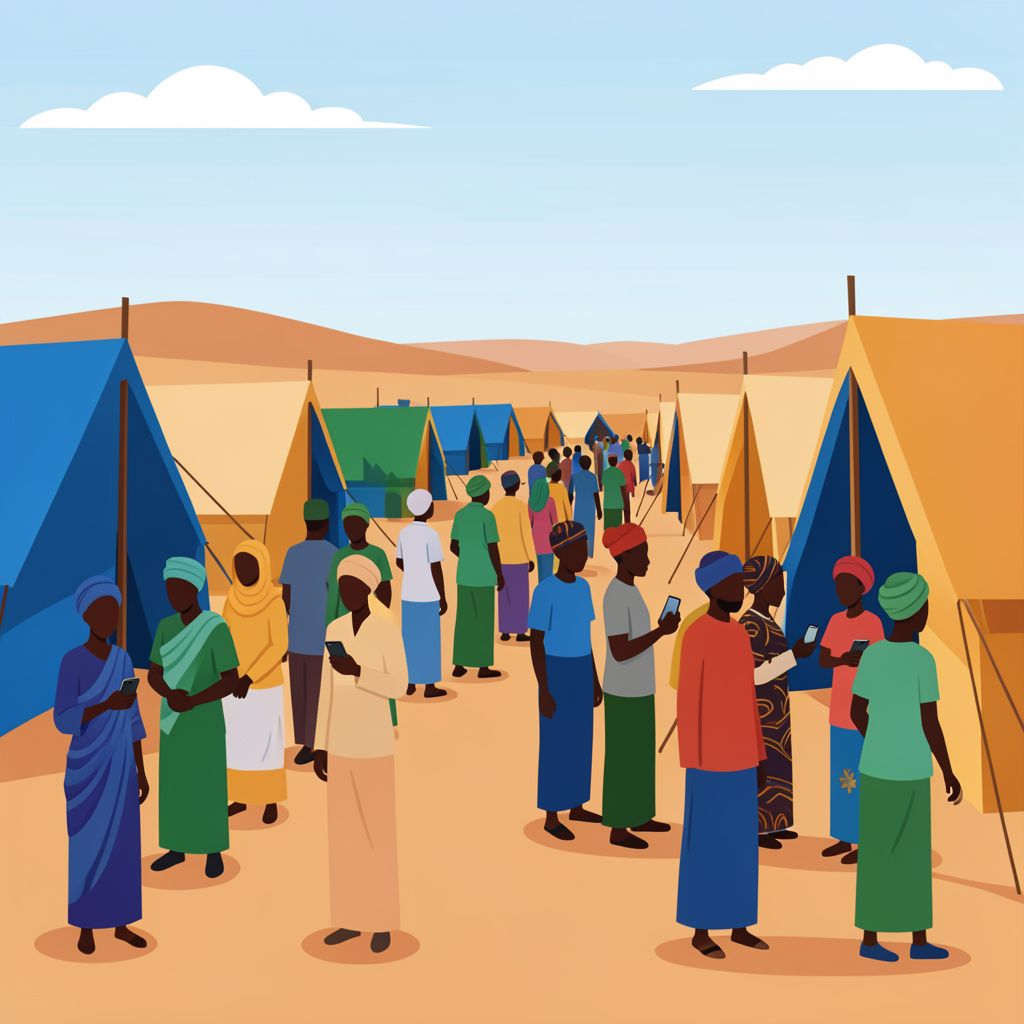
For the tens of thousands of South Sudanese refugees currently sheltering in Kenya’s Kakuma refugee camp and the neighbouring Kalobeyei settlement in Turkana County, the developments reported on 1 June 2026 carry a direct and urgent message: conditions inside South Sudan remain deeply unsafe and wholly inadequate to support return [1][2][GPT]. The fact that WFP — the primary food security backstop for vulnerable populations — has openly admitted it cannot adequately respond to the crisis is a clear indicator that the humanitarian infrastructure inside South Sudan cannot currently sustain a large-scale repatriation. Refugees who may be considering return, whether voluntarily or under pressure, face a country where more than half the population is already struggling to access sufficient food, and where four counties face the genuine prospect of famine [1][2].
A Shared Burden: Turkana Communities Feel the Strain Too
The deteriorating situation inside South Sudan also has direct consequences for the host communities of Turkana County in Kenya, where Kakuma and Kalobeyei are located. Turkana is itself one of Kenya’s most food-insecure regions [GPT], and any increase in the number of South Sudanese fleeing renewed conflict or famine and crossing into Kenya would place additional pressure on local resources, humanitarian budgets, and host community relations [GPT]. The WFP funding crisis does not discriminate by nationality — cuts to food assistance programmes affect both registered refugees and vulnerable Kenyan nationals living alongside them. As the agency faces the prospect of ‘difficult decisions’ on rations inside South Sudan [1][2], the ripple effects of those decisions are likely to be felt across the border in northern Kenya as well. A more acute crisis inside South Sudan today means a more complex humanitarian picture in Turkana tomorrow.
The Road Ahead: $266 Million and a Closing Window
WFP has set out clearly what is needed: $266 million to prevent the situation in South Sudan from deteriorating further [1][2]. As of 2 June 2026, there is no publicly confirmed commitment from donor governments to close that gap [alert! ‘No source confirms donor pledges or funding commitments as of the article date’]. The agency continues to work through rivers, roads, and aircraft to reach those it can [1][2], but the gap between the 7.8 million who need help and the 4.2 million being targeted — 46.154% of those in need going without — is widening, not shrinking. For South Sudan’s people, for the refugees who fled its conflicts, and for the Kenyan communities hosting them, the international community’s response to this funding appeal in the coming weeks will be decisive. The window to prevent famine in at least four counties is open — but it will not remain so indefinitely.