

UNHCR Cash Payments Give Kakuma Refugees the Freedom to Choose How They Survive
Kakuma, 5 June 2026
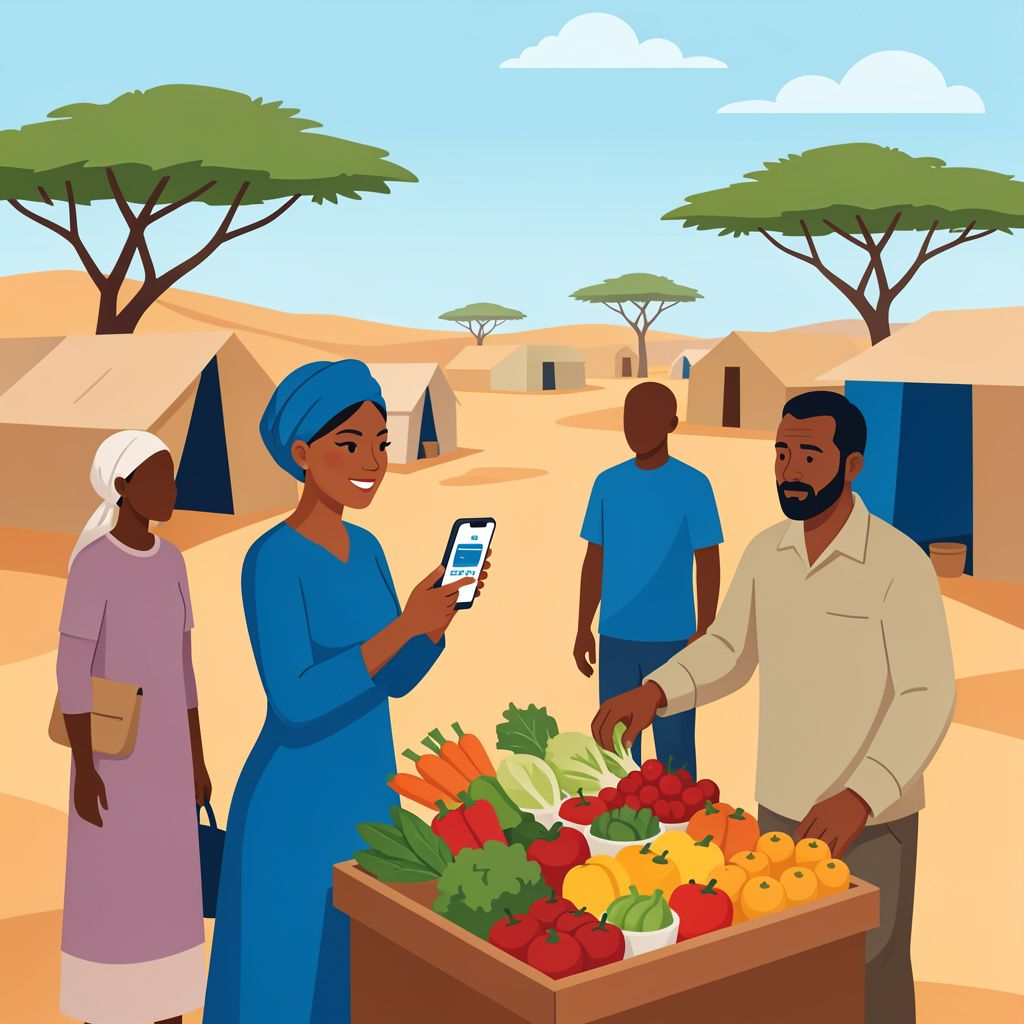
Direct cash transfers to Kakuma refugees are replacing food parcels, letting the most vulnerable — including disabled people and lone women — decide for themselves how to spend vital aid.
A Shift From Parcels to Purchasing Power
For refugees living in Kakuma and Kalobeyei in north-west Kenya, the arrival of cash assistance has changed something fundamental: the ability to make a choice. Rather than receiving a fixed basket of goods, eligible beneficiaries under UNHCR’s Cash-Based Intervention (CBI) programme receive direct financial transfers — money they can spend on whatever their household needs most, whether that is food, medicine, school materials, or shelter repairs [1]. This shift, from in-kind distributions to direct financial support, is not merely logistical. It restores a degree of dignity and autonomy that prolonged displacement can erode [1]. With food ration cuts continuing to affect large numbers of households across the camps [1], the CBI programme has taken on an even more critical role as a financial safety net for those who qualify.
Who Qualifies and How to Apply
The programme does not reach every refugee in Kakuma or Kalobeyei — it is targeted specifically at the most vulnerable registered refugees and asylum-seekers [1]. Priority groups include female-headed households, people with disabilities, the elderly, individuals with mental health issues, and unaccompanied minors [1]. Child-headed households are also supported, either directly or through foster parents, via UNHCR’s child protection partner, Terre des Hommes (TDH) [1]. To find out whether a household qualifies, refugees are encouraged to contact UNHCR Kenya directly or approach their registered implementing partner to check eligibility and understand the registration steps [1]. It is important that household registration records are kept up to date, as the programme relies on accurate registration data to determine who receives assistance [1]. Refugees whose bank accounts have been inactive for more than six months — meaning they have not attended a Proof of Life exercise or a General Food Distribution event — risk having their assistance paused or reverted [1].
How Payments Are Made — and What They Cost
Payments are made through two banking partners: Equity Bank, which operates in both Kalobeyei and Kakuma, and KCB Bank, which operates in Kakuma [1]. Each beneficiary receives a bank account and an ATM card, with the first card provided free of charge by UNHCR [1]. If a card is lost or stolen, a replacement costs KES 500 from either bank [1]. For those banking with KCB in Kakuma, the first over-the-counter or agent withdrawal of up to KES 5,000 is free; ATM withdrawals cost KES 30, and any additional transactions incur a KES 100 fee [1]. For Equity Bank users in Kalobeyei, ATM withdrawals cost KES 36; local over-the-counter withdrawals cost KES 120 (or KES 180 at other branches); and agent withdrawals range from KES 30 to KES 270 [1]. To help offset this, UNHCR adds an extra KES 30 per transfer specifically to cover the cost of the first agent withdrawal [1]. Purchases made directly at merchant Point of Sale (POS) terminals remain free of charge for all beneficiaries [1]. Hygiene cash assistance — set at KES 100 per month, based on the price of an 8-pack of sanitary pads — is provided to households that include women of reproductive age between 11 and 50 years [1]. However, as of 2024, this specific component of the programme was restricted to six months only, due to funding constraints and the growing population across Kakuma and Kalobeyei [1].
Shelter Grants: A Three-Stage Construction Pathway
Beyond monthly cash assistance, UNHCR also runs a ‘Cash for Shelter’ programme in Kalobeyei, designed to help families convert temporary shelters into permanent structures [1]. This is a conditional cash grant, meaning money is released in stages based on verified construction progress — not paid all at once [1]. The total grant amount depends on household size. For households of one to five people, the standard shelter grant totals between KES 153,500 and KES 163,840, plus iron sheet costs calculated at KES 1,266 per sheet [1]. For households of six to ten people, a double shelter grant of KES 280,900 (plus iron sheet costs) is available, or alternatively two standard shelters may be provided [1]. Households of eleven or more people are entitled to a double grant plus one additional standard shelter [1]. Latrine construction receives a separate grant of KES 24,500, disbursed in two instalments: KES 5,500 first, followed by KES 19,000 [1]. Water for construction is supplied by a UNHCR partner at no cost to the beneficiary [1]. The three-instalment structure for shelter grants means families receive funds at each verified stage of building — covering materials, latrine construction supplies, and labour costs — ensuring money is used for its intended purpose [1].
How to Report a Problem or Suspected Fraud
All UNHCR services, including CBI registration and support, are provided free of charge [1]. Any refugee who is asked to pay for registration, or who suspects fraud or misuse of the programme, is encouraged to report it immediately through one of several channels. The Kenya-wide UNHCR helpline can be reached on 1517 [1]. KCB Bank’s dedicated line is 0711 852 534, and Equity Bank’s line is 0763 068 165 [1]. Concerns can also be submitted confidentially to the Inspector General’s Office by fax at +41 22 739 7380 [1]. The broader conversation around who controls humanitarian funding — and whether local organisations should have greater decision-making power over how it is spent — is also gaining momentum. At the AidEx Nairobi conference on 3 June 2026, local organisations and their partners debated whether locally led pooled funds could better address the power imbalance between international actors and the communities they serve [4]. For refugees in Kakuma, however, the immediate priority remains practical: knowing what assistance is available, whether they qualify, and how to access it without losing entitlements through administrative gaps.