

East Africa's Soil Crisis Forces Families to Abandon Farms as Erosion Increases Twenty-Fold
Nairobi, 5 May 2026
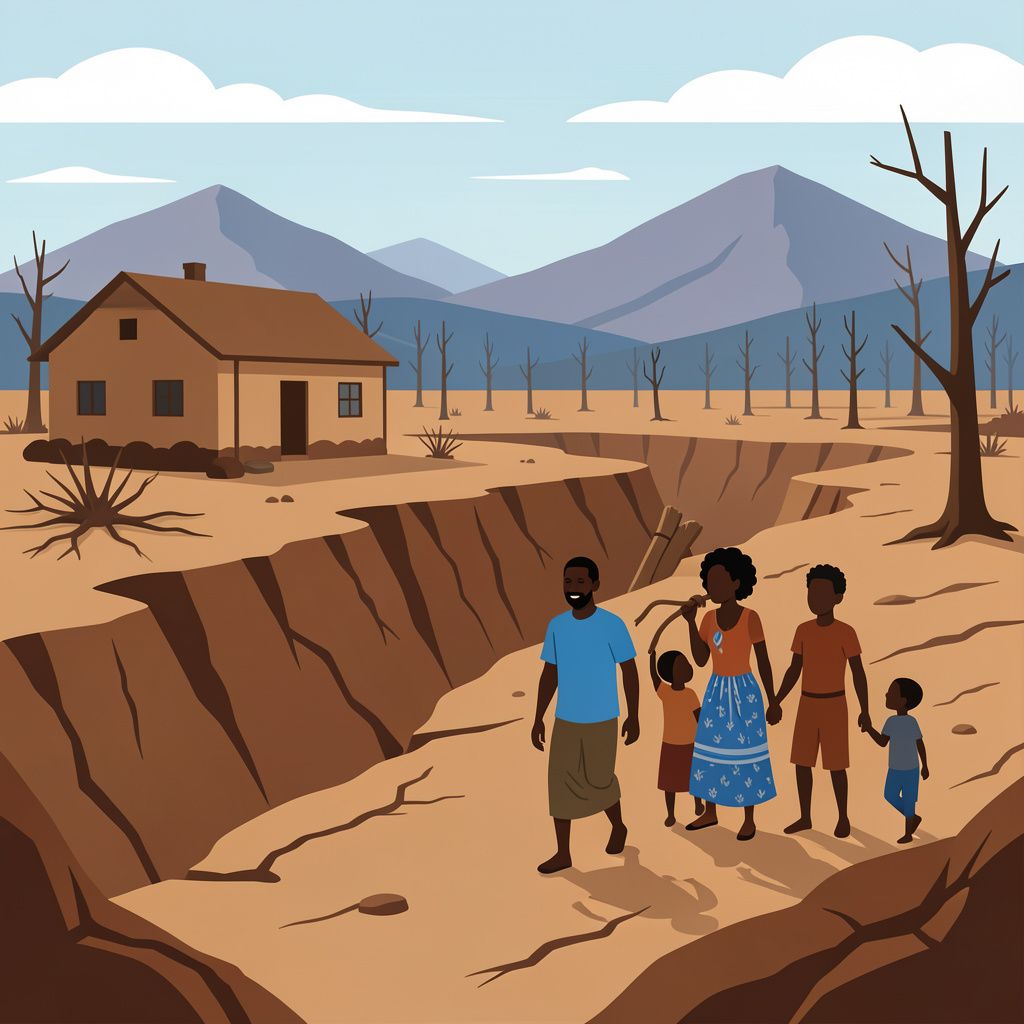
Soil erosion across East Africa has intensified nearly twenty times over the past century, devastating agricultural communities and threatening regional food security. The crisis stems from deforestation, overgrazing, and unsustainable farming practices that leave volcanic highland soils exposed to heavy rainfall. In Tanzania’s northern regions, erosion gullies have grown so massive that bridges costing £76,000 were required for safe passage. With East Africa’s population doubling every twenty-five years, the pressure on fragile land continues mounting whilst traditional conservation methods show promise but require broader implementation.
The Scale of Environmental Devastation
The magnitude of soil loss across East Africa has reached catastrophic proportions, with erosion rates increasing by almost twenty times over the past century due to fundamental changes in land use patterns [1]. This acceleration stems from systematic deforestation for agricultural expansion, followed by intensive overgrazing that stripped away the protective vegetation cover [1]. The region’s volcanic highlands, whilst naturally fertile due to their rich clay, sodium, and calcium content, possess inherently fragile soils that become particularly vulnerable once exposed [1]. Heavy rainfall on these exposed surfaces creates devastating runoff patterns, with soil crusts preventing water absorption and accelerating erosion processes [1].
Population Pressure Intensifies Land Degradation
East Africa’s demographic explosion compounds the environmental crisis, with the population doubling approximately every twenty-five years and creating unprecedented pressure on available land resources [1]. Over half of East Africans are under eighteen years old, indicating continued rapid population growth that will further strain agricultural systems [1]. This demographic reality forces farmers into unsustainable practices, including clearing all vegetation from fields before the rainy season, which leaves soil completely exposed during the most vulnerable period [1]. The combination of population pressure and poor land management has created a vicious cycle where communities must exploit increasingly marginal land whilst losing their most productive agricultural areas to erosion [1].
Infrastructure Costs Mount as Gullies Expand
The physical transformation of the landscape has reached such severity that basic infrastructure requires massive investment to maintain connectivity. In northern Tanzania, gullies have grown so extensively from 2005 to 2025 that bridges costing an estimated $95,000 (approximately £76,000) had to be constructed to allow safe passage [1]. These deep cuts in the landscape, known as gullies, form rapidly and continue expanding at accelerating rates, carrying away not only soil but also water, nutrients, and seeds essential for vegetation recovery [1]. The infrastructure costs represent just one visible measure of the economic impact, whilst the broader agricultural losses remain largely unquantified across the region [1].
Traditional Solutions Show Promise Amid Crisis
Despite the overwhelming scale of degradation, targeted interventions demonstrate the potential for landscape recovery when properly implemented. In Pembamoto, Dodoma, Tanzania, half-moon bunds measuring 5 metres wide, 2.5 metres long, and up to 0.5 metres deep were installed in June 2018 [1]. By June 2024, the treated land had become significantly greener, illustrating how traditional water-slowing techniques can restore vegetation cover within six years [1]. However, whilst communities are beginning to adopt these traditional tools to slow water flow and encourage plant regrowth, the solutions require substantial support from governments and scientists to scale up effectively across larger gullies and broader regional areas [1]. The success of these small-scale interventions highlights both the potential for recovery and the urgent need for coordinated action to address the crisis before it renders vast areas permanently unproductive [1].