

US Senate Passes $70 Billion Immigration Enforcement Bill, Putting Asylum Seekers on Notice
Washington, 5 June 2026
The US Senate voted 52-47 to approve $70 billion in new immigration enforcement funding, on top of $140 billion already allocated in 2025. The bill now heads to the House, expected to vote the week of 7 June 2026.
A Funding Surge Years in the Making
The vote, which took place on 29 May 2026, was hardly smooth sailing. The Senate approved the $70 billion package by a margin of 52 votes to 47, ending months of Democratic resistance that had left Immigration and Customs Enforcement (ICE) and the Border Patrol without dedicated funding since a mid-February 2026 lapse [4]. That lapse itself was triggered, in part, by the political fallout from the fatal shootings of protesters Renee Good and Alex Pretti in Minneapolis in January 2026, an event that deepened partisan divisions over immigration enforcement and made bipartisan negotiation all but impossible [4]. Congress had managed to fund the rest of the Department of Homeland Security (DHS) in late April 2026 with Democratic support, but ICE and Border Patrol remained the unresolved sticking point until the Senate finally broke the deadlock [4].
What the $70 Billion Actually Pays For
The legislation allocates $70 billion specifically to ICE and CBP — covering the hiring of new enforcement agents, expanding deportation operations, and upgrading border security infrastructure [2]. Critically, this $70 billion is not a standalone figure. It is layered on top of the $140 billion that ICE and CBP already received in 2025 under President Donald Trump’s signature ‘One Big Beautiful Bill Act’, meaning the combined allocation to these two agencies across 2025 and the current bill reaches 210 billion dollars [2][4]. The new funding is structured to sustain ICE and Border Patrol operations for the next three years — that is, through to the end of Trump’s current presidential term [4][6]. Senate Majority Leader John Thune (R-S.D.) made clear that delays in passing the bill were not about the core enforcement funding itself, remarking: ‘This would have been done several hours ago if we weren’t having to deal with some of the issues around the fund’ [4].
The Settlement Fund That Nearly Derailed Everything
The bill’s passage was complicated by a deeply contentious side dispute over a $1.776 billion settlement fund, connected to Donald Trump’s IRS tax-leak lawsuit [4]. Senate Republicans voted down an amendment put forward by Senator Bill Cassidy of Louisiana — who lost his own re-election bid in May 2026 — that sought to redirect those settlement funds to law enforcement officers injured during the Capitol attack of 6 January 2021 [4]. Despite acting Attorney General Todd Blanche stating, between 31 May and 2 June 2026, that the administration would not proceed with the so-called ‘anti-weaponisation fund’, President Trump contradicted that position on 3 June 2026, calling the fund ‘very important’ and throwing its status into fresh doubt [4]. Senate Minority Leader Chuck Schumer (D-N.Y.) was sharply critical, warning that opponents were ‘leaving taxpayers to rely on nothing more than a promise from Donald Trump’s personal fixer,’ adding that ‘that is not accountability — that is a permission slip’ [4]. Republican Senator Thom Tillis of North Carolina framed the concern differently, arguing that failure to codify the fund’s termination would leave Republican senators politically exposed ahead of Election Day [4]. The approved bill ultimately excluded the permanent termination of the settlement fund, as well as several other proposed measures: a $1 billion allocation for White House security upgrades, a provision requiring proof of citizenship to vote, and the removal of restrictions preventing the IRS from investigating Trump, his family, or his business [2].
What This Means for Refugees and Asylum Seekers
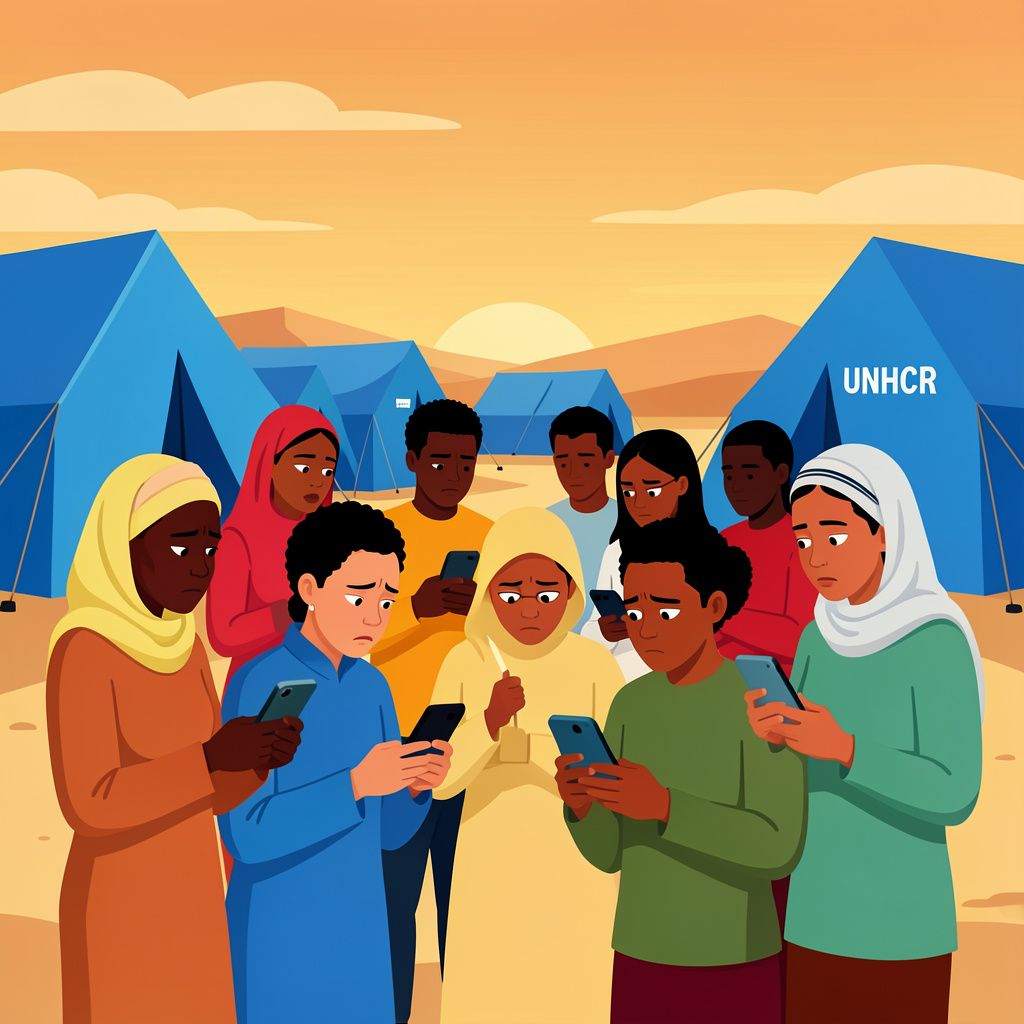
For the hundreds of thousands of refugees and asylum seekers worldwide — including those in camps such as Kakuma and Kalobeyei in Kenya’s Turkana County who are pursuing US resettlement through UNHCR referral pathways — this legislation signals a measurably harder environment [GPT]. The bill contains no new pathways for undocumented migrants already residing in the United States, nor does it include any protections or expanded access for asylum seekers [2]. Its focus is entirely on enforcement: more agents, faster deportations, and stronger border infrastructure [2][4]. With both host and refugee communities in Turkana already navigating profound resource pressures, the prospect of US resettlement has long represented a lifeline for some of the region’s most vulnerable families [GPT]. A political climate in Washington that prioritises enforcement over protection — backed by a combined 210 billion dollars in ICE and CBP funding — means that acceptance rates and processing conditions for resettlement referrals [alert! ‘No specific data on resettlement acceptance rate changes was available in the provided sources; this reflects a general assessment based on the political direction of the legislation’] are likely to tighten further. The bill now moves to the House of Representatives, which is expected to take it up during the week of 7 June 2026 [4][2].
What Comes Next
The House of Representatives is scheduled to begin consideration of the $70 billion enforcement bill from 7 June 2026 onwards [4][2]. Given that the Senate passed the measure with a 52-47 vote and Republicans hold the majority in the House as well [GPT], the bill is widely expected to advance [alert! ‘No explicit House vote count prediction was available in the provided sources’]. For those tracking this legislation from Turkana or elsewhere in East Africa, the coming week will be decisive. If the House passes the bill in its current form, it would move to President Trump for signature, cementing the largest two-year immigration enforcement funding surge in recent American history [GPT]. In practical terms, enforcement-focused legislation of this scale reshapes not just the US border, but the global refugee resettlement landscape — with consequences felt as far away as the dusty plains of north-western Kenya.
Bronnen
- www.kcra.com
- www.facebook.com
- www.sosmediasburundi.org
- www.pbs.org
- www.foxnews.com
- timesofindia.indiatimes.com