

Kenya Relocates Border Exam Centres Amid Rising Security Concerns Near Ethiopia
Moyale, 5 November 2026
Following inter-communal clashes along the Ethiopian frontier, Kenya has relocated national examination centres in Moyale, deploying emergency measures to protect candidates sitting their secondary education certificates safely.
Emergency Relocations Along the Northern Frontier
The Ministry of Education confirmed that two national examination centres situated in Moyale Sub-County, Marsabit County, have been moved to safer alternative sites following heightened security threats along the Kenya-Ethiopia border [1]. Cabinet Secretary for Education Julius Migosi Ogamba announced the directive early this week, citing ongoing communal friction and cross-border security challenges that jeopardise the safety of students and invigilators [1]. The operational adjustment was implemented to preserve the integrity of the 2026 Kenya Certificate of Secondary Education (KCSE) examinations, allowing candidates to sit their papers according to the national timetable without physical disruption [1].
Logistical Provisions and Nationwide Exam Metrics
To ensure equitable access across varying institutional contexts, the Ministry has established targeted arrangements, including provisions for seven candidates writing their examinations from hospitals and five candidates sitting them within correctional facilities [1]. Nationally, this year’s examination exercise encompasses 1,048,355 registered candidates distributed across 10,693 examination centres, representing an extensive logistical deployment across all 47 counties [1]. Basic Education Principal Secretary John Ololtuaa emphasised during the paper dispatch at the Deputy County Commissioner’s offices in Malindi that comprehensive security protocols have been established to prevent disruptions, noting that the national cohort exceeds one million students—the largest candidate turnout recorded so far [7].
Frontier Stability, Transit Routes, and Community Safety
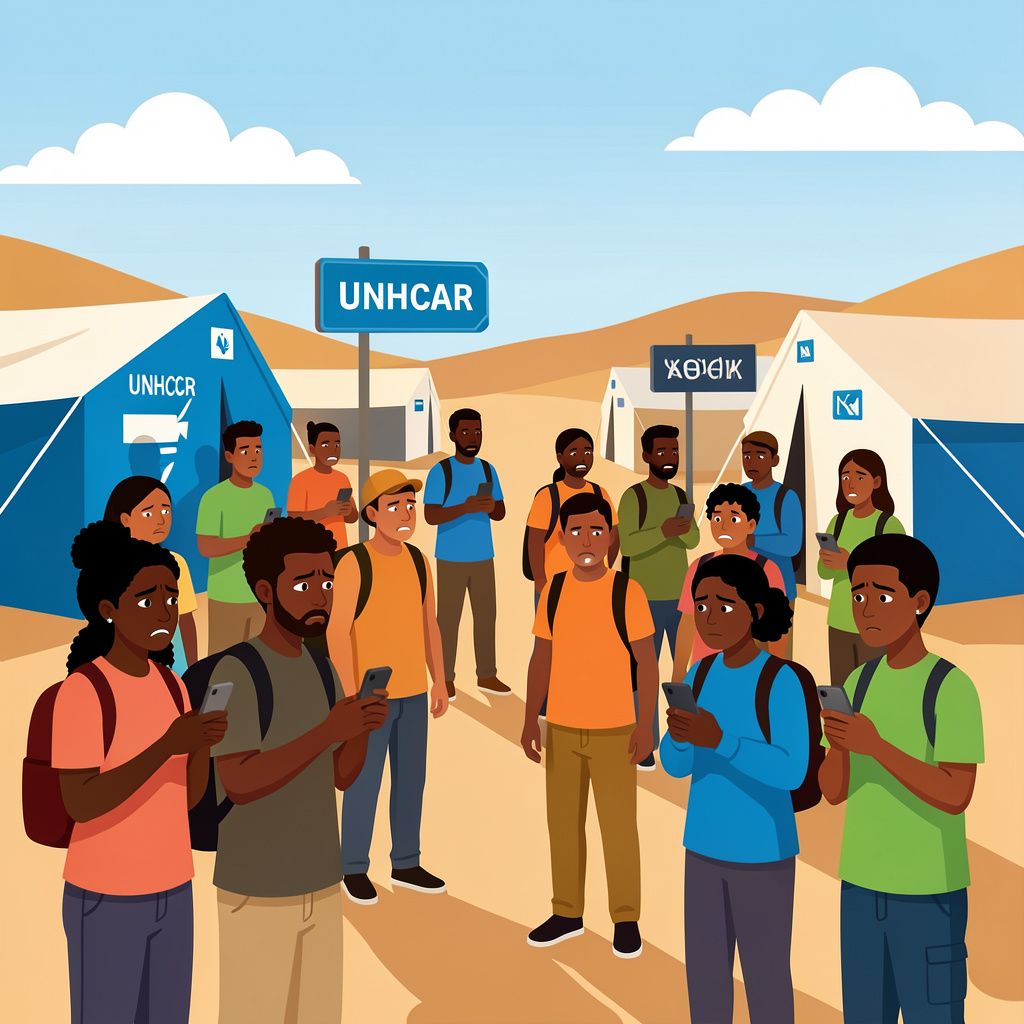
The borderlands spanning Marsabit and adjacent frontier regions continue to endure episodic inter-communal and ethnic clashes, which directly disrupt civilian mobility, safe transit corridors, and essential administrative services [1]. For borderland communities, displaced families, and asylum seekers navigating frontier crossings near Moyale and towards Turkana corridors, localized instability complicates basic humanitarian safety and educational continuity [1][GPT]. By rolling out contingency measures for potential logistics, health, and security bottlenecks, authorities aim to insulate vulnerable frontier populations and students from broader geopolitical friction [1], while educational authorities have further urged the public to report any examination integrity breaches through official toll-free reporting channels [1].
Bronnen
- addisstandard.com
- www.facebook.com
- www.facebook.com
- www.tiktok.com
- www.instagram.com
- www.facebook.com
- www.facebook.com
- www.instagram.com