

Displaced Youth Break New Ground as First Refugee Team Competes at Dakar Games
Dakar, 31 October 2026
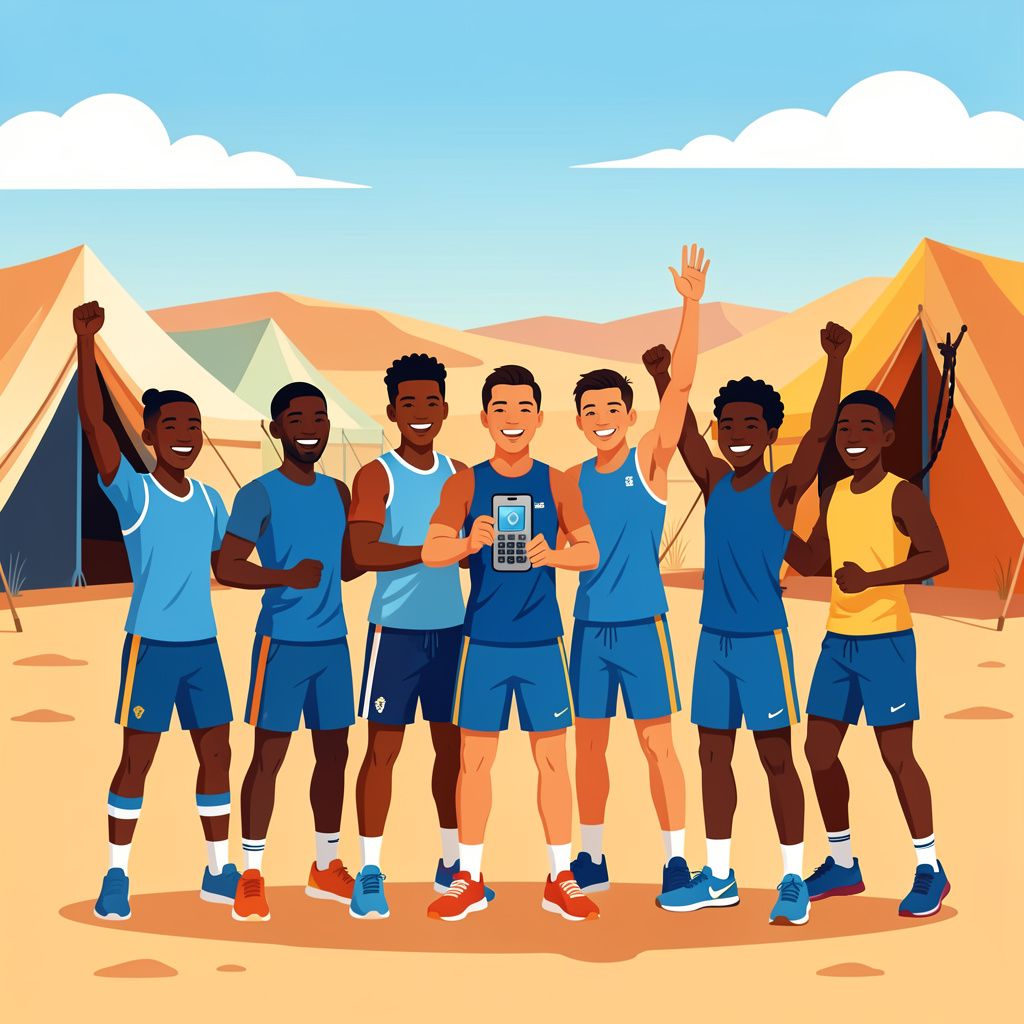
Six young athletes make history today as the first Refugee Olympic Team at the Dakar 2026 Youth Games, Africa’s inaugural Olympic event representing over 117 million displaced people globally.
A Landmark Debut on African Soil
The opening ceremony of the Dakar 2026 Youth Olympic Games marks a historic milestone for international sport as the inaugural Refugee Youth Olympic Team takes the stage [1][3][4]. Running from 31 October to 13 November 2026, the event stands as the first Olympic sporting competition ever staged on the African continent [1][3]. Within this broader gathering of approximately 2,700 competitors [1]—with alternative operational counts reaching nearly 3,000 athletes [4]—the team of six displaced youth embodies a decade of institutional evolution following the debut of the senior Refugee Olympic Team at the Rio 2016 Olympic Games [1][4]. The squad arrived at the Youth Olympic Village in Diamniadio, Senegal, on 30 October 2026 [3], ready to translate years of dedicated preparation into athletic achievement [1][4].
Athletic Discipline and Cross-Border Collaboration
The Dakar 2026 squad features three women and three men based across Africa, competing across athletics, judo, and taekwondo [1]. The roster includes judoka Arno Yafunga Botay in the men’s -55kg division, who found refuge in Kenya’s Kakuma settlement after fleeing the Democratic Republic of Congo at the age of six in 2017 [1][4]. He is joined by taekwondo competitor Lourance in the women’s -49kg category from Kenya, 800-metre runners Clement and Nyataba representing Kenya, and 200-metre sprinters Florence and Rachid based in Uganda [1]. Ahead of the competition, the squad honed their performance during high-altitude training in Kaptagat, Kenya, commencing on 9 September 2026 [4]. The initiative is overseen by the Olympic Refuge Foundation, established by the International Olympic Committee, with foundational support from World Athletics, UNHCR, and the National Olympic Committees of Kenya and Uganda [1].
Mentorship and the Transformative Power of Sport
Guiding the young contingent is Chef de Mission Yiech Pur Biel, a South Sudanese UNHCR Goodwill Ambassador who ran the 800 metres at Rio 2016 after spending his formative years in Kakuma [1][4]. Drawing alongside mentorship from two-time Olympic marathon champion Eliud Kipchoge [1], Biel reflected on the psychological and social journey: ‘Ten years ago, I stood on the Olympic stage as a refugee athlete. Today, seeing a new generation of young refugees follow that same path is incredibly special’ [1][8]. For athletes like 15-year-old Botay, the aspiration extends beyond personal glory to grassroots reinvestment: ‘I think if I achieve [a] gold medal, I can go there and teach them the value of judo’ [4]. Biel emphasised that their representation provides social capital to camp residents: ‘It’s about representing the hope of young people who are living in a refugee camp, who have lost their motivation or their talent’ [4].
Addressing the Scale of Global Displacement
The participation of the squad casts a spotlight on the wider macro-economic and humanitarian realities of forced migration [1][3]. Globally, over 117 million individuals are currently displaced [1]—with regional assessments noting figures approaching 120 million [4]. Sub-Saharan Africa alone hosts 39 million forcibly displaced people [1], while broader continental estimates indicate nearly 45 million [4]. Within sub-Saharan Africa, approximately 13 million are recognised refugees and asylum-seekers [1], and children account for roughly 19.5 million of this vulnerable populace [1]. Assistant High Commissioner for Protection Edem Wosornu stressed that competitive platforms generate vital human capital: ‘Sport creates opportunities, provides a sense of belonging and helps young refugees recover, rebuild their lives and reach their potential. But these opportunities must not end when the Games close’ [1].
Bronnen
- www.unhcr.org
- www.instagram.com
- www.google.com
- www.google.com
- www.google.com
- www.google.com
- www.google.com
- www.google.com