

Worsening Cholera Outbreak Threatens Thousands in Kenya Refugee Settlements
Garissa, 1 November 2026
With nearly half the camp population lacking functional latrines, a surging cholera outbreak in Dadaab has infected 2,786 refugees, severely outstripping local healthcare capacity.
Mounting Influx and Strain on Camp Infrastructure
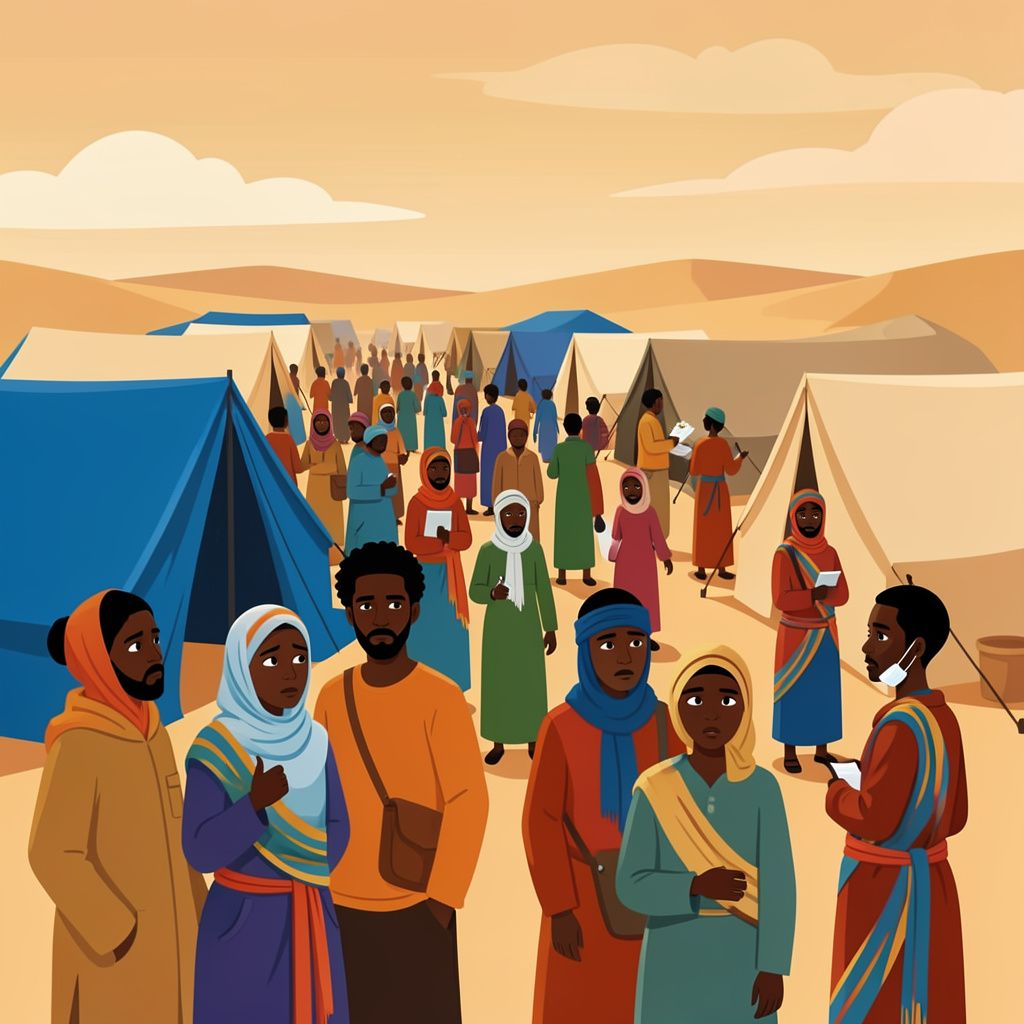
The health situation across the Dadaab refugee complex in eastern Kenya has reached an acute threshold, with an expanding cholera outbreak infecting 2,786 individuals across the settlement network [1]. As of 31 October 2026, the complex shelters over 300,000 residents across three main camps—Dagahaley, Ifo, and Hagadera—most of whom arrived after fleeing severe drought in neighbouring Somalia [1]. Displaced pastoralists, such as Borow Ali Khamis, recount losing all livestock and assets to the drought before seeking sanctuary in Kenya, having to leave family members behind to undertake the journey [1]. With more than 40,000 people reported crossing from Somalia via Ethiopia into Kenya in recent weeks to escape compounding crises [3], the settlement facilities are experiencing critical overextension [1][3].
Mounting Influx and Strain on Camp Infrastructure
This rapid population growth has placed unprecedented pressure on water, sanitation, and hygiene (WASH) resources [1]. Almost half of the overall camp population currently lacks access to functional latrines, leaving open defecation widespread across the settlements [1]. Dagahaley camp alone accounts for a substantial share of the morbidity, reporting 1,120 cholera cases and two deaths since the broader outbreak trajectory began in November 2022 [1]. Compounding regional pressures, heavy coastal downpours on 28 October 2026 caused Tulu and Minjila dams to overflow in Tana River County, displacing 302 households and affecting another 3,156 individuals, intensifying broad-scale hydrological vulnerabilities that exacerbate disease outbreaks in eastern Kenya [2].
Emergency Health Interventions and Field Support Logistics
In response to the escalating epidemiological hazard, Médecins Sans Frontières (MSF) and regional humanitarian partners have mobilised emergency support operations [1]. Teams currently truck 50,000 litres of clean drinking water each day into Dagahaley camp and have constructed 150 communal latrines to serve roughly 9,000 recent arrivals [1]. To curb transmission, the Kenyan Ministry of Health alongside partner organisations has rolled out targeted oral cholera vaccination campaigns accompanied by community health promotion drives [1]. In terms of capacity in Dagahaley, the camp’s recorded caseload represents a noticeable share of total infections across the complex, calculated at 40.201% of all 2,786 recorded cases [1].
Emergency Health Interventions and Field Support Logistics
Refugees and arriving families seeking medical assistance and water allocations can access primary triage and treatment via designated MSF medical outposts and mobile clinics stationed around Dagahaley camp [1]. Field teams provide free rehydration therapy, clinical screenings, and essential hygiene kit distributions without fee requirements [1]. Displaced individuals qualify for communal latrine access and emergency drinking water distributions based on their presence in newly settled blocks, with no formal paperwork deadline imposed for emergency medical care [1][GPT]. However, aid coordinators emphasize that displaced arrivals should report to registration and medical outposts immediately upon arrival to access preventative vaccine doses before regional water points suffer additional contamination [1][GPT].
Capacity Bottlenecks and Resource Reallocation Requirements
Despite preventative medical initiatives, humanitarian coordinators stress that health promotion alone cannot halt pathogen transmission without structural infrastructure capital [1]. Dr Nitya Udayraj, MSF medical coordinator in Kenya, underscored that controlling the outbreak remains unattainable without prioritising resources toward sustained, preventative water, sanitation, and hygiene interventions [1]. Hassan Maiyaki, MSF country director in Kenya, alerted that this represents the worst cholera wave documented in the settlement in five years, warning that any secondary epidemic would decisively outstrip existing camp medical capacity [1].
Strategic Expansion and Long-Term Sanitation Outlook
To mitigate density-driven transmission risks, the Kenyan government has announced plans to reopen a fourth settlement site, Ifo 2, intended to redistribute new arrivals and relieve severe overcrowding across Dagahaley, Ifo, and Hagadera [1]. Humanitarian agencies are urging donors to deliver immediate financial backing to expand piped water delivery networks and build sustainable waste facilities [1]. Without urgent funding to modernise camp sanitation networks, economic and logistical bottlenecks threaten to turn an already severe outbreak into an unmanageable public health emergency across eastern Kenya’s refugee corridors [1].