

Devastating Fire Destroys Vital Commercial Centre in Kenya's Kakuma Camp
Kakuma, 9 November 2026
A blaze in Kakuma camp destroyed thirty stalls, causing losses exceeding 20 million Kenyan shillings. Displaced refugee traders now face economic ruin and fear exclusion from official compensation schemes.
Economic Fallout and Community Resilience in Kakuma III
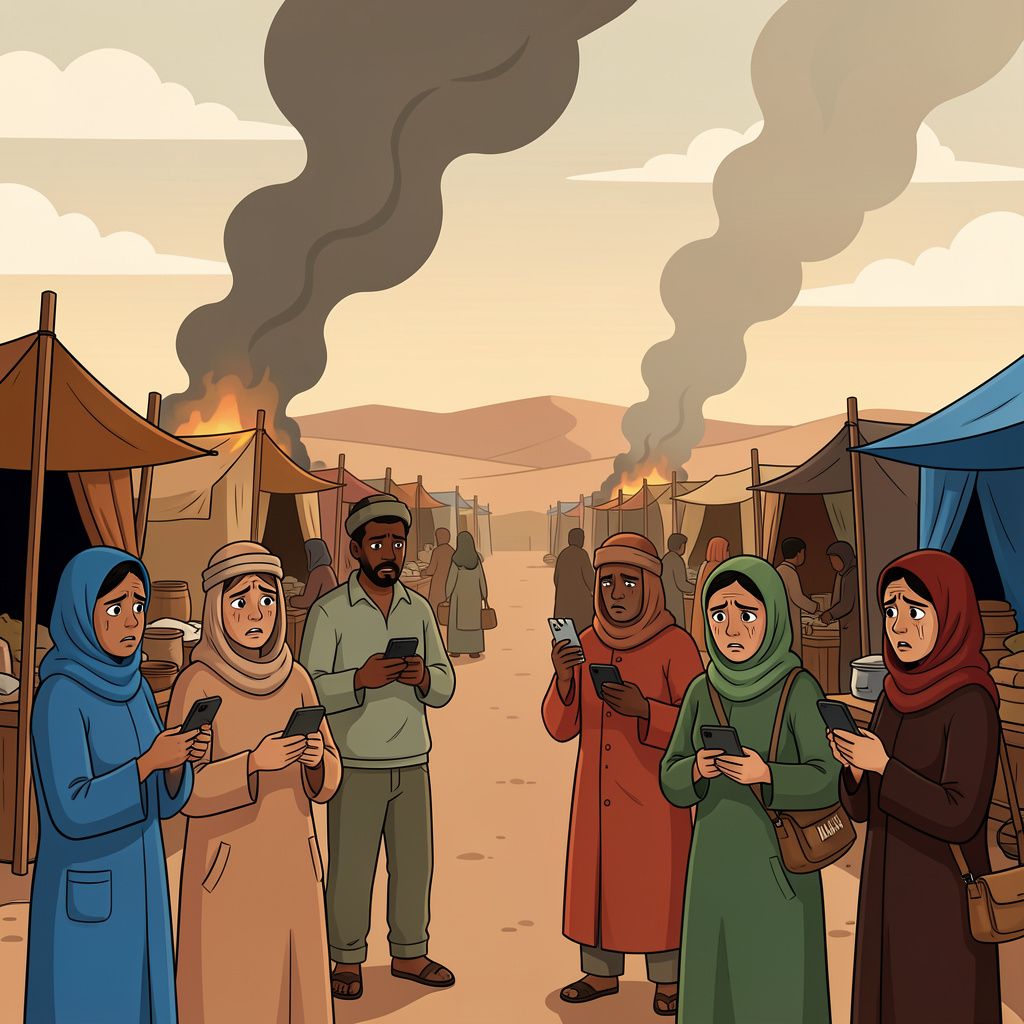
The destructive inferno swept through blocks 14 and 15 at the Kakuma trading centre in Kakuma III, Zone 1, on Friday, 6 November 2026, razing roughly thirty wooden commercial stalls and several adjoining residential structures to the ground [1]. Total inventory, equipment, and structural losses are estimated to surpass 20 million Kenyan shillings, dealing a substantial blow to micro-enterprise networks within northwestern Kenya [1]. The settlement hosts more than 200,000 displaced people, including a population of over 6,000 Burundian nationals, many of whom rely on market commerce as their primary financial lifeline [1]. Local traders swiftly mobilised in the aftermath of the blaze, illustrating remarkable cooperation as neighbours combed through debris to safeguard remaining assets and console families whose livelihoods disappeared within hours [1].
Emergency Response Deficits and Investigation Demands
The overall financial toll escalated rapidly due to prolonged emergency service delays and incidents of looting that took place amidst the smoke and panic on Friday [1]. Official inquiries into the precise ignition point remain inconclusive, though local theories point towards either a combustible gas cylinder explosion or electrical surges stemming from Kenya Power grid fluctuations [1]. Security officials documented that over four separate fires have ignited within the settlement boundary since early 2026, with investigators identifying several previous instances as suspected arson [1]. In response, market vendors and civic groups are actively demanding comprehensive police inquiries, enhanced regional emergency readiness, and substantial structural fire mitigation frameworks to prevent future supply chain shocks [1].
Advocacy for Equitable Recovery and Inclusive Relief
Displaced entrepreneurs, particularly within the prominent Somali business community, express concern over potential disparities in state-led recovery initiatives as municipal authorities register affected host-nation residents [1]. To ensure long-term stability and equitable recovery, affected shopkeepers are directly petitioning the United Nations High Commissioner for Refugees (UNHCR) to intervene and secure restorative business support packages [1]. Despite the immense financial hardship, camp merchants continue to demonstrate notable resourcefulness and mutual assistance, banding together to coordinate informal credit circles and rebuild market stalls [1].
Bronnen
- www.sosmediasburundi.org
- www.facebook.com
- www.youtube.com
- www.facebook.com
- www.instagram.com
- www.facebook.com
- www.facebook.com
- www.facebook.com