

Displaced Youth Drive Breakthroughs in Classroom Access for Young Mothers
Kakuma, 9 November 2026
Defying restrictive cultural norms, a grassroots youth coalition in Kenya’s Kakuma camp has successfully returned 170 young mothers to formal classrooms, transforming educational access and unlocking future human capital.
Grassroots Leadership Reclaims Lost Potential
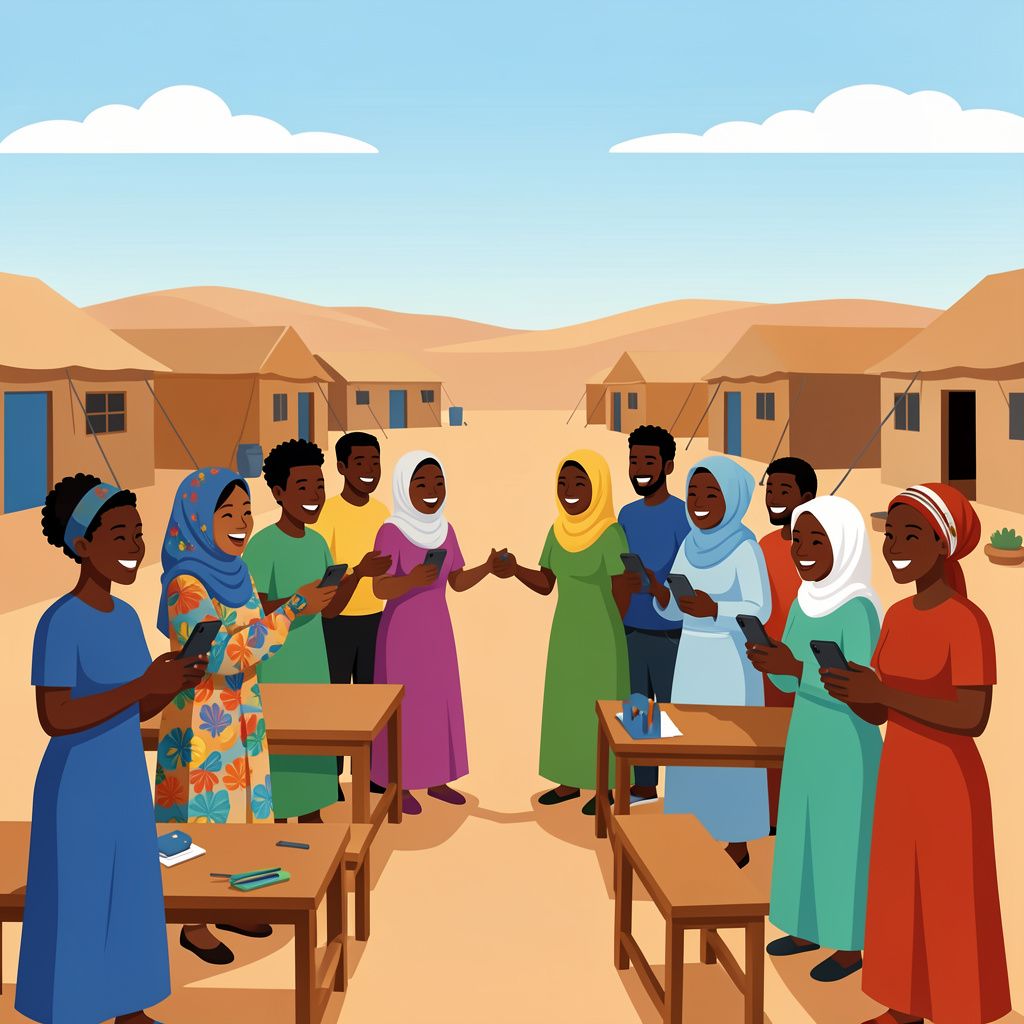
In the semi-arid expanse of Turkana West, educational exclusion frequently compounds the hardships of forced displacement, particularly for adolescent mothers [GPT]. To counter this socio-economic attrition, youth residing in Kenya’s Kakuma refugee camp formed M.I.L.E.S., an initiative standing for ‘Mothers In Learning, Empowerment, and Support’ [1][2]. Co-founded by Vision Secondary School student Abraham Leek Tor alongside fellow displaced youth, the initiative directly tackles the structural hurdles of early pregnancy and child marriage that systematically truncate schooling for girls aged 12 to 19 [1]. Under their rallying slogan, ‘Together, We Can Change HER Story’, the grassroots collective has already guided 170 girls and adolescent mothers through targeted training sessions designed to build confidence, equip them as peer ambassadors, and dismantle traditional stigmas [1][2].
Institutional Synergy and Community Pathways
The inception of M.I.L.E.S. stems from broader community empowerment programmes initiated under the Jesuit Refugee Service (JRS) EAGLE-K Project [2]. Through its Gender Transformative Education (GTE) framework, the project established the Gender Responsive Education (GRE) Youth Club in Kakuma to train displaced young people in equality and advocacy [2]. Former school president Nyajuok William Deng co-founded the group with fellow youths after witnessing her cousin experience teenage pregnancy, observing that adolescent girls in both refugee and host communities face heavy social barriers and limited support networks [2]. Deng affirmed that the club transformed her confidence: ‘Through MILES, we are supporting girls and young mothers to continue their education and build a better future. Together, we can change her story’ [2].
Scaling Impact and Formalised Reintegration
From an initial cohort of 7 dedicated members comprising 4 girls and 3 boys, the core organising body has expanded to 15 active members, including 12 girls and 3 boys, representing an absolute gain of 8 members [2]. Their operational model combines community identification with institutional negotiation to secure formal classroom re-entry [1]. After successfully reintegrating a young mother who had left school into a neighbouring secondary facility, the team identified 5 additional young mothers seeking re-enrolment and coordinated their return alongside school principals and the Jesuit Refugee Service, bringing the direct re-enrolment count in this secondary pipeline to 6 students [1]. To solidify this pipeline into a permanent institutional framework, M.I.L.E.S. is currently completing formal registration as a community-based organisation [1].