

Somalia's Former President Challenges Government Over Protest Restrictions
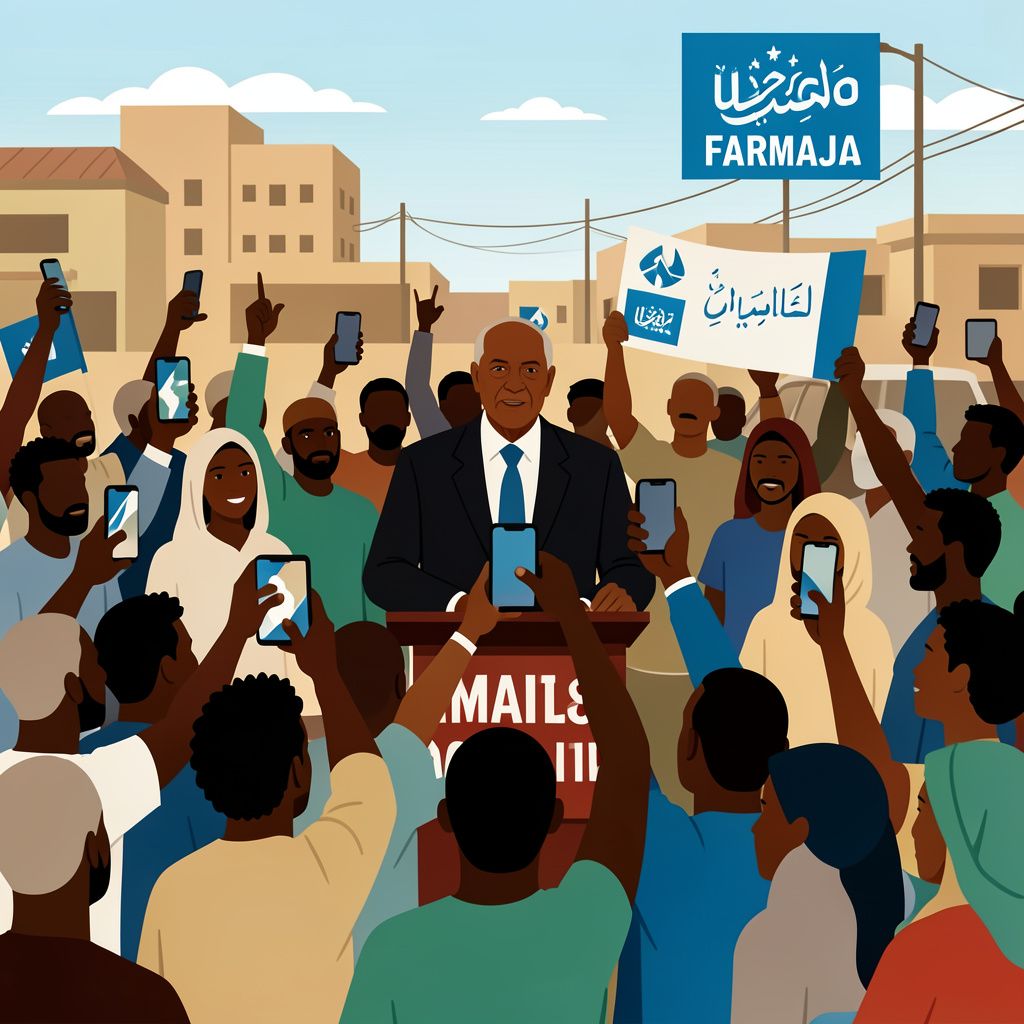
Mogadishu, 10 May 2026
Former President Mohamed Abdullahi Farmaajo has accused Somalia’s current government of attempting to suppress planned protests in Mogadishu, warning against violations of constitutional rights to peaceful assembly.
Constitutional Rights Under Scrutiny
On Saturday, 9 May 2026, former Somali President Mohamed Abdullahi Farmaajo delivered a sharp rebuke to the current federal government, accusing it of attempting to restrict and suppress planned protests in Mogadishu [1]. Farmaajo warned that limits on peaceful demonstrations could violate citizens’ constitutional rights, marking a significant escalation in tensions between the opposition and President Hassan Sheikh Mohamud’s administration [1]. The former president’s intervention comes as Somalia grapples with mounting public discontent over government policies affecting displaced populations and land ownership disputes.
Protest Plans Amid Rising Tensions
The demonstrations, scheduled for today, Sunday 10 May 2026, centre on public anger over forced evictions, alleged corruption, political bias, and disputed land ownership [1]. Government authorities have designated Konis Stadium as the official protest site, whilst opposition groups have planned rallies across multiple locations throughout Mogadishu [1]. The opposition has prepared its own security teams, raising significant concerns about potential clashes with government forces [1]. This organisational split highlights the deep mistrust between the current administration and opposition figures, with residents of the capital expressing fears about armed confrontations.
Government Response and Security Concerns
President Hassan Sheikh Mohamud’s government maintains that protests must be regulated to protect public order and security [1]. However, tensions have escalated considerably in Mogadishu due to the planned demonstrations, with local residents expressing anxiety about potential violence [1]. The government faces mounting pressure from opposition groups regarding constitutional changes, the electoral process, and controversial land policies [1]. Former President Farmaajo specifically criticised what he termed “the outgoing government of President Hassan Sheikh, whose term is ending,” calling on authorities to “refrain from any action to suppress Somali citizens who are peacefully demonstrating to express the immense suffering they have experienced under his leadership” [1].
Impact on Displaced Communities
The protests have particular significance for displaced families, as Somalia’s opposition is using the demonstrations to defend those affected by forced evictions [1]. Former Prime Minister Hassan Ali Khaire has strongly opposed the government’s housing project, questioning why authorities have failed to build homes for the 300,000 people they have displaced [alert! ‘number sourced from Instagram post in Somali language, translation accuracy uncertain’] [3]. The situation reflects broader concerns about the government’s handling of internal displacement, which directly affects both host communities and refugees who have sought shelter in Mogadishu. These developments could potentially impact regional stability and cross-border movement patterns, as political tensions in the capital often influence security conditions throughout southern Somalia.