

Iran Strikes US Warship as Military Standoff Escalates in Strait of Hormuz
Tehran, 4 May 2026
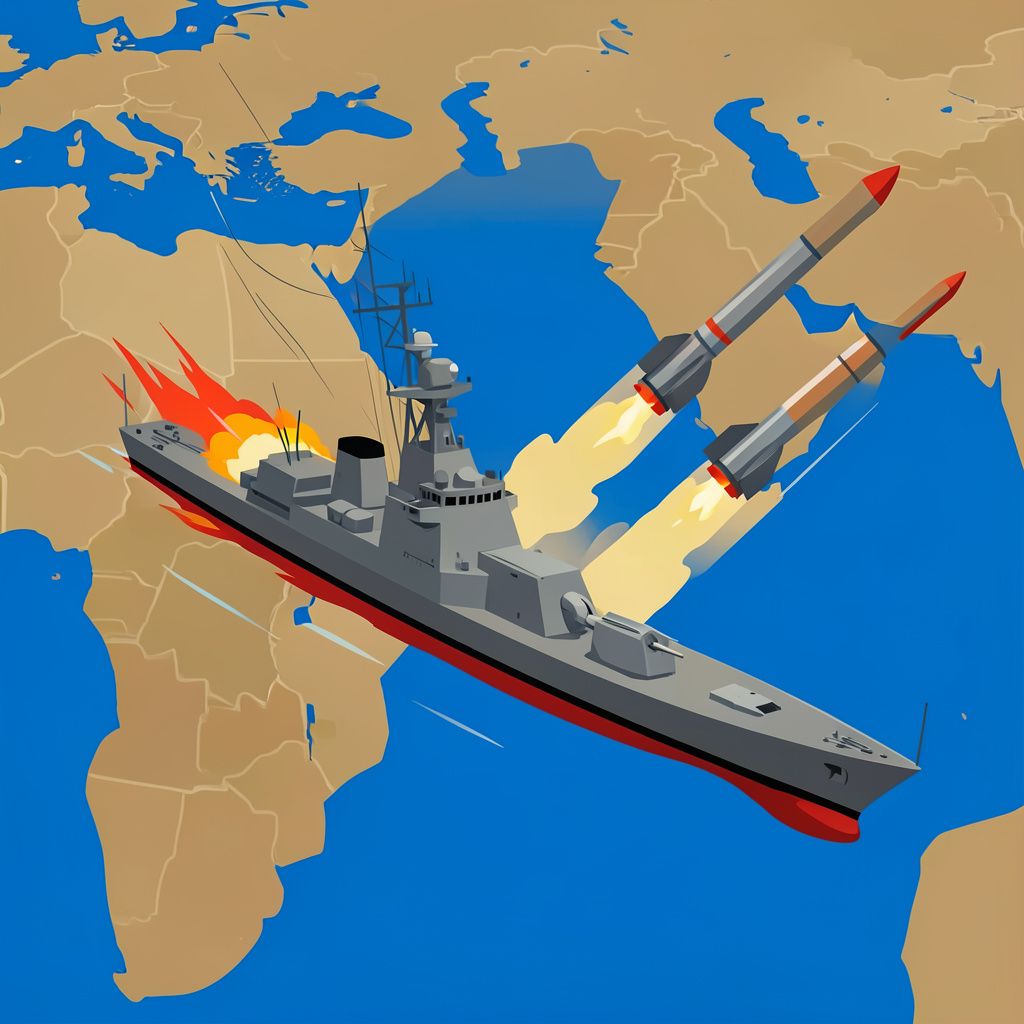
Iranian forces reportedly hit a US warship with two missiles near the Strait of Hormuz on 4 May 2026, as tensions reach breaking point over President Trump’s ‘Project Freedom’ operation to rescue 20,000 stranded sailors. The strike occurred as Iran warned it would attack any foreign forces entering the strategic waterway that carries one-fifth of global oil supplies. With oil prices already up 50% due to Iran’s blockade since February’s US-Israeli attack, this latest escalation threatens to disrupt global energy markets further and compound humanitarian crises worldwide.
Missiles Strike US Naval Forces
This dramatic escalation builds on previous reporting that oil prices had already surged to two-year highs as President Trump considered military action against Iran (https://kakuma.bytes.news/63e787e-oil-prices-Iran-tensions/). The Iranian Fars news agency, which is closely affiliated with Iran’s Islamic Revolutionary Guards Corps, reported on 4 May that two missiles struck a US frigate near Jask Island in the Gulf of Oman after the warship ignored warnings from Iran’s navy [1][2]. However, this attack remains unconfirmed by US officials or independent sources [2]. The reported strike occurred as the warship attempted to enter the Strait of Hormuz, marking the most direct military confrontation between the two nations since the conflict began on 28 February when US and Israeli forces launched attacks that killed Iran’s former supreme leader [3][4].
Project Freedom Launches Amid Threats
Despite Iran’s warnings, the US proceeded with ‘Project Freedom’ on 4 May as planned, deploying guided-missile destroyers, over 100 land and sea-based aircraft, and 15,000 service members to assist stranded vessels [1][3]. President Trump had announced the operation on 1 May, describing it as a ‘humanitarian gesture’ to guide ships safely out of the waterway where approximately 20,000 sailors have been trapped since Iran’s blockade began [3][5]. Major General Ali Abdollahi, head of Iran’s unified command, issued a stark warning that ‘any foreign armed forces, especially the aggressive US army, will be attacked if they intend to approach and enter the Strait of Hormuz’ [1][4]. Iran’s foreign ministry spokesperson Esmail Baghaie reinforced this position, stating that ships must coordinate with Iranian authorities as Iran remains the strait’s ‘guardian and protector’ [1].
Economic Pressure Mounts on Global Markets
The Strait of Hormuz crisis has created severe economic disruption, with oil prices rising by 50% or more since Iran’s blockade began cutting off approximately one-fifth of the world’s oil and liquefied natural gas shipments [2][3]. The waterway also handles about one-third of global fertiliser trade, along with vital Middle Eastern imports including food, medicines, and technological supplies [1]. The US has maintained its own counter-blockade of Iranian ports since 13 April, with US Central Command reporting that 49 commercial ships have been turned back as of 3 May [3]. Treasury Secretary Scott Bessent stated that Iran has acquired less than $1.3 million in tolls from the crisis, suggesting the economic pressure may force Iran to shut oil wells ‘in the next week’ [3].
Diplomatic Efforts Continue Amid Military Escalation
Despite the military confrontation, diplomatic channels remain active with Iran confirming on 4 May that it is reviewing a US counterproposal to end the war, delivered through Pakistan [4]. Iran’s 14-point peace proposal calls for the US to lift sanctions, end the naval blockade, withdraw forces, and cease all hostilities including Israel’s operations in Lebanon [3]. However, Iran’s foreign ministry stated on 4 May that the US must abandon its ‘excessive demands’ for progress to be made [4]. The humanitarian impact extends far beyond the immediate region, with the Joint Maritime Information Centre maintaining a ‘critical’ security threat level in the Strait of Hormuz and advising mariners to coordinate with Omani authorities [4]. As supply chain disruptions continue affecting global food, fuel, and aid systems [6], the standoff threatens to exacerbate humanitarian crises worldwide, particularly impacting refugee communities dependent on international assistance.
Bronnen
- www.the-star.co.ke
- www.independent.co.uk
- www.npr.org
- www.theguardian.com
- www.bbc.com
- www.globalissues.org