

America Withdraws 5,000 Troops from Germany After Diplomatic Row Over Iran Strategy
Berlin, 2 May 2026
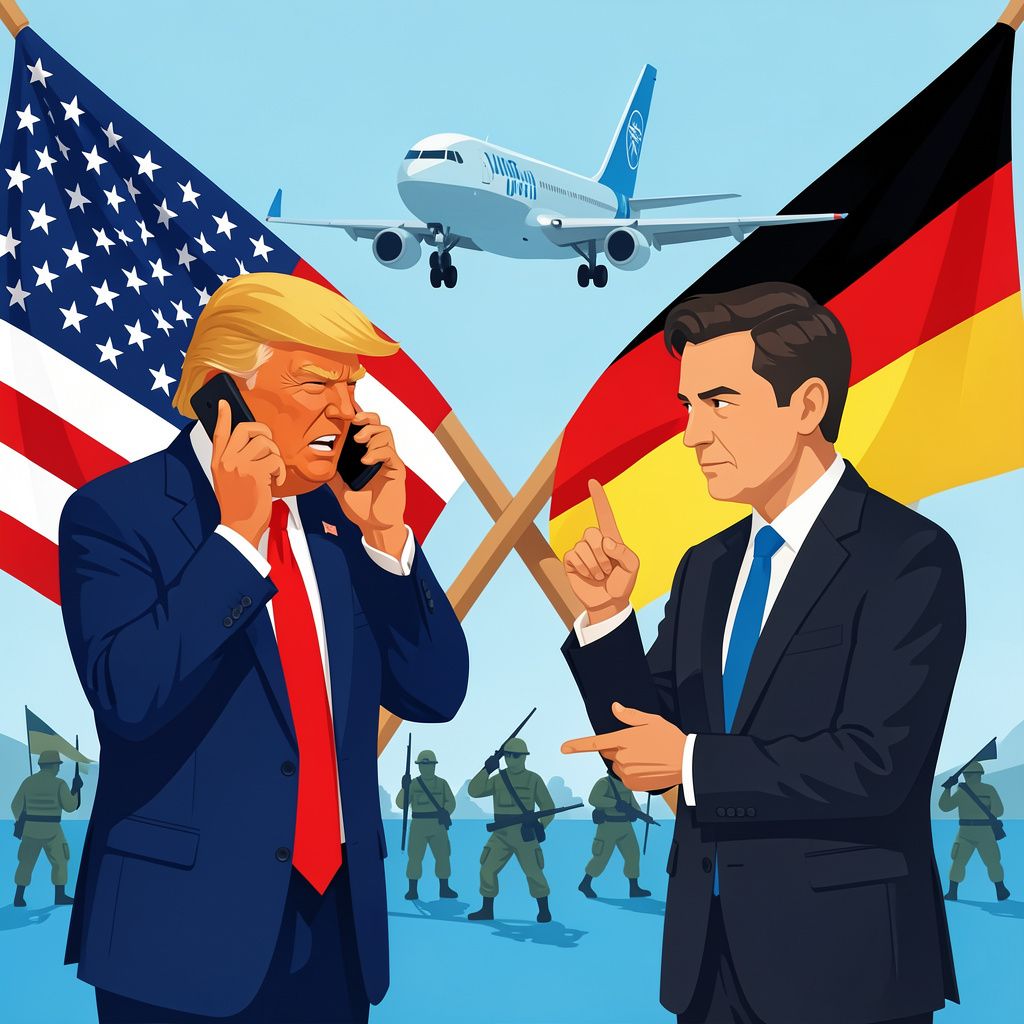
The United States will remove 5,000 military personnel from Germany over the next six to twelve months following a public spat between President Trump and German Chancellor Friedrich Merz regarding Iran policy. The withdrawal was triggered after Merz accused America of lacking strategy against Iran and suggested the nation was being ‘humiliated’ by Iranian leadership during nuclear negotiations. Trump responded on social media, claiming Merz ‘doesn’t know what he’s talking about’ and criticising Germany’s economic performance, whilst also threatening troop reductions in Italy and Spain for their reluctance to engage in the Iran conflict.
Scale and Timeline of Military Drawdown
The Pentagon has confirmed that the withdrawal will affect approximately 13.889 per cent of America’s current German deployment, reducing the force from more than 36,000 active duty troops as of December 2025 [1]. Pentagon spokesman Sean Parnell stated that the Defence Department expects the withdrawal to be completed over the next six to twelve months [1]. This reduction represents a significant shift in America’s largest European military deployment, which has historically been concentrated at installations such as Ramstein Air Base [1].
Diplomatic Tensions Escalate Over Iran Strategy
The military decision stems from comments made by Chancellor Merz earlier in the week of 30th April 2026, when he told university students that Americans ‘clearly have no strategy’ regarding Iran [1]. Merz further escalated tensions by suggesting that the ‘entire nation’ was being ‘humiliated’ by Iranian leadership during ongoing nuclear negotiations [1]. Trump’s response on 29th April 2026 was swift and pointed, taking to Truth Social to claim that Merz thinks it is ‘OK for Iran to have a Nuclear Weapon’ and ‘doesn’t know what he’s talking about’, whilst adding that ‘No wonder Germany is doing so poorly, both Economically, and otherwise!’ [1].
Broader European Military Implications
Trump’s criticism extended beyond Germany, targeting Italy and Spain for their reluctance to engage in the Iranian conflict. On 29th April 2026, Trump stated that ‘In all cases they said, I don’t want to get involved’, and suggested potential troop withdrawals from these nations as well [1]. The US maintains approximately 12,000 troops in Italy and 10,000 in the United Kingdom, making these deployments significant components of NATO’s European security architecture [1]. This follows a pattern of American military reductions in the region, as the US decided to reduce its troop presence in Romania in 2025 [1].
German Defence Spending and Historical Context
Despite the diplomatic row, German Defence Minister Boris Pistorius has emphasised that ‘the presence of American soldiers in Europe, and particularly in Germany, is in our interest and in the interest of the US’ [1]. Germany is positioning itself to significantly increase military spending, with projections showing defence expenditure reaching €105.8 billion (£91 billion) in 2027, representing 3.1 per cent of GDP [1]. This marks a substantial commitment to NATO’s defence spending targets. The current withdrawal echoes previous tensions, as Trump had previously proposed moving 12,000 US troops from Germany in 2020, though that plan was blocked by Congress and later reversed by President Joe Biden [1].