

South Sudanese Refugees Navigate Kenya's Confusing October Holiday Changes
Eldoret, 11 May 2026
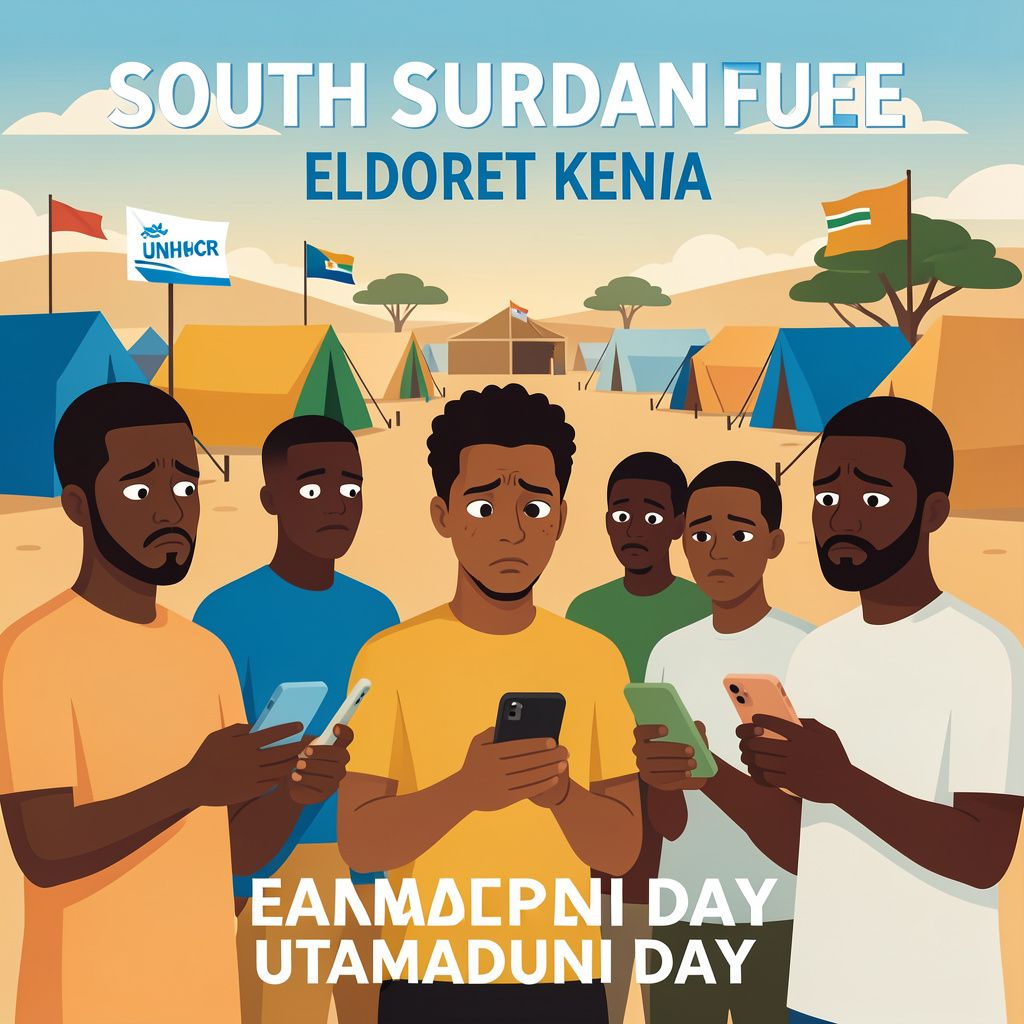
South Sudanese refugees in Eldoret struggle to understand Kenya’s October 10th national holiday, which has transformed from Moi Day to Huduma Day to Utamaduni Day since 2010. The holiday’s multiple name changes reflect Kenya’s complex political evolution, but leave refugees—comprising nearly 25% of Kenya’s displaced population—marking the day in silence due to inadequate guidance from authorities. With Kenya hosting Africa’s second-largest refugee population and Eldoret’s Department of Refugee Services earning a reputation as ‘the invisible department’ due to its poor accessibility, cultural integration remains challenging for the 2,746 refugees in the city seeking to understand their host country’s traditions.
A Holiday in Constant Transition
The confusion surrounding October 10th stems from a decade-long series of political renamings that reflect Kenya’s evolving national identity. Originally established as ‘Moi Day’ to commemorate President Daniel Torotich Arap Moi’s ascent to power, the holiday became increasingly controversial due to its association with ‘one-man party rule’ [1]. Following the 2010 constitutional amendments, mass dissatisfaction with the holiday prompted calls for change [1]. Rather than eliminate the public holiday entirely, Kenya’s Supreme Court ruled in 2017 that the day should be renamed instead of removed [1]. President Uhuru Kenyatta’s government subsequently transformed Moi Day into ‘Huduma Day’—meaning ‘service’ in Swahili—before making yet another change in 2020, renaming it ‘Utamaduni Day’ and moving it to October 10th [1].
Silent Observance in Eldoret
The repeated rebranding has left even Kenyan citizens uncertain about how to celebrate, with the state providing no official guidance on Utamaduni Day observances, leaving communities to create their own activities [1]. For South Sudanese refugees in Eldoret, this uncertainty is compounded by their displacement status and limited integration support. The refugee community, numbering 2,746 in Eldoret alone, marks October 10th in silence due to the difficulties they face as displaced persons [1]. Their quiet observance reflects not just confusion about the holiday’s meaning, but broader challenges in understanding their place within Kenyan society. South Sudanese refugees represent 24.7% of Kenya’s total refugee population, making them the second-largest displaced group after Somalis, who comprise 53.7% [1].
Kenya’s Refugee Integration Challenge
Kenya’s position as Africa’s second-largest refugee-hosting nation, trailing only Ethiopia, underscores the magnitude of integration challenges facing displaced communities [1]. The country hosts refugees across multiple urban centres, with Nairobi, Mombasa, and Nakuru collectively accommodating 88,880 refugees, whilst Eldoret houses a more modest but significant population [1]. The establishment of Urban Reception Centres in Nakuru and Eldoret by the Kenya Department of Refugee Services was intended to improve service delivery, with Eldoret’s field office operating as a subsidiary of the Kakuma Field office [1]. However, the practical reality falls far short of these ambitious integration goals.
The ‘Invisible Department’ Problem
The Eldoret Department of Refugee Services has earned an unfortunate reputation as ‘the invisible department’ due to its poor accessibility and service delivery breakdown [1]. Located in ‘the last room of the last building in a very complicated unmarked immigration compound-complex’, the office presents a formidable challenge for refugees seeking assistance [1]. Despite legal mandates under Section 8 of the Refugee Act 2021 requiring the Department to ‘initiate, in collaboration with development partners, projects that promote peaceful and harmonious co-existence between the host communities and refugees’, refugees encounter unhelpful officers and confusing procedures [1]. The bureaucratic maze becomes particularly punishing for refugee students seeking Alien IDs, who often find themselves trapped in a cycle of being sent back and forth for up to five years, with many told to travel to Nairobi’s Ministry of Interior to resolve status issues [1]. This process exacts a significant psychological and financial toll, undermining the very integration that cultural celebrations like Utamaduni Day are meant to foster [1].