

Informal Alcohol Trade Becomes an Economic Lifeline for Displaced Families in Kenya
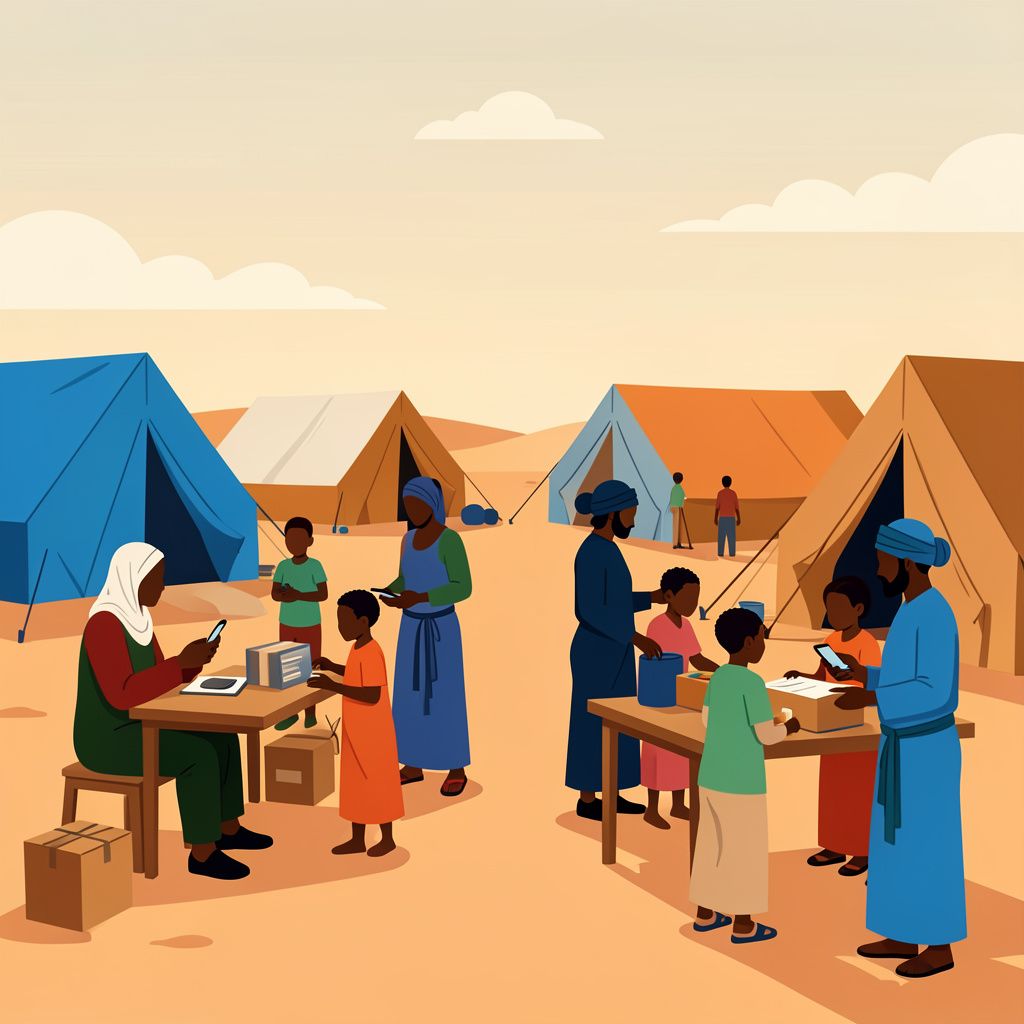
Kakuma, 28 October 2026
Facing declining food aid and severe job shortages, displaced families in northern Kenya increasingly rely on informal brewing to survive, balancing police crackdowns against essential household income.
Grassroots Enterprise Amid Economic Strain
In the sprawling expanse of northern Kenya’s Kakuma refugee settlement, enterprise often thrives in the narrow spaces left by systemic deprivation [1]. With formal employment severely constrained and World Food Programme (WFP) food rations strictly targeted according to specific classification bands, displaced households face persistent structural hurdles [1]. In response, community members demonstrate remarkable entrepreneurial initiative by transforming staple grains such as maize and millet into viable commodities [1]. Traditional brewing has emerged not merely as a survival tactic, but as a testament to the resilience of families striving to fund essentials, including daily nutrition and schooling, entirely through their own industrious efforts [1].
The Economics of Traditional Distilling
The settlement’s bustling informal economy features distinct micro-distilling operations yielding beverages that cater to regional tastes and diverse budget levels [1]. Busaa, a nutrient-dense, grain-fermented beverage widely savoured across South Sudan, the Democratic Republic of the Congo, Burundi, and Uganda, remains a cultural staple within the camp blocks [1]. Alongside it, the distillation of chang’aa—colloquially known as Siko, Number 1, or “kill me quick”—offers higher margins [1]. Kenya formally regularised chang’aa distillation through legislative reform in 2010 to curb hazardous adulteration, yet unlicensed smallholders in the camp still produce it because it undercuts commercial spirits while yielding substantially larger net revenues than milder fermented drinks [1].
Determination and Creative Talent in Kakuma
Behind every informal enterprise lies a deeply human story of perseverance and devotion to family welfare [1]. Christin Nyadeng, a South Sudanese mother of seven who has resided in Kakuma for more than a decade without formal schooling, typifies this unwavering determination [1]. Operating despite unpredictable market hazards, customer payment defaults, and periodic police interventions, Nyadeng views her enterprise as a platform for family advancement [1]. “I brew because it allows me to earn enough to feed myself and my children – or even contribute a little to their education,” she explains, reflecting a shared drive among camp mothers to secure self-reliance through local trade [1].
A Shared Vision for Sustainable Livelihoods
Local thought leaders and creatives are actively collaborating to channel this entrepreneurial energy into broader economic pathways [1]. Joseph Lopir, a 13-year Kakuma resident who serves as a freelance filmmaker and photographer as well as a communications officer for the grassroots organisation Solidarity Initiative for Refugees (SIR), highlights that repetitive police raids fail to address underlying income insecurity [1]. Drawing on his artistic and community engagement work, Lopir advocates for holistic empowerment programmes [1]. His vision combines sensible trade regulation with formal vocational pathways, startup grants, post-training mentorship, and direct links to employers, providing budding refugee entrepreneurs with the institutional backing needed to build enduring businesses [1].