

Kenya Plans to Build East Africa's Largest Oil Refinery to Cut Fuel Import Costs
Nairobi, 30 May 2026
President Ruto is pushing ahead with a Dangote-backed refinery processing 650,000 barrels daily — despite fierce resistance from powerful fuel import lobbies profiting from the current system.
A Declaration at the Prayer Breakfast
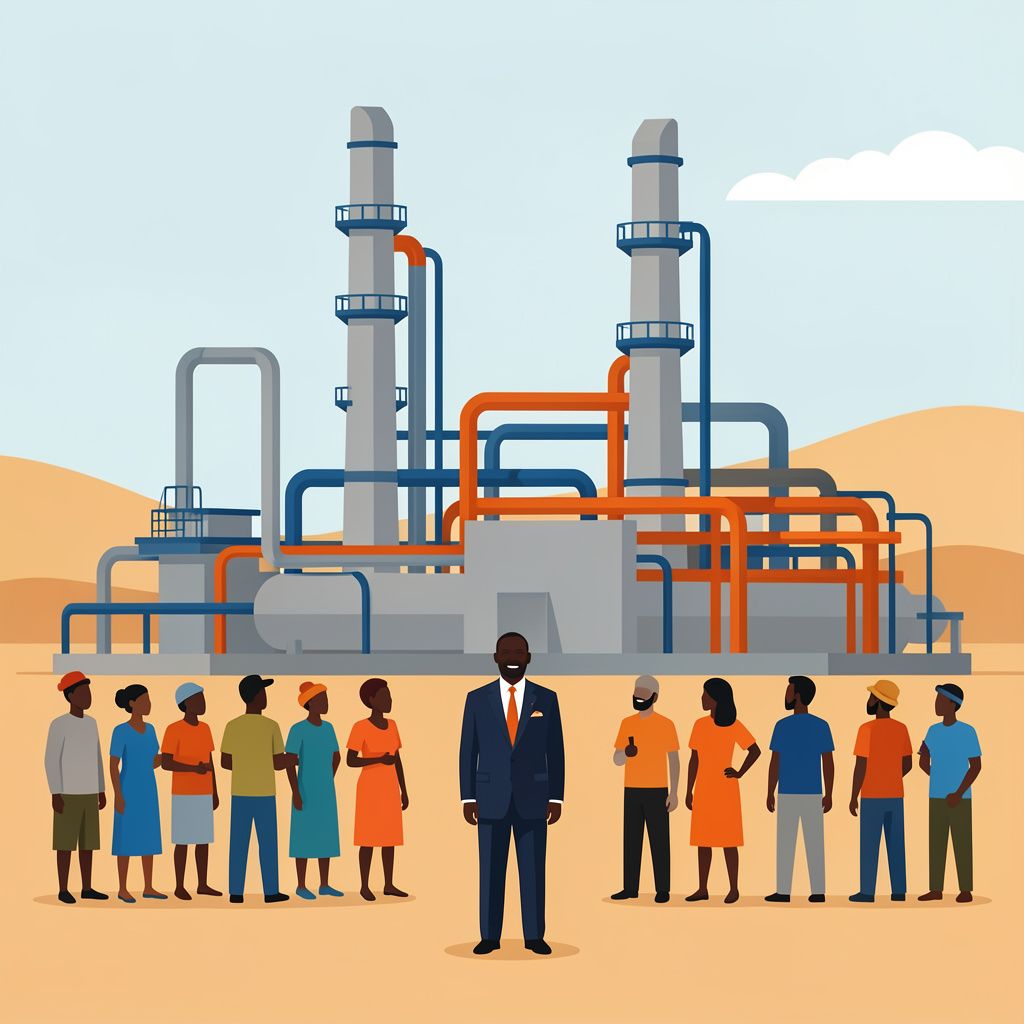
On Thursday, 28 May 2026, President William Ruto used the platform of Kenya’s Annual National Prayer Breakfast to make one of the more politically charged announcements of his administration: that Kenya and its regional partners would press ahead with plans to build a major oil refinery, regardless of the resistance being mounted by those who currently profit from the country’s fuel importation system [1]. The setting may have seemed an unusual venue for an energy policy declaration, but the message was pointed and deliberate. Ruto made clear he had spoken directly with Nigerian billionaire Aliko Dangote on Wednesday, 27 May 2026, the day prior to the breakfast, and that Dangote had personally described the scale of the opposition mobilising against the project [1]. “I had a chat with Mr Dangote yesterday, and he was telling me how much resistance has been built by the people we are buying fuel from now because they want to continue buying their fuel,” Ruto stated [1]. The implication was unmistakable: entrenched commercial interests, deeply embedded in Kenya’s existing fuel supply chain, are actively working to derail a project that could fundamentally alter how East Africa sources and processes its energy [1].
The Dangote Proposal: Scale and Ambition
The refinery proposal itself is staggering in its scope. In April 2026, during the Africa We Build Summit held in Nairobi, Aliko Dangote formally offered to construct an East African oil refinery with a processing capacity of 650,000 barrels — approximately 103.3 million litres — per day [1]. That figure is not arbitrary; it mirrors the capacity of Dangote’s existing refinery in Lagos, Nigeria, which stands as one of the largest single-train refineries in the world [GPT]. Dangote, addressing both President Ruto and Ugandan President Yoweri Museveni at the Nairobi summit, was unambiguous in his commitment: “Even now, I can give commitment to the two presidents who are here; if they will support the refinery, we will build an identical one to the one we have in Nigeria, 650,000 barrels per day” [1]. If constructed, the facility’s daily throughput of 67.165 million [alert! ‘approximate litre-per-barrel conversion used; precise refinery-grade conversion may vary marginally’] litres per day would represent a transformative shift in the region’s energy infrastructure. The groundwork for this proposal had been laid months earlier, with a Kenyan technical team visiting relevant energy infrastructure sites around November 2025 to assess feasibility, a mission that subsequently produced agreements between Ruto and regional leaders including Museveni [1].
The Import Dependency Problem
To understand why this refinery proposal carries such political weight, one must first appreciate how deeply the current model of fuel importation is embedded in East Africa’s economic structure — and how costly that dependency has become. Dangote himself framed the structural problem in stark terms at the April 2026 Nairobi summit: “We are a continent of imports. We export raw materials, which means we export jobs, and when we import, we import poverty” [1]. For Kenya and its neighbours, this is not merely rhetorical. The country currently imports refined petroleum products rather than processing crude oil domestically [GPT], meaning that every price movement in international refining markets, every shipping disruption, and every currency fluctuation feeds directly into what Kenyan households and businesses pay at the pump [GPT]. Ruto, for his part, has cast the refinery as a generational opportunity, urging citizens and policymakers alike to look beyond immediate discomfort: “Some of the time we have to forego temporary convenience for long-term transformation, and that is how we are going to build this great nation” [1]. On 28 May 2026, he reiterated that Kenya has “a long term plan to solve the fuel crisis, building an oil refinery here” [5].
Who Is Resisting — and Why
The resistance Ruto and Dangote have described is rooted in straightforward commercial logic. Kenya’s current fuel supply system generates substantial revenues for established importers, traders, and distributors — a network of interests that would face serious disruption if a regional refinery were to come online and undercut the economics of importation [1]. These are not peripheral players; they are, as Ruto’s remarks implied, sufficiently powerful to mount organised opposition to a presidential-backed infrastructure initiative [1]. The lobbying dynamic here is a familiar one in resource-rich or resource-dependent economies: incumbents who have built profitable businesses around an existing supply architecture will invest heavily in preserving that architecture, even when alternatives could deliver broader public benefit [GPT]. The political test for Ruto, then, is whether his administration can maintain the momentum of a project that faces not just regulatory and logistical hurdles, but active commercial resistance from actors with the financial means and political connections to obstruct it [1]. [alert! ‘The specific identities of the fuel import lobby groups resisting the project have not been named in available sources; this characterisation is drawn from Ruto’s own public statements’].
Timeline and the Road Ahead
The timeline for the proposed refinery is ambitious but not immediate. According to information from the April 2026 Nairobi summit and subsequent statements, construction is planned to begin in 2026, with the project expected to reach completion within four to five years — placing a projected operational date somewhere between 2030 and 2031 [1]. That window, while lengthy, reflects the sheer scale of infrastructure involved in constructing a facility capable of processing 650,000 barrels per day [1]. In the interim, Kenya’s energy sector has seen at least one significant administrative development: a new Petroleum Principal Secretary was appointed in a recent reshuffle [6], a move that [alert! ‘the content of source 6 was not available for full verification; the appointment detail is drawn from the source URL metadata only’] may signal an effort to align the ministry’s leadership with the administration’s stated refinery ambitions. For the millions of households and businesses across Kenya, Uganda, and the wider East African region that bear the burden of elevated fuel costs daily, the stakes of whether this project advances — or is quietly shelved under lobbying pressure — could scarcely be higher [1][GPT]. The coming months will reveal whether Ruto’s declaration at the Prayer Breakfast on 28 May 2026 marks the beginning of a genuine energy transformation, or whether the weight of entrenched interests proves too great to overcome.