

Nearly 16 Years in Limbo: The Hidden Cost of Africa's Refugee Crisis
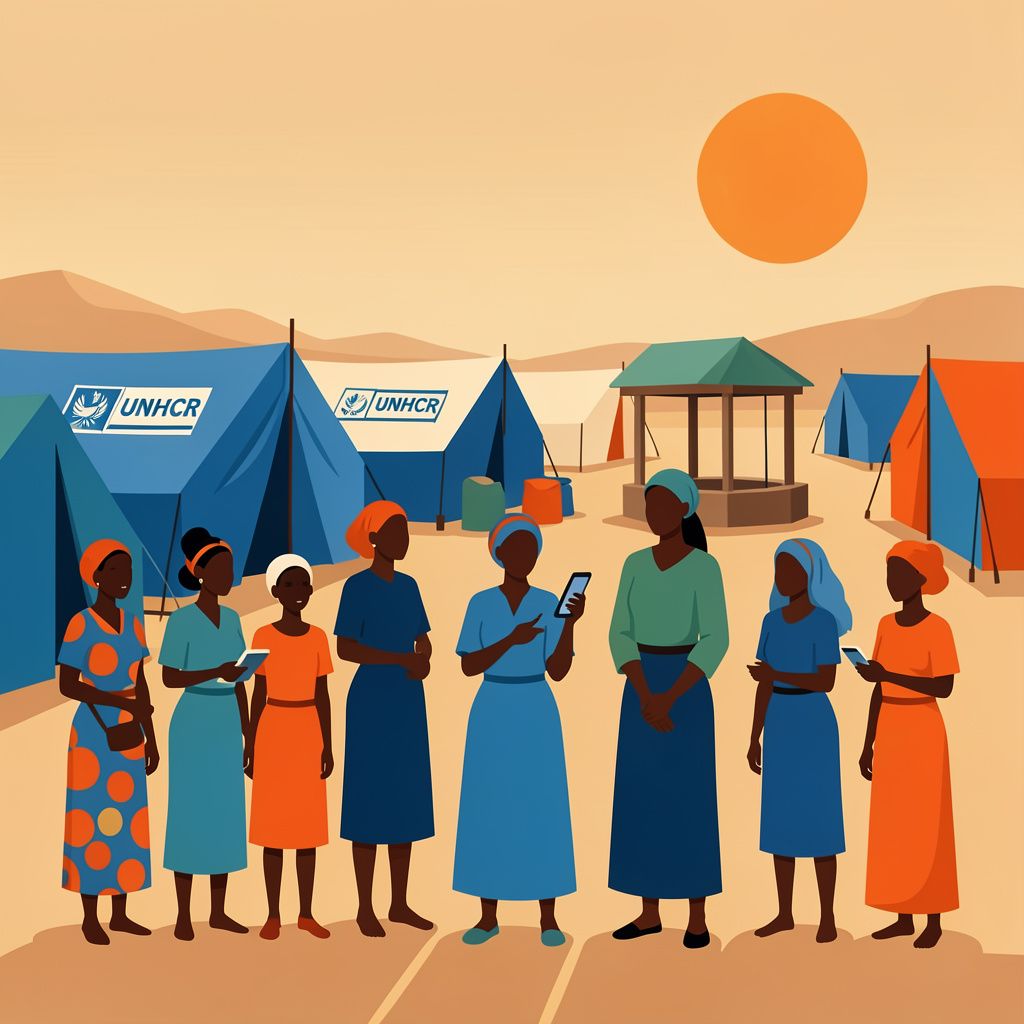
Nairobi, 4 June 2026
A new UNHCR analysis reveals that 6.4 million refugees in Eastern and Southern Africa spend a median of almost 16 years in exile, with women and girls displaced nearly three years longer than men.
A Generation Lost to Displacement
On 3 June 2026, UNHCR released a landmark analysis of refugee registration and case management data collected across Eastern and Southern Africa between 2001 and 2025, painting a sobering picture of protracted displacement on a vast scale [1][2]. The figures are stark: at the end of 2025, some 6.4 million registered refugees and asylum-seekers were recorded across the region, the overwhelming majority having fled sustained conflict and instability in Sudan, South Sudan, and Somalia, with Uganda, Ethiopia, and Kenya absorbing the largest numbers [1][2]. For communities such as those in Kakuma and Kalobeyei in north-western Kenya — home to tens of thousands of people displaced from South Sudan, Somalia, Ethiopia, and the Democratic Republic of Congo — the data places hard numbers on a reality that residents have long lived [GPT].
The Numbers Behind the Crisis
The UNHCR analysis draws on more than two decades of registration records to establish that refugees in Eastern and Southern Africa remain in exile for a median period of almost 16 years [1][2]. That figure alone would be striking, but the granular breakdown reveals an even more complex picture of who suffers most and for how long. Three-quarters of all refugees in the region remain displaced after five years, and nearly 40% are still in asylum after two decades [1][2]. Children registered with UNHCR before the age of five face the longest journeys of all, with a median exile duration of over 18 years — meaning that, in many cases, an entire childhood and the transition into adulthood unfolds entirely in a refugee settlement or urban displacement [1][2].
Women and Families Bear a Disproportionate Burden
The data reveals a pronounced gender gap in displacement duration. Women and girls remain in asylum for a median of nearly 17 years, compared with just over 14 years for men and boys [1][2] — a difference of approximately 3 years that reflects the particular vulnerabilities women face in conflict settings, including reduced mobility, heightened protection risks, and a greater likelihood of remaining with dependent family members [GPT]. Family composition compounds the disparity further: single refugees and asylum-seekers remain in exile for a median of under six years, whereas families of five or more remain for nearly 19 years [1][2] — a gap of roughly 13 years between the most and least mobile demographic groups. Mamadou Dian Balde, UNHCR Regional Director for Eastern and Southern Africa, captured the urgency plainly: “Asylum saves lives, but after nearly 16 years of living in limbo, refugees need more than help; they need hope, opportunity and a way forward” [2].
Small Steps Forward Amid a Systemic Impasse
Against the backdrop of these multidecade displacement trends, individual acts of return carry particular significance. On 3 June 2026 — the very day UNHCR published its regional analysis — 58 Burundian refugees voluntarily repatriated from Nairobi to Burundi, among them Eric Ngendakumana and his partner Irankunda Minette, who had spent two years in Kenya [3]. “Whatever caused us to flee has been sorted, so now we are very happy to be going back,” Eric said, describing the family’s anticipation of reuniting with relatives and resuming their children’s schooling [3]. Separately, as of early June 2026, more than 48,000 Congolese refugees had begun returning to South Kivu in the Democratic Republic of Congo from Burundi, following improved security conditions around the Uvira area — a development discussed at the second tripartite meeting between the DRC, Burundi, and UNHCR [4]. However, approximately 100,000 Congolese refugees remain in Burundi, underscoring that voluntary return, while meaningful, represents only a fraction of what is needed at scale [4].
The Road Ahead: Solutions, Not Just Shelter
UNHCR has been emphatic that the data must translate into accelerated action across all three durable solutions: voluntary return, local integration, and resettlement to third countries [1][2]. Mamadou Dian Balde warned that the pace of progress is insufficient: “We need to move faster towards real solutions, helping refugees return home when it is safe to do so, and ensuring those who cannot return are able to study, work, support themselves and contribute to their communities” [1][2]. The agency has pointed specifically to the need for refugee children to be embedded within national education systems and given access to documentation and skills development, arguing that an entire generation is now entering adulthood in exile [1][2]. “No child should have to grow up with their future clouded by uncertainty,” Balde said [2]. For residents of Kakuma and Kalobeyei, where displacement from South Sudan, Somalia, and beyond has often stretched across decades, the report’s findings are a direct reflection of lived experience — and a call for the international community to match rhetoric with meaningful political will and funding [GPT]. A broader global picture will become available on 11 June 2026, when UNHCR is scheduled to publish its 2025 Global Trends Report, containing updated worldwide displacement figures [1][2].