

Over 400 Refugees Arrested at Kenya's Kakuma Camp as Health Fears Grow
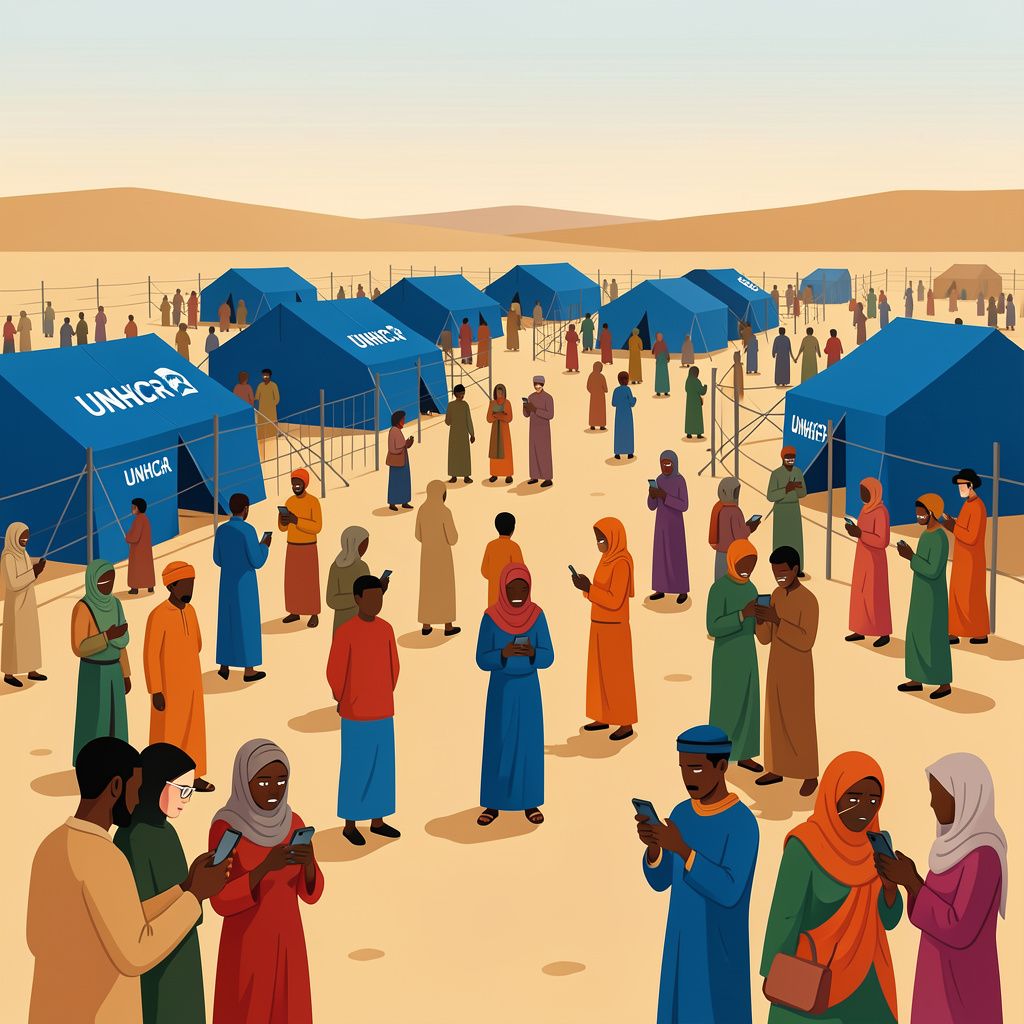
Kakuma, 4 June 2026
A disease outbreak at an already overcrowded reception centre has triggered mass arrests, raising urgent questions about refugee welfare and camp management in Kenya.
Mass Arrests at Kakuma’s Reception Centre
On Thursday, 4 June 2026, Kenyan police arrested more than 400 refugees from the Great Lakes region near the asylum seeker reception centre within Kakuma refugee camp, located in Turkana County in north-western Kenya [GPT]. The arrests have drawn immediate attention from humanitarian organisations and camp management, coming at a moment when the reception facility is already under strain. The exact legal basis for the arrests has not been confirmed by the Kenyan authorities as of the time of publication [alert! ‘No official statement from Kenyan police or Department of Refugee Services has been made available in the provided sources confirming the specific charges or legal basis for the arrests’]. Residents of both Kakuma camp and the neighbouring Kalobeyei Integrated Settlement have been advised to remain calm and to follow guidance issued by UNHCR and the Department of Refugee Services (DRS) [GPT].
A Reception Centre Already Under Pressure
The timing of these arrests is particularly significant given the pre-existing vulnerabilities documented at Kakuma’s asylum seeker reception centre. As far back as April 2023, reports had already flagged serious concerns about poor sanitation and severe overcrowding at the facility, conditions described at the time as posing a direct disease risk to new arrivals [1]. Those earlier warnings, which went largely unaddressed in subsequent years [alert! ‘No source confirms what remedial action, if any, was taken between April 2023 and June 2026 in response to sanitation concerns at the reception centre’], now appear to have materialised into a tangible health threat. A small outbreak of an unspecified illness has been observed at the reception facility as of early June 2026, raising concerns among health authorities and camp management [GPT][1].
Great Lakes Refugees at the Centre of the Crisis
The refugees involved in the 4 June 2026 arrests originate specifically from the Great Lakes region — an area encompassing countries such as Burundi, the Democratic Republic of Congo (DRC), and Rwanda [GPT]. This region has seen significant and continued displacement in recent years. In Burundi, as recently as 2 June 2026, returning refugees were reportedly being blocked from reclaiming their land by political and security networks, further entrenching conditions that drive displacement [1]. Meanwhile, in the DRC, a Congolese national was arrested in Bujumbura by Burundian intelligence services on 2 June 2026, illustrating the volatile cross-border security dynamics that continue to push people towards camps like Kakuma [1]. These ongoing pressures mean that the flow of new asylum seekers into Kakuma’s reception centre is unlikely to ease in the near term [alert! ‘This is an analytical inference based on regional context; no source provides a specific projection of future arrival numbers at Kakuma’].
Institutional Oversight and the Road Ahead
Kakuma camp and the adjacent Kalobeyei Integrated Settlement are jointly overseen by UNHCR in partnership with Kenya’s Department of Refugee Services [GPT]. It is important to note that Kakuma and Kalobeyei are distinct in their operational design: Kakuma functions as a traditional refugee camp, while Kalobeyei was established as an integrated settlement model intended to promote greater self-reliance among refugees and host communities alike [GPT]. The National Gender and Equality Commission (NGEC) of Kenya has previously been active in advancing access to services for both refugees and host communities in the Kakuma and Kalobeyei areas [2], and its role in monitoring the current situation may become relevant as events develop [alert! ‘No source confirms NGEC involvement specifically in response to the 4 June 2026 arrests or health outbreak’]. Separately, community-level concerns about health infrastructure in the broader Kakuma area have been evident in recent months, with local residents having previously protested against a proposed US-backed Ebola quarantine facility in Kenya, reflecting wider anxieties about disease containment measures [5]. Further details on both the circumstances of the arrests and the evolving health situation at the reception centre are expected to be released by the relevant authorities in the coming days [GPT].
Bronnen
- www.sosmediasburundi.org
- www.facebook.com
- www.facebook.com
- www.facebook.com
- www.facebook.com
- www.facebook.com