

Solar Power Project to Connect 550,000 Refugees and Locals in Kenya's Remote Turkana County
Kakuma, 8 May 2026
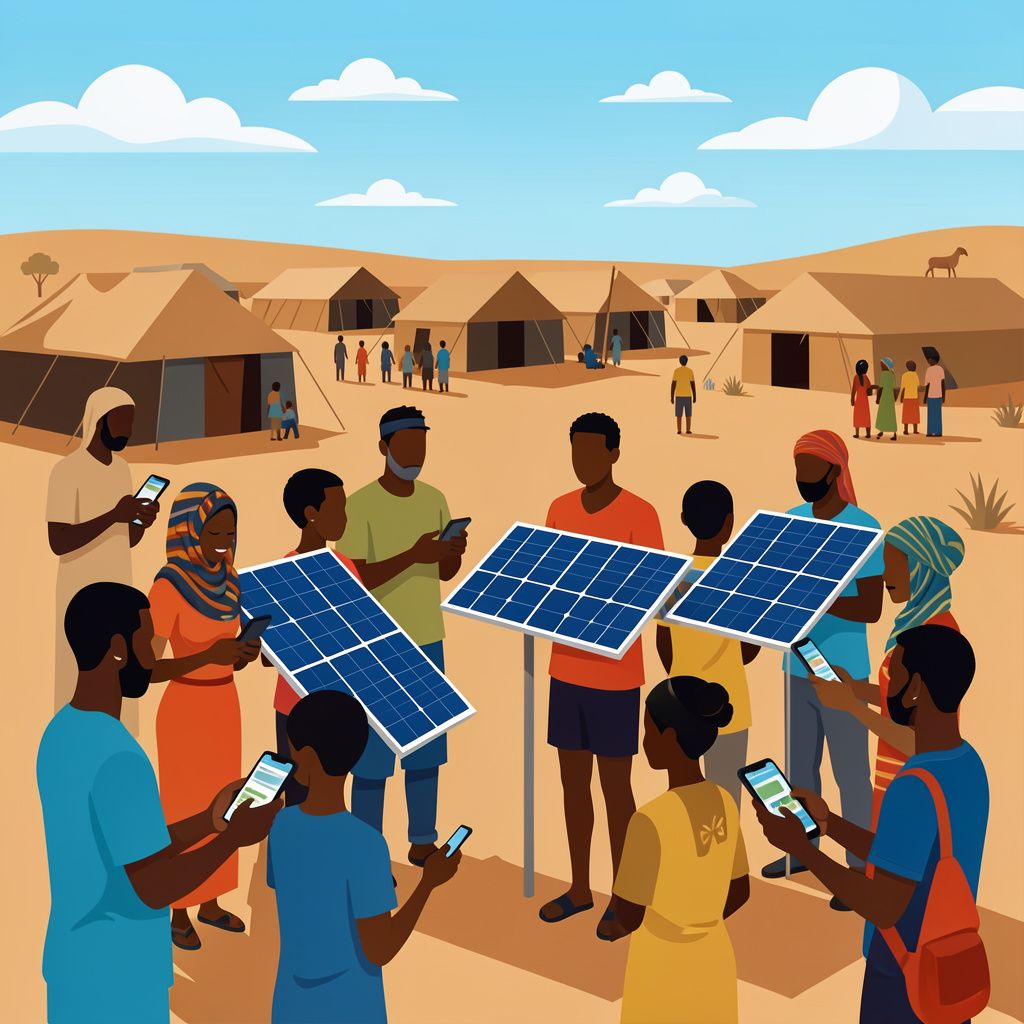
A groundbreaking solar mini-grid project will bring electricity to both refugee camps and host communities in Kakuma, Turkana County, potentially serving over 550,000 people. The initiative, announced on 5 May 2026, represents a significant step towards addressing energy poverty in Kenya’s second-largest county, where vast populations lack reliable power access. The project will generate between 180-290 units through partnership between Turkana County Government and LIFT Community Best Organization. This development comes as part of broader continental efforts to connect 300 million Africans to electricity by 2030, highlighting how renewable energy solutions can transform both humanitarian and local community outcomes in remote regions.
Partnership Framework and Implementation Timeline
The solar mini-grid initiative emerged from discussions between Turkana County Government and LIFT Community Best Organization, with the project set to commence in the coming month [1]. County Executive for Climate Change and Energy Dr. Anthony Apalia was briefed on the project plan and implementation model during a meeting with LIFT officials on 5 May 2026 [1]. The county government’s commitment to expanding residents’ access to clean energy forms the foundation of this partnership, with Dr. Apalia emphasizing the county’s openness to collaborations that achieve this goal [1]. LIFT Community Best Organization team lead Faustine Mwanue expressed optimism about the project’s impact, stating the organisation will adhere to all laid down procedures of operation [1].
Strategic Location and Regional Context
The project’s location in Kakuma holds particular significance within Kenya’s energy landscape, situated in Turkana County, which spans 77,000 square kilometres and ranks as Kenya’s second-largest county [1]. This North-Western most county presents both challenges and opportunities for renewable energy development, with Dr. Apalia commending the organisation for tapping solar power and noting Turkana’s strong potential to harness sunlight for electricity generation and economic growth [1]. The region’s vast size and remote location have historically limited electricity access, making this solar initiative particularly crucial for addressing infrastructure gaps [1]. The county government has emphasised ensuring partners fully comply with partnership terms and adhere to legal requirements for operating as energy solution providers under Kenyan law [1].
Broader Continental Energy Initiatives
The Kakuma project aligns with ambitious continental efforts to address Africa’s energy deficit, where Sub-Saharan Africa has almost 600 million people without access to power, accounting for more than 80% of the global total [2]. The World Bank and African Development Bank are heading up the Mission 300 programme, planning to connect 300 million Africans by 2030 [2]. Companies like Renewvia Energy Corp., which operates 24 commercial mini-grids in Kenya and Nigeria ranging from 100 kW to 2.5 MW each, demonstrate the growing momentum behind solar mini-grid solutions [2]. Renewvia’s expansion plans require approximately $750 million for 2.1 million connections across Uganda, Rwanda, Ethiopia, and the Democratic Republic of Congo [2].
Humanitarian Energy Access Challenges
The project addresses critical energy access issues facing refugee populations, who have limited access to national grid systems due to affordability and political constraints [3]. Research indicates that injustices are created and reinforced within humanitarian energy supply and by climate action policies for forcibly displaced people [3]. Off-grid solar technologies can provide access for refugees and fill gaps created by lack of grid connectivity, offering low-carbon electricity for both refugee households and humanitarian organisations working in displacement settings [3]. To deliver electrification at scale and connect refugee households and businesses to electricity grids, humanitarian actors and national governments would need to commit to institutional reform and political change [3]. The Kakuma initiative represents a practical example of how renewable energy solutions can transform outcomes for both humanitarian and local community populations in remote regions.