

Teacher Leads Solar Revolution in Refugee Schools
Kalobeyei, 9 May 2026
Onorio Morris transforms education for thousands of refugee students through innovative solar technology that brings electricity to previously powerless schools in Kalobeyei settlement.
Solar Suitcases Illuminate Educational Opportunities
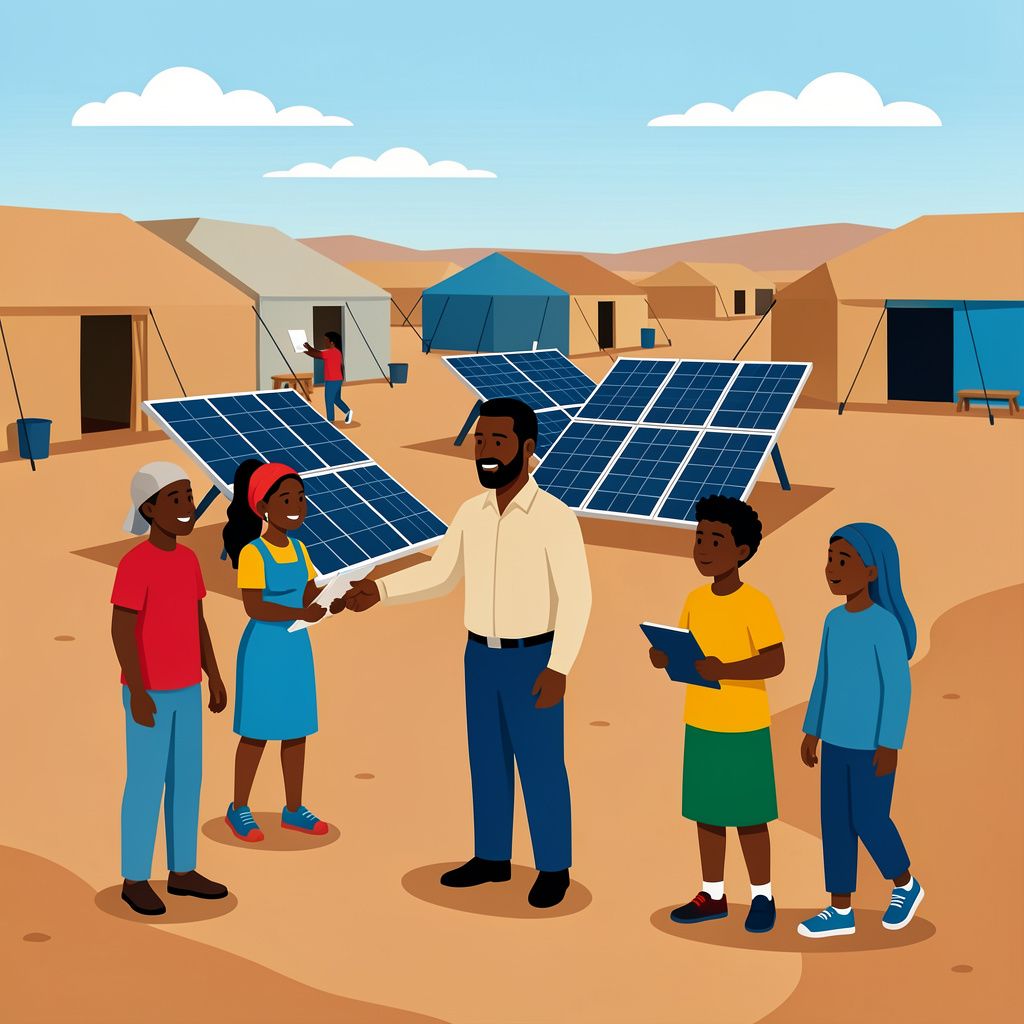
The solar initiative centres on deploying specialised equipment known as ‘solar suitcases’ to secondary schools throughout the Kalobeyei settlement [1]. These portable solar power systems are specifically designed to provide reliable and sustainable electricity for schools operating in off-grid locations [1]. The technology represents a practical solution to the chronic electricity shortage that has long hindered educational progress in refugee settlements across Kenya [GPT]. Morris’s project directly addresses the fundamental challenge facing thousands of students who previously had no access to electric lighting for evening study sessions or school operations after sunset [1].
Transforming Learning Conditions for Refugee Students
The solar power project aims to significantly improve the learning environment for refugee students by providing access to electricity for lighting and other educational resources [1]. This initiative particularly benefits the substantial population of young refugees from South Sudan, Somalia, and other conflict-affected regions who attend secondary schools in the settlement [GPT]. The reliable electricity supply enables extended study hours, allowing students to continue their education well into the evening hours when natural light is no longer available [1]. Schools can now operate more effectively with powered equipment and improved lighting conditions that create a more conducive learning atmosphere [1].
Broader Development Context in Northern Kenya
The Kalobeyei solar project aligns with wider development initiatives transforming Turkana County, where multiple projects are creating opportunities and improving livelihoods across the region [2]. From digital hubs to irrigation systems, energy infrastructure, markets, and youth empowerment programmes, Turkana County is experiencing steady transformation through development projects that deliver tangible benefits to communities [2]. This broader development momentum, documented as recently as 8 May 2026, demonstrates that progress in the region extends beyond promises to measurable improvements that residents can observe and experience directly [2].
International Support for Regional Development
The solar initiative occurs within a context of substantial international development support for the East African region. Japan, for instance, is providing over US$6.6 million in supplementary budget support for 2025–2026 towards refugee assistance, healthcare, waste management, and disaster risk reduction across Uganda [3]. Through partnerships with UN agencies and local communities, international donors are supporting vulnerable populations in regions like Karamoja whilst strengthening host communities and constructing vital infrastructure [3]. This international commitment to supporting refugee populations and host communities creates an enabling environment for local initiatives like Morris’s solar project to flourish and expand their impact [3].