

Kenya Railways Orders Passengers to Arrive Hour Early as Heavy Rains Disrupt Train Operations
Nairobi, 30 April 2026
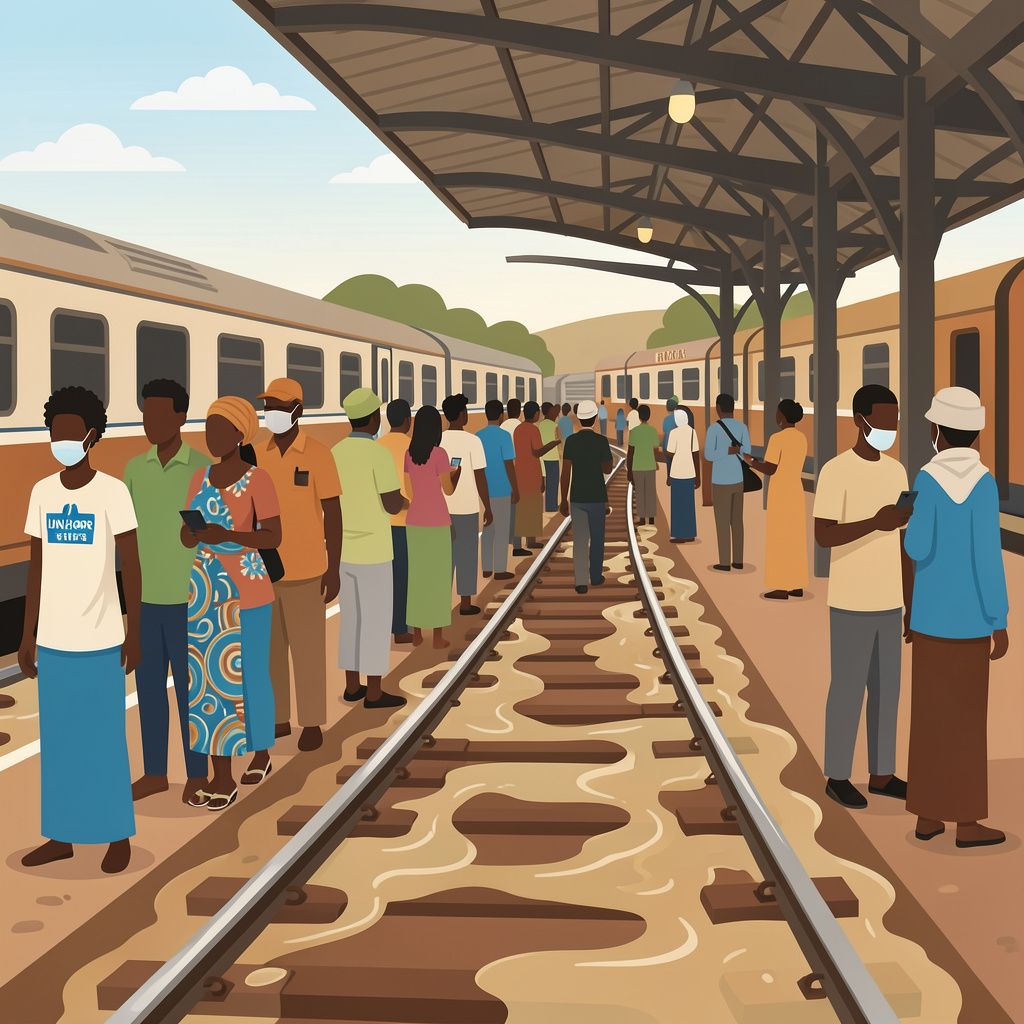
Kenya’s railway corporation has mandated all Madaraka Express passengers arrive one hour before departure following severe flooding and traffic disruptions nationwide. The emergency measure affects the crucial Nairobi-Mombasa route amid unprecedented rainfall that has already claimed two lives and submerged homes across the country. With major highways closed and infrastructure damaged, the extended arrival time ensures passengers can complete security screening and boarding procedures despite widespread transport chaos affecting Kenya’s critical rail network.
Emergency Measures Take Effect Immediately
Kenya Railways Corporation announced the new travel requirements on 29 April 2026, stating that passengers must arrive at departure stations at least one hour before their scheduled departure time [1]. The directive affects all Standard Gauge Railway terminals countrywide, representing a significant departure from normal operating procedures where security screening, ticketing, and boarding typically require between 30 and 60 minutes [1]. The corporation emphasised that this measure ensures ‘a streamlined and seamless experience during ticketing, security checks, and boarding’ as transport networks face unprecedented strain [1].
Critical Boarding Procedures Under Pressure
The extended arrival window becomes particularly crucial given the railway’s strict boarding timeline, where final calls occur 11 minutes before departure and platform gates close 10 minutes prior to train departure [1]. During peak periods, physical security screening alone can consume up to 30 minutes, whilst passengers without prior reservations face additional delays for physical ticket printing at stations [1]. These queues can grow extensively during busy travel periods, creating substantial risk that late arrivals will miss their trains entirely [1]. The combination of normal processing delays with current weather-related transport disruptions has created a perfect storm for passenger inconvenience.
Infrastructure Crisis Compounds Transport Challenges
The railway directive comes as Kenya grapples with severe infrastructure damage across major transport corridors, with the Kenya National Highways Authority closing critical routes including the Iten-Kabarnet Road due to flooding and structural concerns [1]. Major highways and critical infrastructure have been destroyed countrywide, creating cascading effects throughout the transport network that extend well beyond individual road closures [1]. The flooding has already resulted in two confirmed deaths according to Kenya Red Cross data, prompting the government to deploy the Kenya Defence Forces to lead search, rescue, and evacuation operations in the worst-affected areas [1].
Extended Weather Warnings Signal Prolonged Disruption
The Kenya Meteorological Service Authority has predicted that heavy rains will continue for an extended period, advising residents in low-lying areas to exercise particular caution [1]. This forecast suggests that the emergency travel measures may remain in place well beyond the immediate crisis, fundamentally altering passenger planning for railway journeys across the network [1]. The National Transport and Safety Authority has issued comprehensive travel advisories urging motorists to exercise extreme caution on roads, reflecting the broader transport sector’s response to the ongoing meteorological emergency [1]. Recent images from 28 April 2026 showed passengers stranded along the Ruai bypass after flooding rendered the highway impassable, illustrating the real-world impact of these weather conditions on Kenya’s transport infrastructure [1].