

Refugee Communities in Kakuma and Kalobeyei Celebrate International Labour Day
Nairobi, 30 April 2026
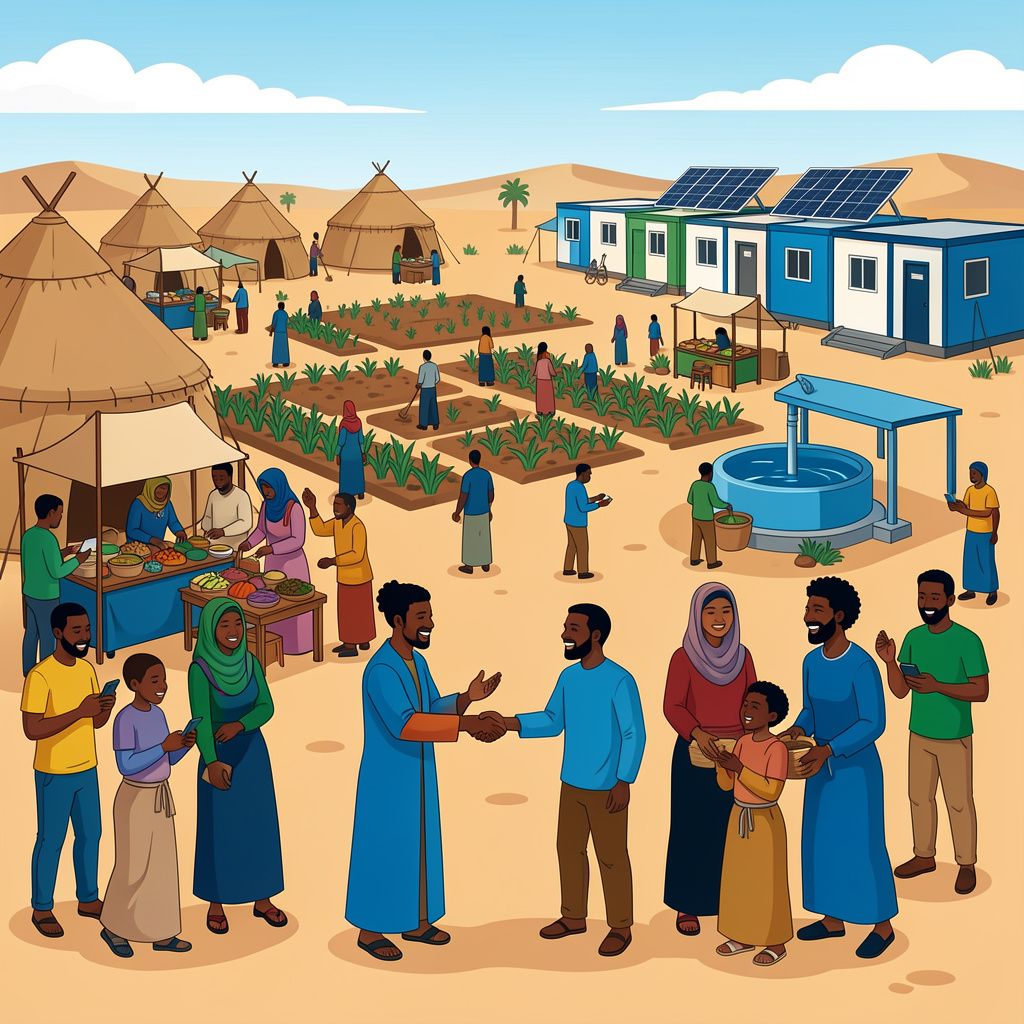
Despite displacement challenges, refugee communities in Kenya’s Kakuma and Kalobeyei camps observe May 1st International Labour Day, highlighting their entrepreneurial spirit and economic contributions through small businesses and agricultural work. The celebration underscores the dignity of labour for displaced populations who continue building livelihoods whilst advocating for improved working conditions and fair treatment in their host communities.
Historical Foundations of Labour Rights
Tomorrow’s International Labour Day celebrations on 1 May 2026 will resonate deeply within Kenya’s refugee settlements, connecting displaced communities to a global movement rooted in the historic struggle for workers’ dignity [1]. The observance traces its origins to the Haymarket Affair in Chicago in 1886, when workers protested for an eight-hour workday, challenging the brutal 12-16 hour shifts that were commonplace at the time [1]. The International Federation of Socialist Groups and Trade Unions designated 1 May in 1889 to commemorate these Chicago protests, establishing a tradition that now spans over 80 countries [1]. For refugee communities in Kakuma and Kalobeyei, this historical context carries particular weight, as many residents have experienced their own struggles for fair treatment and economic opportunities in displacement.
Climate Challenges and Worker Safety
The 2026 International Labour Day theme, ‘Ensuring Safety and Health at Work in a Changing Climate,’ speaks directly to the experiences of refugee workers in Kenya’s arid northern regions [1]. This year’s focus on extreme weather, heatwaves, and environmental shifts reflects challenges that Kakuma and Kalobeyei residents face daily in their agricultural activities and outdoor enterprises [1]. The emphasis on adapting occupational safety standards amid green transitions particularly resonates with refugee communities who have developed innovative approaches to sustainable farming and renewable energy projects despite harsh environmental conditions [1]. [alert! ‘No specific data available on current refugee camp labour conditions or climate adaptation measures’]
Economic Contributions and Labour Rights
International Labour Day serves as a platform to recognise that labour rights are fundamentally human rights, a principle that extends to all workers regardless of their displacement status [1]. The day commemorates significant achievements including the abolition of child labour and establishment of minimum wage protections, milestones that remain relevant for refugee communities advocating for fair treatment in their economic activities [1]. Across Kakuma and Kalobeyei, residents engage in diverse forms of productive work, from small-scale trading to skills development programmes, contributing to both their own livelihoods and the broader regional economy [GPT]. The celebration provides an opportunity to highlight how these communities embody the core Labour Day message of work dignity, even whilst facing unique challenges related to legal status and market access.
Looking Forward: Collective Voice for Change
As International Labour Day 2026 approaches, refugee communities prepare to join the global platform for rallies and seminars that characterise this international observance [1]. The day’s significance in giving ‘a collective voice to billions who drive the global economy’ extends to displaced populations whose entrepreneurial spirit and resilience contribute to economic development in their host regions [1]. The historical slogan ‘8 hours for work, 8 hours for rest, and 8 hours for what we will’ takes on new meaning for refugee communities who often work extended hours to build sustainable livelihoods whilst navigating complex regulatory environments [1]. Tomorrow’s celebrations will underscore the ongoing relevance of labour rights advocacy, bridging the historical movements of the 19th century with contemporary challenges facing displaced workers in the modern economy.