

Thousands of Displaced Ethiopians Left Without Food as International Aid Dries Up
Dessie, 6 June 2026
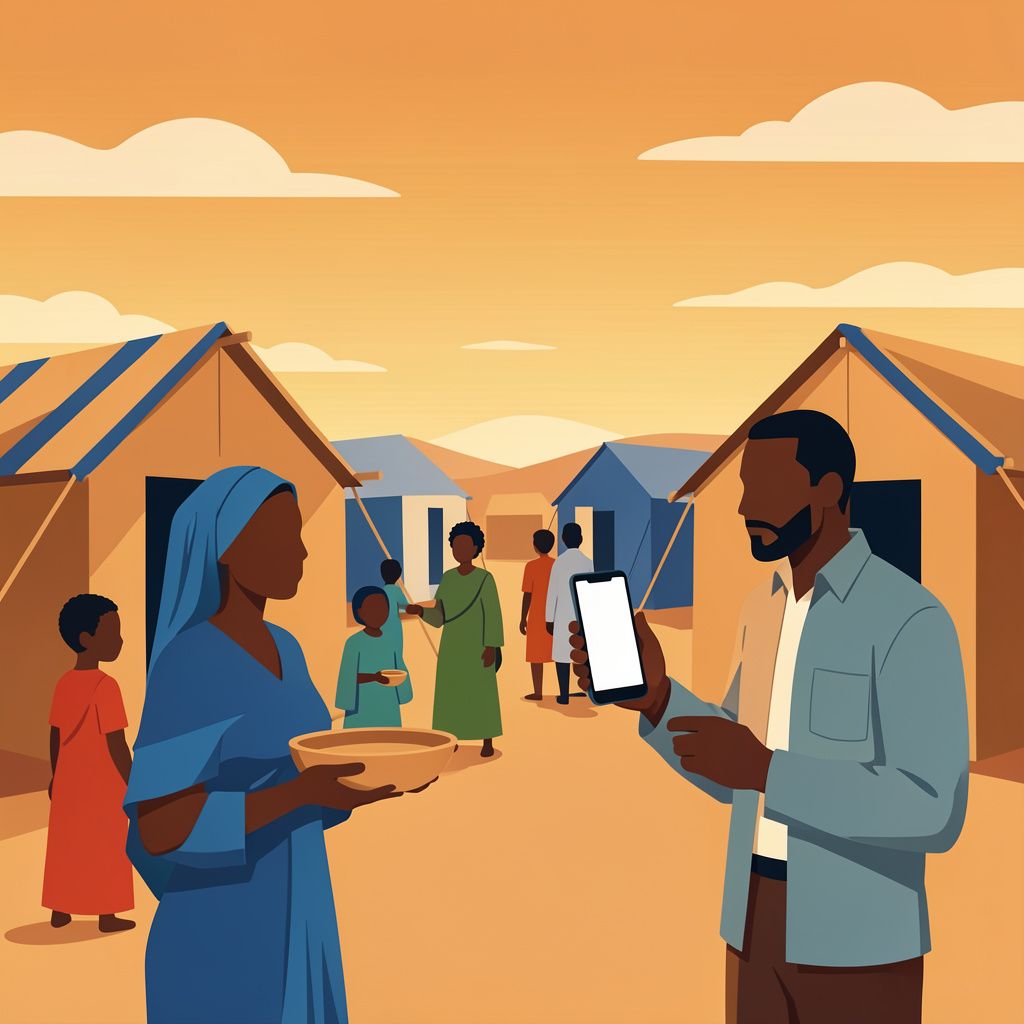
Families in Ethiopian displacement camps have gone up to five months without food aid, forcing women to beg for survival whilst security conditions prevent men from seeking work.
Voices From the Camps: A Crisis Measured in Months
The human cost of the aid suspension is starkly captured in the words of those living through it. Mohammed Seid, a resident of the Jari displacement camp in Tewledere Woreda, North Wollo, described the unbearable choice now facing his community: ‘We are coming up to four months now. When Ramadan came, we received assistance on the fifth day, and after that, nothing. If they took us back to our homeland right now, it would be better. Is it not better to struggle with death than to struggle with hunger?’ [1]. His words reflect a desperation that has become commonplace across multiple camp sites in both South and North Wollo zones. The suspension of food assistance — which had been in place for approximately six years since the communities were first displaced around 2020 — represents a catastrophic withdrawal of the only lifeline many of these families have ever known in their current circumstances [1].
Camp by Camp: The Geography of Hunger
The crisis is not confined to a single location. Across South Wollo Zone, camps including Mekane Yesus and the Turkey Camp in Hayk town have been affected, as has the Jara displacement camp in North Wollo [1]. Each site presents its own particular hardship. In the remote Jara camp, the food supply was cut entirely as of approximately 5 April 2026 — two months before the date of this report on 6 June 2026 [1]. Atο Ahmed Seid, another Jara resident, explained why the location compounds the suffering: ‘There is nowhere to go to do day labour. It is desert. It is far from all towns, far from both rural and urban areas. It is a place where it is simply impossible to do day labour. There is severe hunger.’ [1]. The isolation of Jara means that the standard coping mechanism available to urban IDPs — casual daily labour — is entirely inaccessible, leaving residents with no fallback whatsoever.
Security Conditions Force Women Into Begging
Beyond the logistical and economic barriers to self-sufficiency lies a security dimension that is particularly devastating for male residents. Reporting from 5 June 2026 indicates that security conditions in the surrounding areas prevent men from leaving the camps to seek work, meaning that the burden of finding food has fallen almost entirely on women, who have resorted to begging in order to feed their families [1]. This gendered impact of the aid collapse reflects a broader pattern seen across conflict-affected displacement situations in the Horn of Africa, where insecurity disproportionately restricts the mobility and economic agency of men, pushing women into roles of extreme vulnerability [GPT]. The combination of remote geography, active insecurity, and zero formal food assistance has created conditions that camp residents themselves describe as worse than the conflict zones from which they originally fled [1].
Authorities Acknowledge Gaps but Point to Wider Failures
The head of the North Wollo Zone Disaster Prevention and Work Management Office, Atο Alemu Yimer, offered a candid — and somewhat contradictory — account of the situation. While claiming that camp residents at Jara had historically lacked for nothing, receiving monthly food assistance and NGO cash transfers of between 7,000 and 10,000 Ethiopian birr to more than 1,000 households on at least a quarterly or six-monthly basis, he simultaneously acknowledged that the aid pipeline for IDPs integrated into host communities had broken down entirely [1]. ‘The problem is continuity,’ he stated. ‘They do not receive it monthly, they do not receive it every two months — it comes every four or five months, and in the current situation they are in difficulty.’ [1]. This admission from a senior zonal official is significant: it confirms that the failure is systemic, not incidental, and that the authorities themselves are aware the current support cycle is wholly inadequate for the nutritional needs of the displaced population.
Self-Sufficiency Plans Stalled by the Same Insecurity Driving Displacement
Perhaps the most troubling element of the official response is the acknowledgement that longer-term solutions are currently out of reach. Atο Alemu Yimer confirmed that the zone has a stated policy direction aimed at enabling food self-sufficiency among displaced communities, covering both camp-based IDPs and those dispersed within host communities [1]. However, he was explicit that implementing this strategy is not currently feasible: ‘To enable the displaced — whether in camps or within host communities — to sustain themselves, given the current security situation in our zone, it is very difficult. It is not a situation we are able to manage. The security situation is well known.’ [1]. This places the zone in a particularly painful bind: the same insecurity that generated the displacement in the first place is now blocking the very policies that could reduce dependency on external food aid. For Ethiopian refugees currently in Kakuma camp who have family members in North or South Wollo, this assessment will be deeply alarming, as it suggests no near-term improvement in conditions is likely and that voluntary return to the region remains a remote prospect [GPT].
A Pattern Rooted in Donor Funding Shortfalls
The crisis in Wollo does not exist in isolation. It is part of a broader and accelerating pattern of food aid shortfalls affecting internally displaced populations across the Horn of Africa, driven principally by reductions in international donor funding and the operational constraints imposed by ongoing insecurity [GPT]. South Wollo Zone’s Disaster Prevention and Work Management Office, which had previously been supplying food to IDPs across 11 displacement sites as well as to those living among host communities, has now reported that it is struggling to continue food deliveries at all [1]. The timing of the collapse — occurring progressively between January and April 2026, with some camps losing food assistance as early as January or February 2026 and others from April 2026 — suggests a phased withdrawal of resources rather than a single decision, compounding the uncertainty for affected families who have had no reliable indication of when, or whether, assistance might resume [1]. As of 6 June 2026, there is no confirmed timeline for the restoration of food aid to these communities [alert! ‘No official resumption date or donor commitment has been confirmed in available source material’].