

Sudanese Refugee Mothers Face Impossible Choice Between Children's Education and Food
Kakuma, 6 May 2026
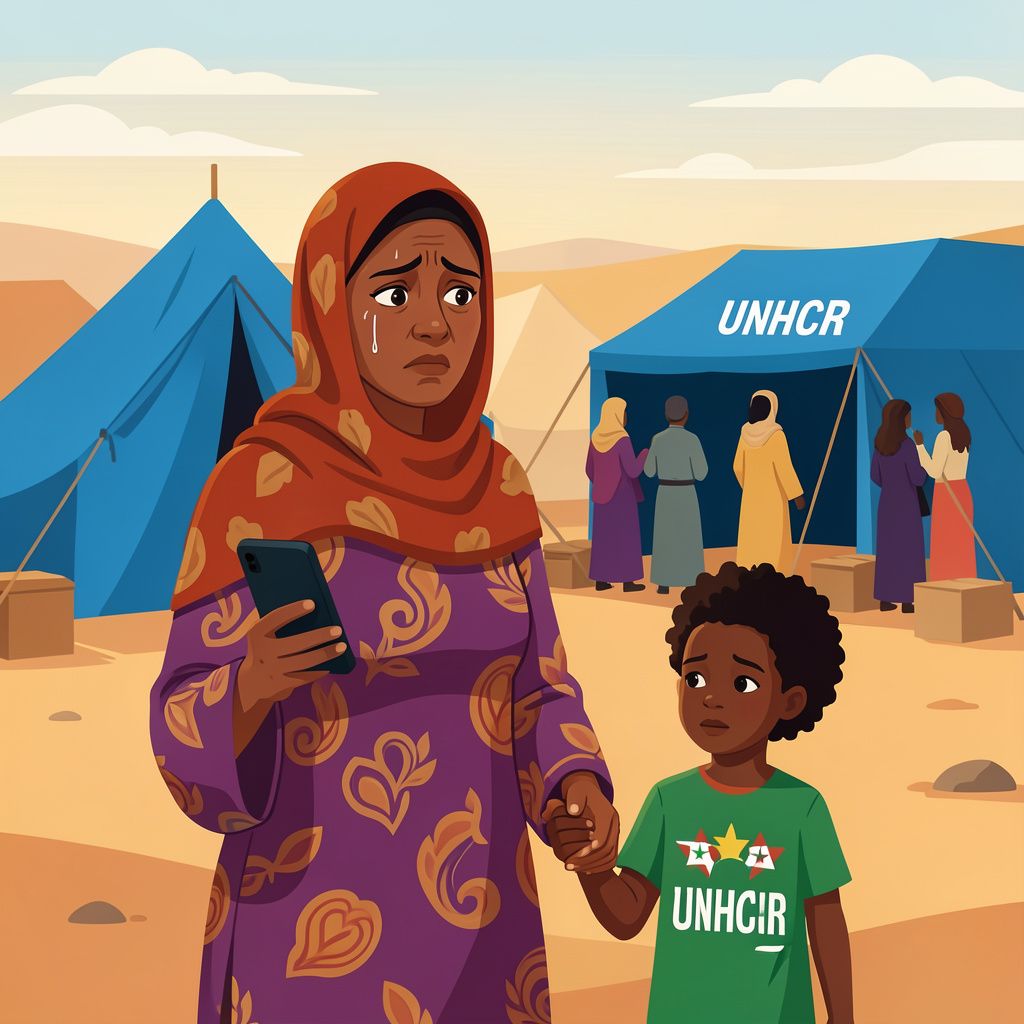
As international funding for refugee assistance plummets, 850,000 Sudanese refugees in Egypt confront devastating decisions about their children’s futures. Monthly support has collapsed from £11 per refugee to just £4, forcing the UN’s cash assistance programme to serve half as many families. Mothers like Nawal, receiving only £29 monthly for six children, must choose between school fees and meals. The programme faces complete closure within weeks unless emergency funding arrives, threatening to push vulnerable families deeper into crisis.
The Mathematics of Desperation
The stark reality facing Sudanese refugee families in Egypt becomes clear through the numbers. The UNHCR’s cash assistance programme has received only 2% of its required funding as of May 2026, forcing the agency to reduce beneficiary families by more than half [1]. For families like Nawal’s, this translates into 1,530 Egyptian pounds (approximately $29) monthly to support six children [1]. The funding crisis has created a devastating arithmetic: whilst the refugee population in Egypt has grown from 300,000 three years ago to over 1.1 million today, funding levels in 2025 remained similar to those in 2022, before the Sudan crisis began [1]. This disparity has caused the available funding per refugee to plummet from $11 per month to just $4 per month [1].
Imminent Programme Collapse
The financial shortfall threatens the complete closure of UNHCR’s cash assistance programme within weeks. Christine Beshay, UNHCR spokesperson in Egypt, warned in early May 2026 that “the programme is threatened with closure if we do not receive additional support in the next few weeks” [1]. The timing is particularly critical given that most families receiving cash assistance are headed by women with school-aged children [1]. Should the programme collapse, these mothers will face the impossible choice between feeding their children and sending them to school [1]. The crisis exemplifies a broader global challenge, with almost 320 million people facing acute food insecurity as of 5 May 2026 [2].
The Education-Survival Dilemma
The funding shortfall forces refugee mothers into decisions that pit immediate survival against long-term prospects. With inadequate monthly allowances, families must weigh school fees against basic nutrition, often resulting in children being withdrawn from education to reduce costs or sent to work to supplement family income [GPT]. This creates a devastating cycle where the very investment in education that could improve future prospects becomes unaffordable during times of crisis. The situation reflects the harsh reality that emergency humanitarian funding often prioritises immediate survival over developmental programmes, despite education being recognised as a critical component of refugee protection and empowerment [GPT].
Community Resilience Amid Crisis
Despite the funding crisis, some positive developments are emerging through private sector engagement and community initiatives. UNHCR spokesperson Beshay noted in May 2026 that “companies have begun, through their social responsibility, to provide support, whether through training or providing job opportunities” [1]. These initiatives are opening “new horizons” for refugees and asylum seekers to learn new skills for when they can return home “when they have the opportunity to return in a safe and dignified manner” [1]. Meanwhile, community-led programmes continue to provide vital support, as demonstrated by the Kupika Drive 3rd Edition event, which attracted over 400 participants including women, girls, children, and young men in what organisers described as “a space for learning, sharing, healing, and community” [3]. The event, supported by multiple partners including the World Food Programme, illustrates how grassroots initiatives can complement formal humanitarian programmes during funding crises [3].