

Nigerian School Builds Toilet from 20,000 Plastic Bottles in Three Months
Lagos, 5 May 2026
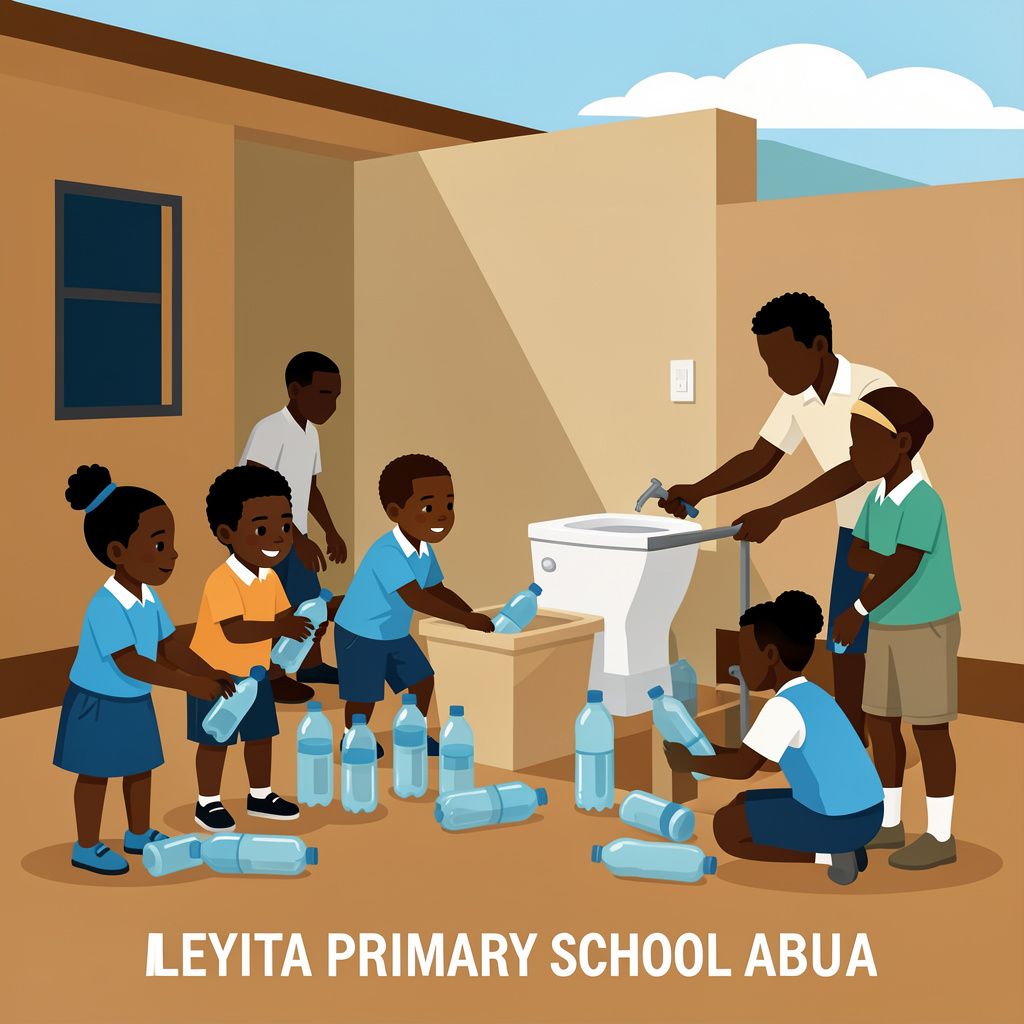
Aleyita Primary School in Abuja transformed waste into dignity by constructing a toilet facility using over 20,000 discarded plastic bottles in under three months. The innovative project, led by UNICEF and local partners, addresses critical sanitation gaps affecting school children who previously had to use bushland. Students from the school’s Environmental Health Club collected bottles from their community, whilst 42 youth volunteers organised clean-ups. The eco-friendly structure stays cool in Nigeria’s heat and demonstrates how simple waste-to-infrastructure solutions can restore children’s dignity whilst tackling environmental pollution.
Community-Led Construction Transforms School Sanitation
The toilet facility at Aleyita Primary School in Lugbe, Abuja, represents a collaborative effort between multiple organisations and the local community [1]. The project emerged from a partnership between UNICEF Generation Unlimited Nigeria, FCT RUWASSA, International Climate Change Development Initiative (ICCDI), NG Youths SDGs, the school, and the Aleyita community, with construction leadership provided by ICCDI [1]. Students from the school’s Environmental Health Club played a crucial role by collecting plastic bottles from their homes and surrounding areas, whilst 42 youth volunteers from NG Youths SDGs organised community clean-ups to gather additional materials [1]. This community-driven approach ensured local ownership of the project whilst addressing two critical challenges simultaneously: waste management and sanitation infrastructure.
Innovative Design Delivers Practical Benefits
The construction methodology demonstrates remarkable efficiency and environmental consciousness. Oloruntoba, Gender and Communications Lead at ICCDI, confirmed that the project utilised over twenty thousand plastic bottles and completed construction in less than three months [1]. The innovative design offers distinct advantages over traditional building materials, particularly in Nigeria’s challenging climate conditions. “It is not just innovative. It is practical. The structure reuses waste that would otherwise pollute the environment. It stays cool in the heat, more comfortable than many traditional buildings. It works,” explained Oloruntoba [1]. This temperature regulation feature addresses a significant concern for school children who require comfortable facilities during the hot Nigerian school day.
Addressing Critical Dignity and Safety Needs
Prior to the toilet construction, students at Aleyita Primary School faced daily challenges that compromised their dignity and safety. The school had access to water infrastructure but lacked proper sanitation facilities, forcing children to use bushland for their basic needs [1]. Hameedah, head of the school’s Environmental Club, described the transformation: “Before, there was no toilet, so everywhere was dirty…But now our school is clean. We are happy” [1]. The absence of adequate sanitation facilities particularly affects school attendance rates among girls [GPT], who often face additional challenges related to menstrual health and privacy. The new facility directly addresses these concerns by providing private, safe spaces that enable all children to maintain their dignity whilst at school.
Broader Implications for Nigeria’s Sanitation Crisis
The Aleyita project emerges against a backdrop of widespread sanitation challenges across Nigeria’s educational sector. Recent initiatives highlight the scale of the problem, with The EME Foundation raising funds on 2nd May 2026 for over 1,000 students at a public school in Ibadan who lack safe, functional toilet facilities [4]. The foundation’s fundraising appeal emphasises how students “go through each school day without safe, functional facilities, risking infections that spread through contact with human waste” [4]. Meanwhile, in Sokoto State, the European Union and UNICEF announced a €1 million intervention to support over 20,000 conflict-affected children, which includes rehabilitating water, sanitation, and hygiene facilities in target schools [6]. These concurrent efforts demonstrate that sanitation infrastructure remains a critical barrier to education across multiple Nigerian states, making the Aleyita model particularly significant as a scalable, cost-effective solution.