

Putin Claims Ukraine War 'Coming to an End' After Four Years of Conflict
Moscow, 10 May 2026
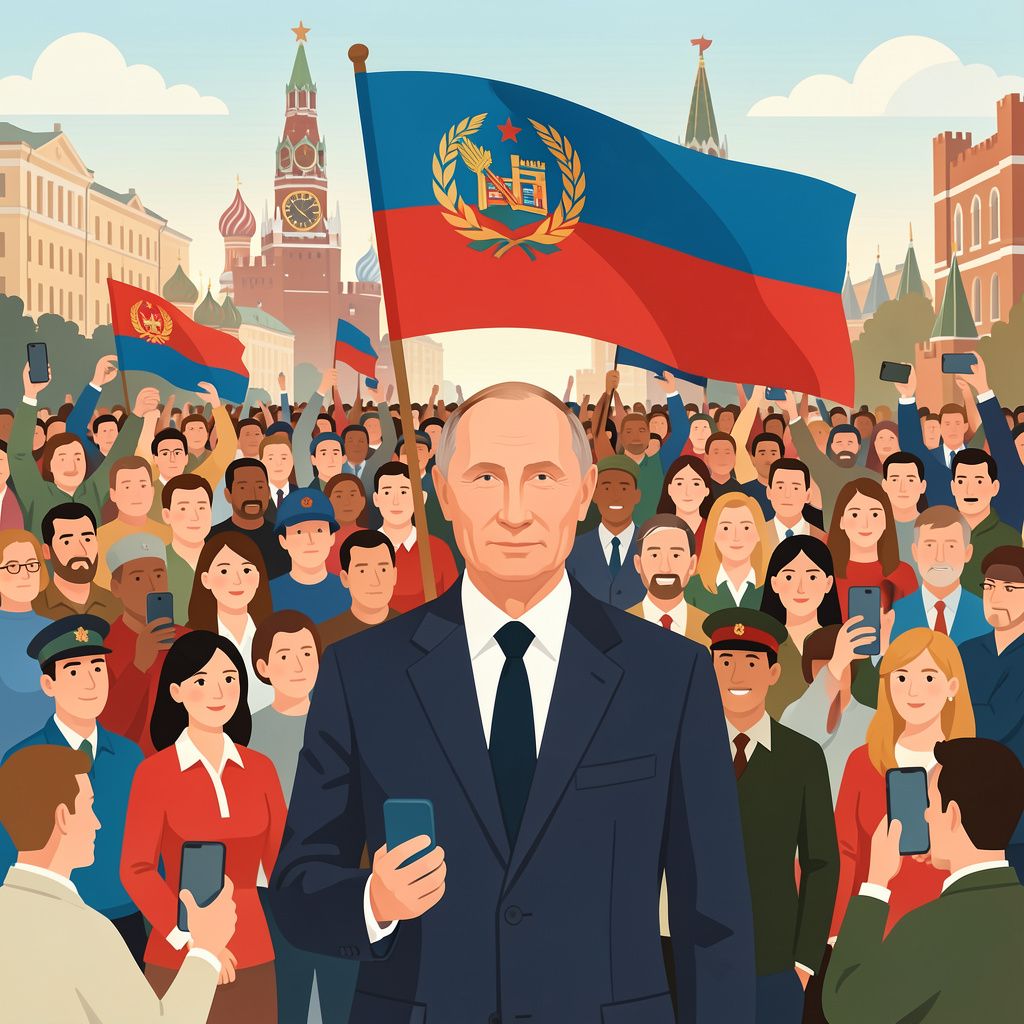
Russian President Vladimir Putin declared the Ukraine war is ‘coming to an end’ during Moscow’s Victory Day parade on 9 May 2026, marking a dramatic shift in rhetoric after over four years of fighting. His statement coincided with a US-brokered three-day ceasefire and prisoner exchange involving 1,000 captives from each side, though both nations traded violation accusations immediately.
Diplomatic Momentum Builds Around Prisoner Exchange
Putin’s announcement came as a US-brokered ceasefire agreement took effect on Saturday, 9 May 2026, running through Monday, 11 May 2026 [1][2][3]. The arrangement included a significant prisoner exchange of 1,000 captives from each country, though by Saturday evening Putin stated Russia had not yet received proposals from Ukraine regarding the swap implementation [1][3]. Despite the ceasefire framework, both Moscow and Kyiv immediately traded accusations of violations, with continued drone activity and civilian casualties reported throughout the weekend [2]. The Kremlin indicated there were no plans to extend the truce beyond the initial three-day period [2].
Moscow’s Victory Day Reflects Changed Circumstances
The 2026 Victory Day parade in Moscow presented a notably subdued affair compared to previous years, lacking the traditional display of tanks and missiles due to security concerns [1]. For the first time in nearly two decades, the Red Square event featured no military hardware, whilst international media access was severely restricted with fewer journalists permitted to attend [1]. North Korean troops participated in the parade for the first time, acknowledging Pyongyang’s support in fighting against Ukrainian forces in Russia’s Kursk region [3]. Only leaders from Belarus, Malaysia, Laos, Uzbekistan, and Kazakhstan attended the event, highlighting Russia’s diplomatic isolation [2].
Putin Sets Conditions for Future Negotiations
The Russian president expressed willingness to engage in broader European security negotiations, specifically naming Germany’s former Chancellor Gerhard Schröder as his preferred negotiating partner [1][2][3]. Putin stated he would only meet Ukrainian President Volodymyr Zelenskyy in a third country after a comprehensive peace agreement is finalised, emphasising this should represent ‘a final deal, not the negotiations’ [3]. European Council President António Costa had indicated on 2 May 2026 that there was ‘potential’ for EU negotiations with Russia, suggesting Zelenskyy favoured such diplomatic engagement [1][2]. However, the choice of Schröder remains controversial, as Zelenskyy called the former German chancellor ‘disgusting’ in 2022 for his meetings with Putin and work for Russian state-owned energy firms [2].
Regional Impact on Displaced Populations and Security
The conflict has become Europe’s deadliest since the Second World War, now extending beyond four years and causing hundreds of thousands of deaths [2][3]. Russian forces currently control just under one-fifth of Ukrainian territory, with military advances slowing significantly in 2026 [2][3]. For refugees and displaced populations across Eastern Europe, Putin’s rhetoric represents a potential shift, though verification requires continued monitoring through reliable international sources [GPT]. The involvement of foreign fighters has extended the conflict’s reach, with Kenya’s government reporting on 8 May 2026 that 291 Kenyans have been recruited into the war, with 19 confirmed dead and 42 missing [4]. The economic implications have strained Russian resources, with Ukrainian drone attacks reportedly reducing Moscow’s energy sector revenue by $1 billion in a single week [5].