

California Police Can Now Ticket Self-Driving Car Companies for Traffic Violations
California, 2 May 2026
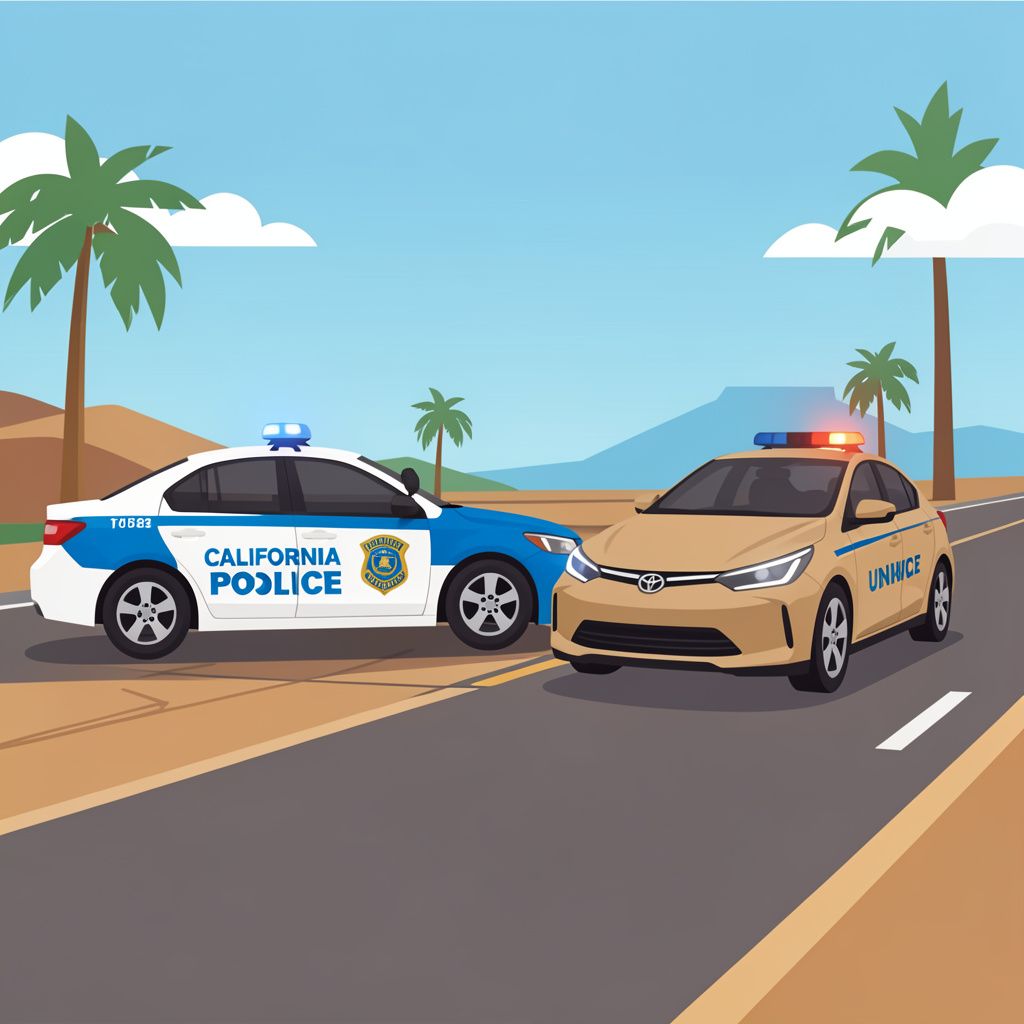
Starting 1 July 2026, California police will issue tickets directly to autonomous vehicle manufacturers when their driverless cars break traffic laws, ending confusion over accountability. The groundbreaking regulations require companies to respond to emergency calls within 30 seconds and face penalties for entering active emergency zones. This follows incidents where officers were left helpless after stopping self-driving cars for violations like illegal U-turns, with no driver present to ticket.
A Regulatory Framework Born from Enforcement Gaps
The new enforcement mechanism addresses a practical challenge that has confounded law enforcement across California’s autonomous vehicle testing zones. In September 2025, San Bruno police officers witnessed a Waymo autonomous vehicle making an illegal U-turn directly in front of them but found themselves unable to issue a citation due to the absence of a driver [1]. Instead, officers were forced to contact the company about what they termed a ‘glitch’, highlighting the enforcement vacuum that existed under previous regulations [1]. The California Department of Motor Vehicles describes these updated rules as ‘the most comprehensive AV regulations in the nation’, establishing clear accountability mechanisms where none previously existed [1].
Emergency Response Requirements and Infrastructure Impact
Beyond traffic violations, the regulations introduce stringent emergency response protocols that autonomous vehicle companies must follow. Under the new framework, AV manufacturers will be required to respond to calls from police and emergency officials within 30 seconds, a provision designed to address ongoing concerns about autonomous vehicles interfering with emergency operations [1]. The urgency of these requirements became apparent during a December 2025 blackout in San Francisco, when multiple Waymo vehicles became stalled in busy intersections, exacerbating traffic congestion during an already challenging situation [1]. San Francisco Fire Department officials have repeatedly raised complaints about robotaxis impeding emergency responses, underlining the critical nature of these new regulatory provisions [1].
Market Leaders and Testing Landscape
The regulations will directly impact major players in California’s autonomous vehicle sector, with Waymo operating as one of the primary providers of fully self-driving robotaxis across the San Francisco Bay Area and Los Angeles County [1]. Several companies, including Tesla, maintain permits to test their autonomous vehicles in various California cities, indicating the broad scope of entities that will fall under the new regulatory framework [1]. DMV Director Steve Gordon emphasised that ‘California continues to lead the nation in the development and adoption of AV technology, and these updated regulations further demonstrate the state’s commitment to public safety’ [1].
Legal Precedent and Future Implications
These regulations form part of a broader 2024 law that imposed deeper oversight on autonomous vehicle technology, representing a significant evolution in how regulatory bodies approach emerging transportation technologies [1]. The new enforcement mechanisms establish manufacturer liability as the cornerstone of autonomous vehicle accountability, shifting responsibility from absent drivers to the companies that design and deploy the technology [GPT]. As autonomous vehicles become increasingly prevalent on California roads, this regulatory framework may serve as a template for other jurisdictions grappling with similar enforcement challenges [GPT]. The July 2026 implementation date provides companies with a clear timeline to adapt their operational protocols and emergency response capabilities to meet the new requirements [1].