

Kalobeyei Refugees Block Roads in Water Crisis Protest
Kalobeyei, 10 May 2026
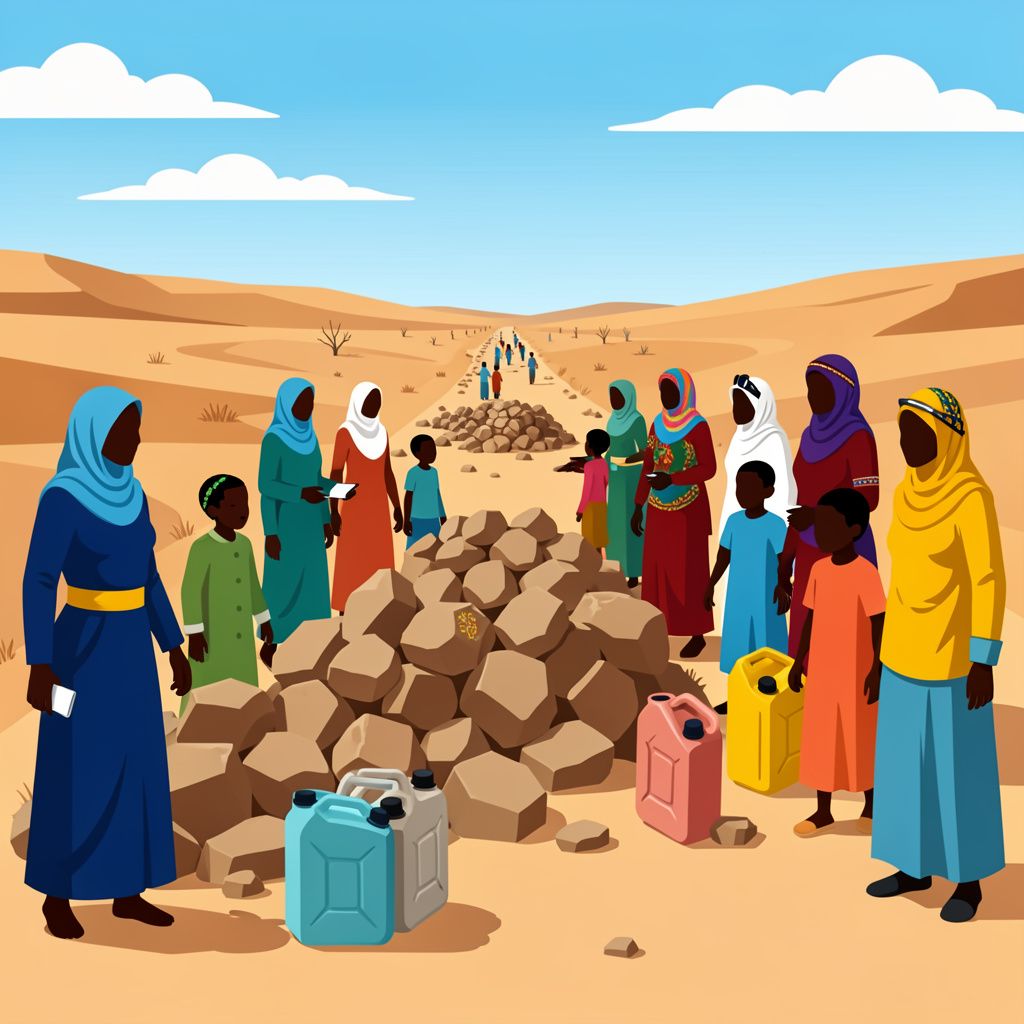
Residents of Kalobeyei settlement staged a dramatic road blockade in November 2022, with women and children carrying empty water containers to protest chronic water shortages that have plagued the community for years. The demonstration saw protesters barricade main roads with stones for several hours, highlighting the settlement’s seven-year struggle with inadequate water infrastructure despite initial promises of improved conditions over Kakuma camp. One resident reported her block had no water for five consecutive days, questioning whether persistent funding issues justify the humanitarian crisis facing thousands of refugees.
Protest Details and Community Response
The demonstration on 1 November 2022 saw residents of Kalobeyei’s Village One and Two neighbourhoods take direct action by blocking the main road connecting the settlement to Kakuma’s central business district and humanitarian compounds [1]. The protesters, predominantly women and girls carrying empty jerricans, barricaded roads with stones for several hours to draw attention to their plight [1]. During the protest, 38-year-old Halima voiced the frustration felt by many residents, asking reporters why water taps in her block had been dry for five consecutive days and questioning whether funding issues should justify the absence of clean drinking water throughout the year [1].
Long-standing Infrastructure Failures
The November 2022 protest highlighted chronic issues that have persisted since Kalobeyei’s establishment seven years earlier [1]. A local community leader in Village One expressed deep disappointment with the settlement’s development, stating that despite initial promises of superior conditions compared to Kakuma camp, UNHCR and local government have failed to address fundamental infrastructural problems [1]. Water shortages have been a recurring issue for years, with the situation exacerbated during recent dry spells [1]. The persistent nature of these problems raises questions about the effectiveness of humanitarian agencies’ long-term planning and resource allocation in refugee settlements [GPT].
Broader Pattern of Water-Related Demonstrations
The Kalobeyei protest was not an isolated incident in the region’s refugee community. Earlier in 2022, on 21 March, refugees from three zones in Kakuma camp marched to the UNHCR main compound in Kakuma One to protest severe water shortages affecting camp residents [1]. This pattern of demonstrations across both Kalobeyei settlement and Kakuma camp indicates a systemic failure in water provision that extends beyond individual locations [GPT]. The recurring nature of these protests suggests that temporary solutions and promises have failed to address the root causes of water insecurity in the region’s refugee communities.
Agency Response and Accountability Questions
At the time of reporting on the November 2022 protest, attempts by KANERE journalists to contact the concerned humanitarian agencies were unsuccessful, with phone calls going unanswered [1]. This lack of immediate response from agencies highlights broader accountability issues that have been a focus of KANERE’s critical reporting on humanitarian organisations operating in refugee camps [2]. The organisation has faced funding obstacles due to its critical stance on accountability, fraud, corruption, and insecurity in refugee camps, suggesting that independent oversight of humanitarian operations remains challenging [2]. The persistent water crisis in Kalobeyei raises fundamental questions about whether access to clean water is being treated as a basic need or as a human right by implementing agencies [1].