

Kenya Sets 2028 Deadline to End Preventable Deaths for Mothers and Newborns
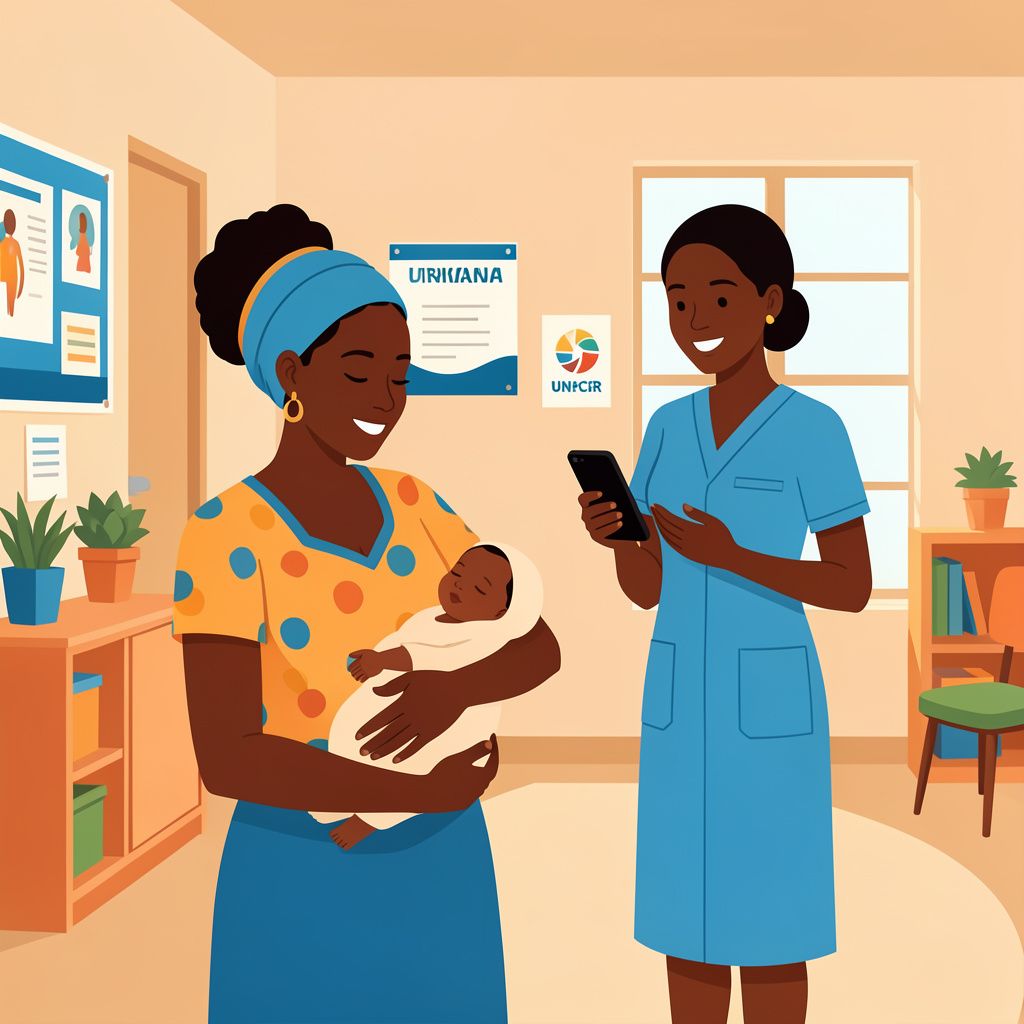
Nairobi, 5 June 2026
Kenya has launched a bold national plan targeting near-zero preventable maternal and newborn deaths by 2028 — against a current maternal mortality rate of 355 deaths per 100,000 live births.
A Plan Built on Urgency
On 3 June 2026, Kenya’s Ministry of Health officially published the Every Woman Every Newborn Everywhere (EWENE) Acceleration Plan 2026–2028, a structured national roadmap designed to eliminate preventable deaths among mothers and newborns across all 47 counties [7][8]. The plan was formally launched with Principal Secretary Ouma Oluga describing EWENE as a global movement that demands action from every stakeholder in healthcare — including government, health workers, communities, and families [GPT]. The scale of the challenge is stark: Kenya currently records a maternal mortality rate of 355 deaths per 100,000 live births, a neonatal mortality rate of 21 deaths per 1,000 live births, and a stillbirth rate of 15 per 1,000 [7]. The leading causes of these deaths are not mysterious — they are well-understood and, critically, preventable: postpartum haemorrhage, hypertensive disorders, prematurity, intrapartum asphyxia, and sepsis [7].
A Plan Built on Urgency
To put the targets into perspective, Kenya’s longer-term Sustainable Development Goals and Kenya Health Policy targets — set for 2031 — aim to reduce maternal deaths to fewer than 70 per 100,000 live births and neonatal deaths to 12 per 1,000 live births [3]. The required reduction in maternal mortality from the current baseline to the 2031 SDG target represents a change of -80.282 per cent. The EWENE plan represents the acceleration mechanism designed to close that gap, with 2028 serving as the critical milestone deadline [7][8].
Five Mechanisms to Drive Change
The EWENE plan does not rely on aspiration alone. It is structured around five concrete delivery mechanisms that the Ministry of Health will deploy between now and 2028 [7][8]. First, a National EWENE Delivery Unit will be established to coordinate implementation across all counties. Second, a ring-fenced last-mile fund will be created specifically to address commodity security and infrastructure gaps in hard-to-reach areas. Third, emergency drills will be embedded into facility culture to ensure that health workers are prepared to manage high-risk obstetric events. Fourth, the plan promotes a package of five evidence-based clinical interventions for premature babies — known as ‘PremPrep5’ — comprising antenatal corticosteroids, magnesium sulphate, delayed cord clamping, early breastfeeding, and Kangaroo Mother Care. Fifth, a live maternal and newborn health scorecard will be introduced to track progress in real time and hold counties accountable [7].
Five Mechanisms to Drive Change
Accountability is a central theme of the EWENE framework. The live scorecard mechanism means that performance data will be visible and updatable as events unfold, rather than being reported only in annual reviews [7]. This approach reflects a broader shift in how Kenya’s health system is being asked to operate — moving from passive monitoring to active, responsive management. The plan covers every registered healthcare facility in Kenya, which includes those serving refugee populations in camps such as Kakuma and Kalobeyei [GPT]. Pregnant women and new mothers in those settings are encouraged to attend antenatal clinics and deliver at registered health facilities in order to benefit from the renewed national focus on maternal care [GPT].
Local Action: From Kilifi to Kajiado
Even before the national plan’s formal publication on 3 June 2026, counties were already mobilising at the grassroots level. In Kilifi County, the International Centre for Reproductive Health Kenya (ICRHK) hosted a Maternal, Newborn, Child Health and Nutrition (MNCH+N) Engagement Forum at Kibaoni Social Hall, bringing together participants from all seven sub-counties [1]. The forum was centred on the Okoa Mama na Mtoto Initiative (OMMI), a community-level programme that deploys grassroots champions to drive awareness and save lives [1]. Kilifi’s Deputy Governor, Flora Mbetsa Chibule, addressed the forum and called for bold strategies to reduce the mortality burden [1]. Key civil society partners present included Nazi Kivutha of the Shina Foundation and Christine Mvuria of the Fanikisha Foundation, both of whom are engaged in community-level health promotion [1]. Discussions focused specifically on how to localise the EWENE Acceleration Plan to produce real-world results at sub-county level [1].
Local Action: From Kilifi to Kajiado
In Kajiado County, a different kind of infrastructure investment was made visible on 1 June 2026, when the county opened a modern maternity wing at Ngatataek Hospital in Matapato North [3]. The new unit includes a theatre, newborn care facilities, and postnatal services — a significant upgrade for an area that previously had limited access to safe delivery options [3]. The opening of this wing is also expected to ease operational pressure on the Kajiado County Referral Hospital, which had been absorbing a disproportionate share of maternal cases from the region [3]. Women in Matapato North have welcomed the improved access to safe maternal healthcare that the new facility provides [3].
Nutrition as a Pillar of Maternal Health
Kenya’s maternal health push is not limited to clinical delivery alone — nutrition is being treated as an equally critical pillar. Between 25 and 31 May 2026, Vitamin Angels and the Makueni County Government jointly launched a prenatal multivitamin distribution programme across 13 public health facilities in Makueni County [2]. The initiative is implemented through the Transforming Lives Through Nutrition Consortium, which brings together Vitamin Angels, Helen Keller International, and iDE Global, with funding provided by The Church of Jesus Christ of Latter-day Saints [2]. By the end of 2026, the programme aims to reach approximately 7,200 pregnant women with essential prenatal multivitamins [2]. Looking further ahead, the partners plan to scale the programme to all 242 health facilities across Makueni County by 2028 — a timeline that directly aligns with the EWENE Acceleration Plan’s own deadline [2].
How to Access Maternal Care Under the EWENE Plan
For pregnant women and new mothers across Kenya — including those in refugee settlements — the EWENE plan translates into a set of practical steps that can be taken immediately. Any woman who is pregnant or has recently given birth should register at the nearest public health facility to begin antenatal care (ANC). Antenatal care is free at public health facilities in Kenya under the national health coverage framework [GPT]. Women should attend a minimum of eight antenatal visits during pregnancy, in line with World Health Organization guidance [GPT]. At these visits, health workers will monitor both mother and baby, provide essential medicines, and — in counties such as Makueni — distribute prenatal multivitamins [2]. Women should plan to deliver at a registered health facility rather than at home, as this is where the EWENE plan’s clinical interventions — including emergency theatre access, newborn care, and postnatal services — are available [3][7].
How to Access Maternal Care Under the EWENE Plan
There are no eligibility restrictions on who can access these services under the EWENE plan: the programme is designed to cover every woman and every newborn in every part of Kenya, regardless of county, socioeconomic status, or residency category [7][8]. Women in remote, arid, and semi-arid areas are specifically included in the plan’s scope, with the ring-fenced last-mile fund intended to ensure that commodity shortages and infrastructure gaps in those regions are addressed [7]. Community health promoters — such as those trained under the Okoa Mama na Mtoto Initiative in Kilifi — serve as a first point of contact for women who are unsure where to go or what services are available [1]. Women who do not know the location of their nearest registered facility can ask a community health promoter, visit a local sub-county health office, or contact the Ministry of Health directly [GPT]. The EWENE plan’s live scorecard will be publicly accessible, allowing communities to track whether their local facilities are meeting the required standards of care [7].
Bronnen
- www.instagram.com
- www.instagram.com
- www.instagram.com
- www.instagram.com
- reliefweb.int
- www.afro.who.int