

Refugee Women in Kenya's Camps Transform Communities Despite Global Justice Gap
Kakuma, 6 March 2026
Women in Kakuma and Kalobeyei refugee camps are building remarkable support networks and leading community initiatives, even as global data reveals women possess only 64% of men’s legal rights. These women from South Sudan, Somalia, Ethiopia, and Democratic Republic of Congo have established vocational training groups, advocacy programmes, and educational initiatives that strengthen entire camp communities. Their achievements come at a critical time when 4,000 young women acquire HIV weekly worldwide, and nearly one in four adolescent girls faces violence before age 20. The celebration highlights both their extraordinary resilience in rebuilding lives and ongoing challenges including healthcare access and economic empowerment opportunities.
Digital Skills and STEAM Education Lead the Way
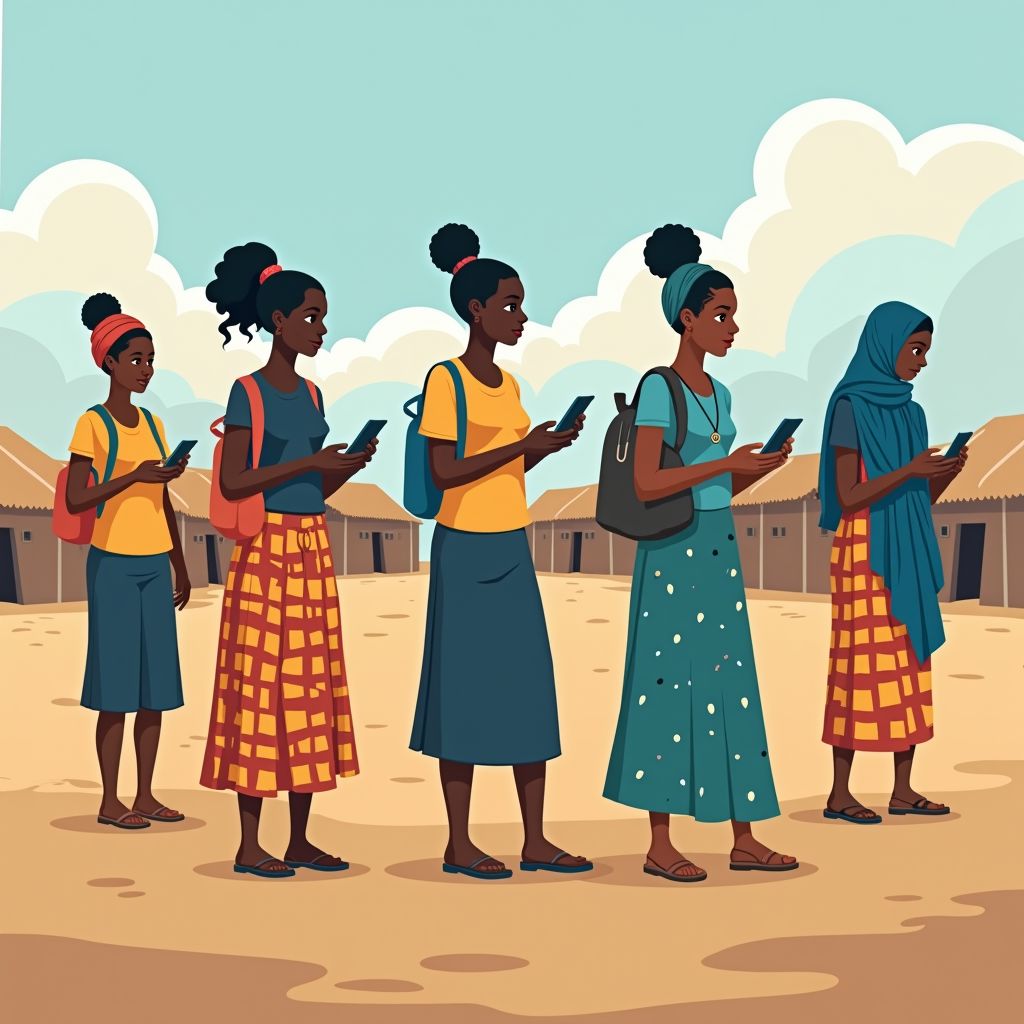
In February 2026, refugee girls in Kakuma and Dadaab camps participated in coding, digital skills, and STEAM education programmes through partnerships with organisations like I Am The Code [8]. The initiative reflects the broader push for educational opportunities that align with this year’s International Women’s Day theme, ‘Rights. Justice. Action. For ALL Women and Girls’ [4][7]. These technology-focused programmes represent a critical pathway for economic empowerment, particularly as women worldwide hold only 64% of the legal rights held by men [4][6]. The educational initiatives demonstrate how refugee communities are creating solutions despite systemic barriers that make it challenging for women to access justice and opportunities.
Legal Protections Evolve Globally While Gaps Persist
Recent legislative progress in countries like Thailand, which enacted comprehensive sexual harassment laws on 30 December 2025, and introduced a fast-track ‘take it down’ mechanism for digital platforms in January 2026, shows how legal frameworks can evolve to protect women [6]. Thararat Panya, Attorney-at-law at Feminist Legal Support, explained: ‘This law matters because it defines sexual harassment and explicitly covers online sexual harassment’ [6]. However, these advances highlight the stark contrast with refugee women’s situations, where access to formal justice systems remains limited. At the current rate of progress, it will take an estimated 286 years to close legal protection gaps globally [4][7], underscoring the urgency for action in refugee contexts where women face additional vulnerabilities.
Health Challenges Demand Community-Led Solutions
The global health statistics paint a sobering picture that refugee women know intimately: around 4,000 adolescent girls and young women newly acquired HIV every week in 2024, with 3,300 of those living in sub-Saharan Africa [1]. Nearly one in four adolescent girls experiences physical or sexual violence before the age of 20 [1]. Winnie Byanyima, Executive Director of UNAIDS, stated: ‘HIV thrives where gender inequality persists’ [1]. These challenges are magnified in refugee settings where access to healthcare services remains inconsistent. The community networks that women have built in Kakuma and Kalobeyei camps serve as vital support systems, providing peer education and advocacy that complement formal health services.
Looking Forward: International Women’s Day 2026 and Beyond
As International Women’s Day approaches on 8 March 2026, the celebration will coincide with the 70th Session of the Commission on the Status of Women (CSW70), taking place from 9-20 March 2026 in New York, which focuses on access to justice for all women and girls [4]. A Media & Legal Café in Nairobi on 9 March 2026 will spotlight women’s access to justice in East and Southern Africa, featuring experts including Mammy Masime, a Congolese refugee and expert on refugee women’s rights [4]. These events underscore how refugee women’s experiences inform broader discussions about justice and equality. The resilience and leadership demonstrated by women in Kenya’s refugee camps exemplify what can be achieved when communities come together, even as they continue advocating for the systemic changes needed to ensure true equality and justice for all women and girls.
Bronnen
- www.unaids.org
- www.ndtv.com
- impact-investor.com
- africa.unwomen.org
- www.facebook.com
- lac.unwomen.org
- eca.unwomen.org
- www.instagram.com