

Second Oil Tanker Hijacked in Ten Days as Somali Piracy Surges
Aden, 3 May 2026
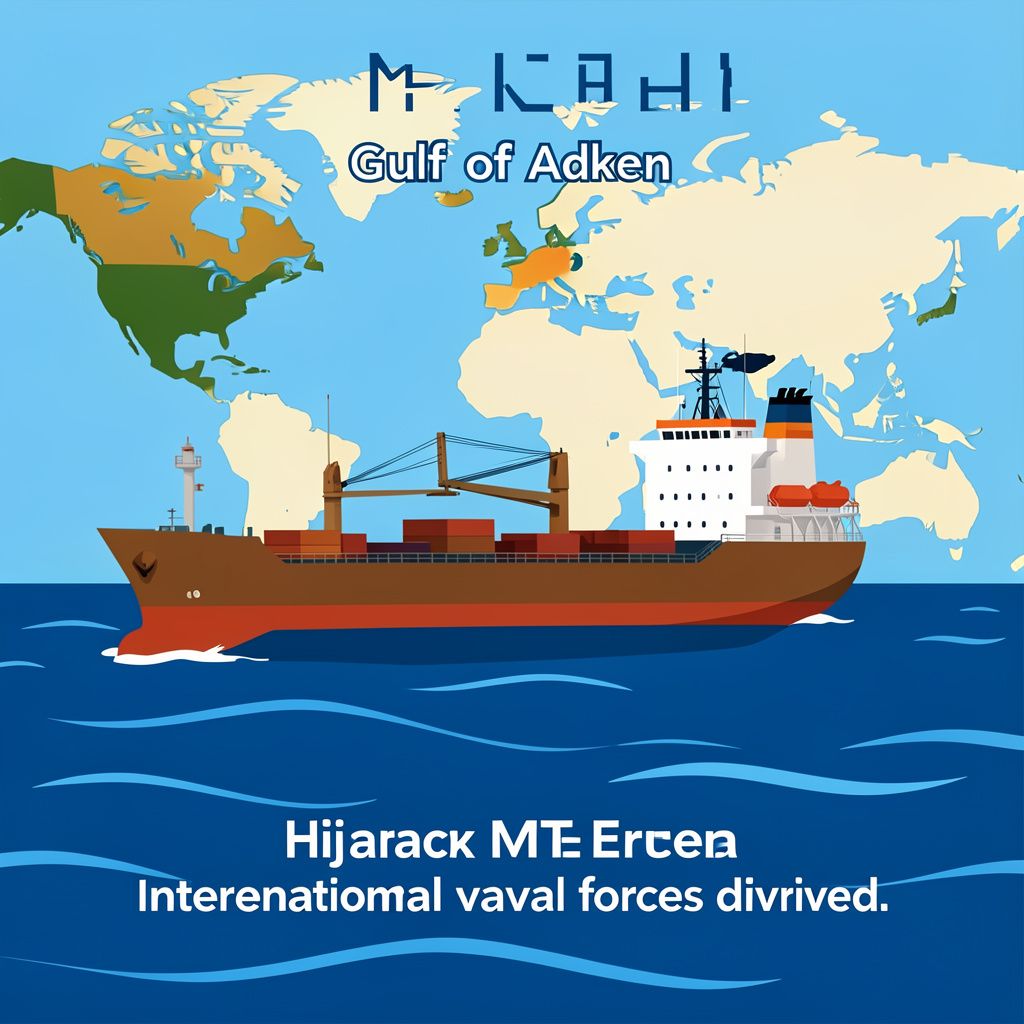
Somali pirates have captured the MT Eureka oil tanker in the Gulf of Aden, marking the fourth successful hijacking in just two weeks. The vessel was seized at dawn and is now heading towards Somali waters, following the pattern of the Honor 25 tanker hijacked on 22nd April. This dramatic resurgence of maritime piracy stems from international naval forces being diverted to counter Houthi rebel attacks in the Red Sea since late 2023, creating a security vacuum that armed groups are exploiting along Somalia’s 3,333-kilometre coastline—the longest in mainland Africa.
Dawn Attack in Strategic Waters
The MT Eureka, sailing under the Togolese flag, was overrun by gunmen at 5:00 AM local time (03:00 BST) on Sunday morning near the port of Qana in the Gulf of Aden [1]. According to three separate security officials from Somalia’s semi-autonomous Puntland region who spoke with the BBC, the pirates departed from a remote coastal area near the seaside town of Qandala [1]. The vessel is now sailing between Yemen and Somalia and is expected to anchor in Somali waters within hours [1]. This latest incident follows the hijacking of the Honor 25 on 22nd April 2026, which was carrying 18,500 barrels of oil bound for Mogadishu [1].
Expanding Pirate Operations Across East Africa
The resurgence of maritime piracy is not confined to a single area, with armed groups expanding operations across Somalia’s extensive coastline. On Friday, the United Kingdom Maritime Transportation Operation (UKMTO) reported that ‘armed persons’ on a ‘skiff’ approached a bulk carrier near Al-Mukala, Yemen [1]. These attackers departed from a remote coastal area near the fishing town of Caluula (Alula), located 209 kilometres from where the MT Eureka hijackers originated [1]. A security official from Puntland region warned that ‘the on-going crisis with the pirates is much worse than many realize’ and noted ‘increasing movements (of armed groups) all over the coast’ [1]. Somalia’s coastline stretches 333 kilometres, making it the longest in mainland Africa [1].
Implications for Regional Trade and Humanitarian Operations
The escalation of maritime piracy threatens critical shipping routes that serve East African ports, including those supporting refugee populations and humanitarian operations [GPT]. The Gulf of Aden and Red Sea corridors are essential for global trade, with disruptions potentially affecting fuel supplies and goods reaching vulnerable communities across the Horn of Africa [GPT]. The targeting of oil tankers specifically poses risks to energy security in the region, where many countries rely heavily on imported petroleum products for basic services and economic activity [GPT]. Both Somali authorities and EUNAVFOR have remained silent on their response strategies to this latest wave of hijackings, raising concerns about the adequacy of current maritime security arrangements [1].