

Iran War Enters Second Week as US Launches Most Intensive Strike Campaign Yet
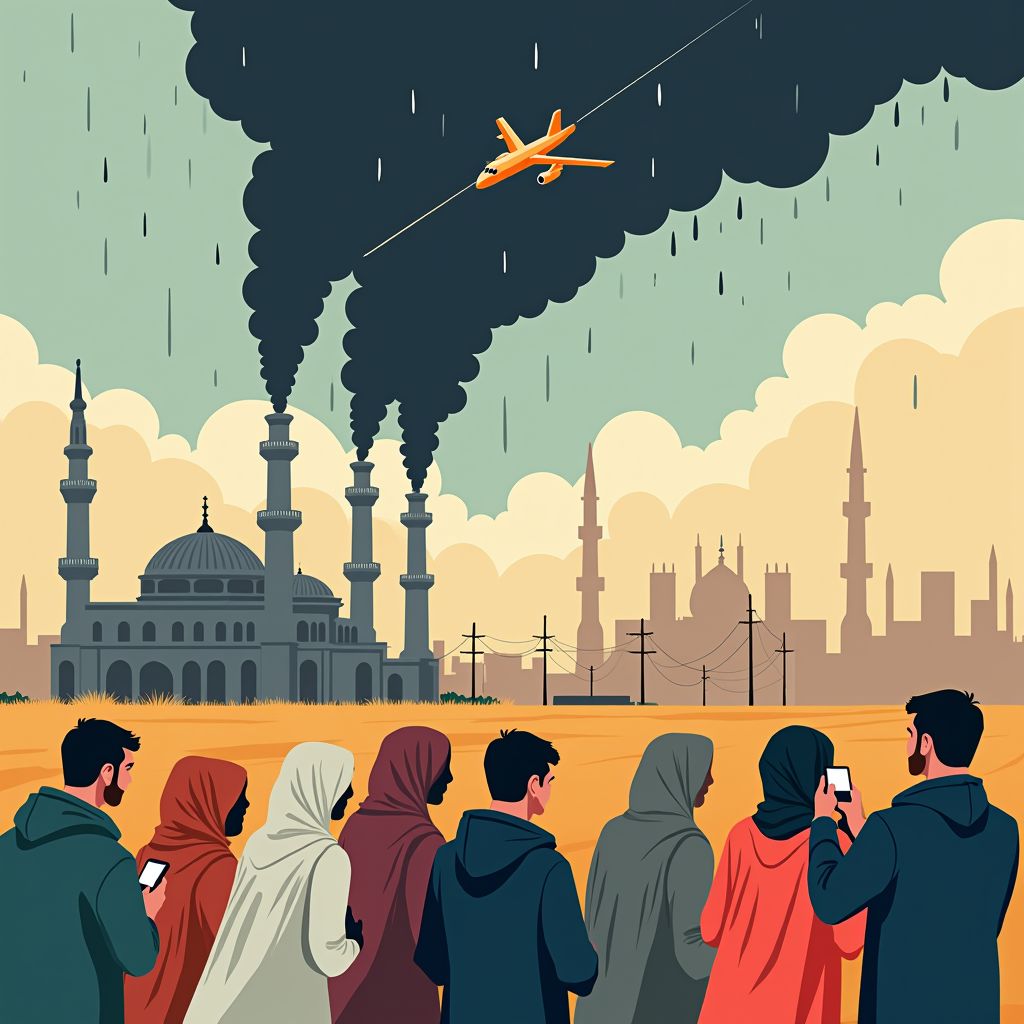
Tehran, 10 March 2026
The eleven-day conflict escalated dramatically on Tuesday as US Secretary of War Pete Hegseth declared it would be ‘the most intense day of strikes’ against Iran. Beyond the immediate human toll, the war has triggered an ecological disaster with black rain falling over Tehran after energy infrastructure attacks. Critical water supplies face severe disruption following strikes on desalination plants, whilst Iranian retaliation has caused banking system crashes across the UAE and sent oil prices soaring at their fastest rate since the COVID pandemic, threatening global economic stability.
Escalation Continues from Previous Conflict
The current strikes represent a dramatic escalation from the conflict that began on 29 February 2026, as detailed in our previous coverage of America’s mass evacuation from Middle East operations [alert! ‘previous URL referenced’]. What started as Operation Epic Fury has now evolved into an eleven-day campaign that US Secretary of War Pete Hegseth described on Tuesday as delivering ‘death and destruction from the sky all day long’ [1]. The intensity marks a stark departure from earlier phases of the conflict, with Hegseth declaring that ‘this was never meant to be a fair fight, and it is not a fair fight. We are punching them while they’re down, which is exactly how it should be’ [1].
Tehran Residents Face Relentless Bombardment
The human cost of the intensified campaign has become starkly apparent through accounts from Tehran residents experiencing their second week under fire. Following strikes that occurred near Azadi Tower in western Tehran on 9 March [2], the Israeli military launched another wave of attacks on Tuesday afternoon, targeting an underground complex used by the Revolutionary Guards, infrastructure within the Quds Force headquarters, and weapons production sites [2]. The psychological toll on civilians has been severe, with one Tehran resident expressing: ‘I’m feeling terrible. They hit a street near us today. I just want to be able to sleep tonight’ [2]. Another resident described the aftermath of Monday night’s bombardment: ‘They hit hard last night. All you can see in our house are cracks in the walls. Sleeping has become the hardest thing for me’ [2].
Environmental and Infrastructure Crisis Emerges
Beyond the immediate human casualties, the conflict has triggered an unprecedented environmental disaster. US and Israeli warplanes targeted Iranian energy infrastructure on Tuesday, resulting in black rain falling over Tehran [1]. The World Health Organisation confirmed on 9 March the risk of contamination to food, water, and air due to damage to petroleum facilities across Iran [1]. The crisis has extended to critical water infrastructure, with US forces striking a vital desalination plant on Qeshm Island that supplies 30 towns and villages [1]. Iran retaliated by targeting a similar facility in Bahrain, highlighting the vulnerability of regional water security [1]. This development carries particular significance given that Kuwait relies on desalination plants for 90% of its drinking water [1].
Regional Economic Shockwaves Intensify
The economic implications have reverberated far beyond Iran’s borders, with markets experiencing their most severe disruption since the COVID pandemic. Iranian drone strikes against Amazon data centres in the UAE on 7-8 March caused online payment and banking systems to crash [1], demonstrating the conflict’s reach into digital infrastructure. Oil prices rose at their fastest rate since the pandemic on 9 March [1], though Tuesday saw some market recovery as speculation mounted about a potential US retreat [1]. Chris Beauchamp, chief market analyst at IG, observed that ‘stock markets have finally woken up to the implications of the Iran war, as oil hits three figures for the first time in four years. Having remained remarkably complacent last week, it looks like the rush for the exits has begun in earnest’ [1]. The casualty toll has also mounted across the region, with Iranian strikes resulting in seven US troops killed in Kuwait and Saudi Arabia, two Israeli troops killed in Lebanon, over 2,000 hospitalised in Israel with 13 civilian fatalities, and 23 deaths in Gulf states [1].