

Kenya's Grey Crowned Crane Population Stabilises After 80% Decline Over Four Decades
Nairobi, 2 March 2026
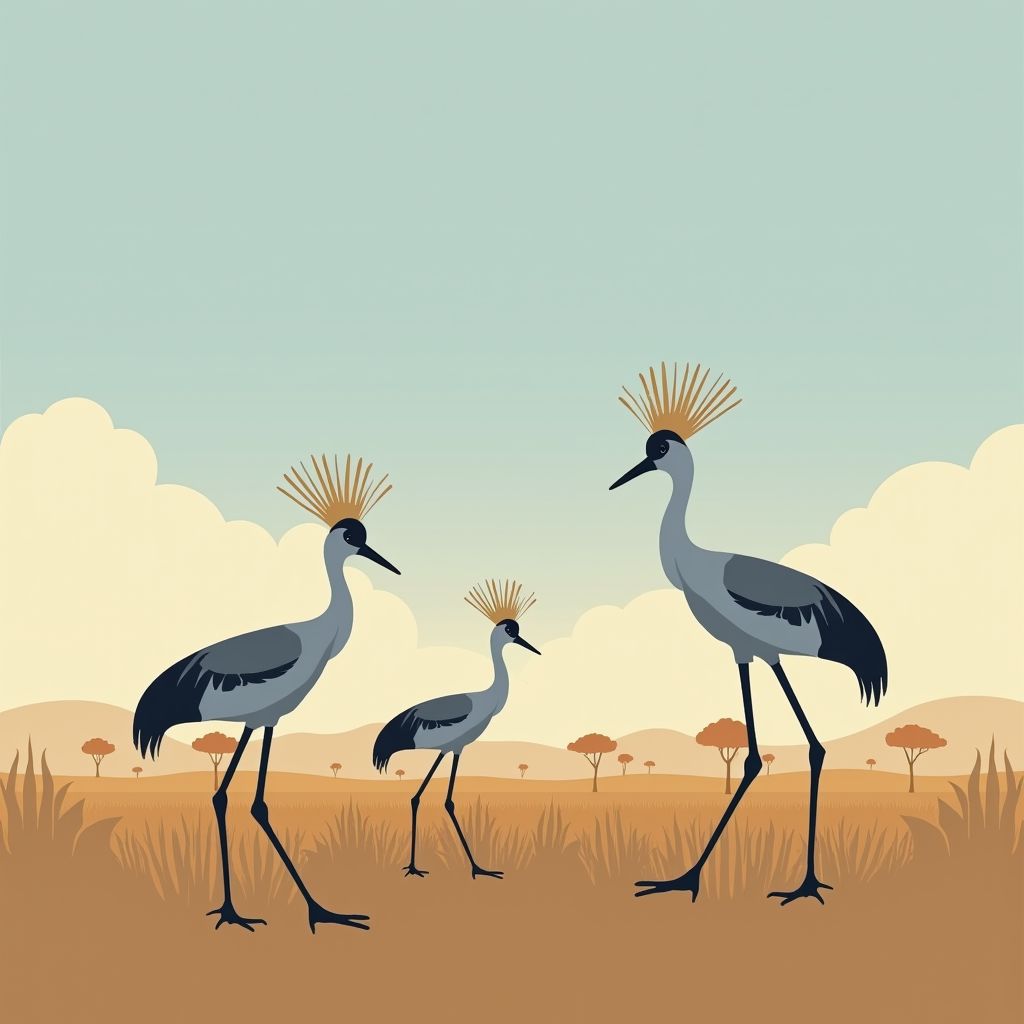
Kenya’s Grey Crowned Crane population has shown signs of recovery, with 8,300 birds recorded in 2023 after suffering an 80% decline over 40 years. The remarkable fact: 90% of these majestic birds survive outside protected areas, living alongside farming communities rather than in national parks. Kenya launched its National Single Species Action Plan in 2025, focusing on wetland restoration and community partnerships. As Cabinet Secretary Deborah Barasa warns, ‘When cranes disappear, our water systems are in danger’—making these birds crucial indicators of ecosystem health and water security across the country.
Community-Based Conservation Takes Centre Stage
The stabilisation of Kenya’s Grey Crowned Crane population represents a fundamental shift in conservation thinking. Unlike traditional approaches that focus solely on protected areas, the success story emerging from Kenya demonstrates that community-based conservation can deliver tangible results [1]. The International Crane Foundation, which has been working in Kenya for nearly 30 years on wetland restoration and sustainable livelihoods, has documented this remarkable turnaround [1]. Dr. Richard Beilfuss, President and CEO of the International Crane Foundation, emphasises the unique nature of these birds’ habitat preferences: ‘Cranes have different dialects everywhere, showing how closely they are tied to their landscapes and communities. That means their survival depends on communities, not parks. They live where people farm, graze livestock, and raise families’ [1].
The Economics of Wetland Degradation
The dramatic decline in crane populations over the past four decades reflects broader environmental challenges that carry significant economic implications [1]. Primary threats to cranes include habitat loss, wetland degradation, illegal wildlife trade, poisoning, collisions with power infrastructure and climate change [1]. These same factors that threaten wildlife also undermine the economic foundations of rural communities who depend on wetlands for water security, agriculture, and fishing [GPT]. Cabinet Secretary Barasa articulates this interconnection clearly: ‘When water disappears, cranes disappear. And when cranes disappear, our water systems are in danger. Cranes are indicators of a healthy ecosystem. Their voice is a symbol of rich biodiversity. When that voice is missing, our ecosystems are in trouble’ [1]. The 2019 Grey Crowned Crane census confirmed these sharp population declines, providing the data foundation for Kenya’s conservation response [1].
Strategic Investment in Climate Resilience
Kenya’s approach to conservation has evolved to integrate climate resilience with biodiversity protection, as demonstrated by recent project launches. On 26 February 2026, Kenya officially launched the Upper Athi River Catchment Area (ARCA) project, funded by the Green Climate Fund, marking a major step in strengthening climate resilience and water security across four counties [3]. This initiative enhances community resilience and water security in Kiambu, Machakos, Nairobi and Nyandarua counties [3]. Principal Secretary Festus K. Ng’eno described the project’s significance: ‘We aren’t just launching a project with a long title; we are launching a lifeline for the Upper Athi River Catchment’ [3]. The ARCA project will focus on strengthening water infrastructure, ecosystem restoration, and climate information systems, directly addressing the wetland degradation that threatens crane populations [3].
Financial Framework Supporting Conservation Goals
Kenya’s conservation efforts are supported by substantial international funding commitments that reflect the country’s strategic approach to environmental protection. Cabinet Secretary Barasa noted that the ARCA initiative strengthens Kenya’s growing Green Climate Fund portfolio, which now comprises over 19 projects valued at approximately £224.6 million [3]. This financial backing aligns with Kenya’s broader climate commitments, including reducing greenhouse gas emissions by 32% by 2032 and 35% by 2035, in line with the Paris Agreement [3]. The National Single Species Action Plan for the Grey Crowned Crane, launched in 2025, prioritises protecting breeding sites, restoring degraded wetlands, reducing direct threats, and strengthening community stewardship [1]. These investments recognise that wetland conservation delivers both biodiversity and economic benefits, supporting the 90% of cranes that live in agricultural and human-dominated landscapes outside protected areas [1].