

Border Consulates Closed as Diplomatic Crisis Escalates Between Sudan and Ethiopia
Addis Ababa, 6 November 2026
Sudan and Ethiopia have expelled diplomats and shuttered consulates following mutual accusations of backing rebel forces, severely escalating cross-border instability and threatening broader economic and regional security across East Africa.
Tit-for-Tat Consular Evacuations Along the Border
Diplomatic ties between Addis Ababa and Khartoum deteriorated sharply during the first week of November 2026, culminating in reciprocal consular shutdowns along their shared frontier [1][6]. Ethiopian authorities initiated the standoff by ordering six Sudanese diplomatic personnel stationed at the consulate in Asosa to leave the country within a 48-hour deadline, leading to their formal departure on Tuesday, 3 November 2026 [1][3][8]. In swift retaliation, the Sudanese transitional government closed the Ethiopian consulate situated in the eastern agricultural hub of Gadarif, declaring all assigned personnel persona non grata and issuing an identical 48-hour expulsion order [1][6]. While Sudanese authorities enforced the closure on the ground, diplomatic staff had reportedly already transitioned operations towards Humera and Asosa prior to the formal declaration [6].
Mutual Accusations and Proxy Conflict Allegations
The immediate diplomatic rupture stems from entrenched hostilities and proxy warfare allegations linked to Sudan’s ongoing civil war, which ignited in 2023, claiming tens of thousands of lives and displacing over 14 million people [1]. On Sunday, 1 November 2026, Sudan’s Council of Ministers declared a state of maximum caution following widespread drone attacks against power infrastructure, blaming Ethiopia for enabling strikes launched from within Ethiopian territory [1][8]. Continuous aerial assaults across a single week crippled approximately 14 electricity substations across Sudan—including key facilities in Gadarif, Sennar, Al Jazirah, White Nile, Khartoum, South Kordofan, Northern State, and River Nile, with strikes directly targeting substations in al-Dabba and Abu Hamad on 1 November [1][8]. Khartoum subsequently lodged formal complaints before the United Nations Security Council and the African Union’s Peace and Security Council, accusing Ethiopia of militarily backing the Rapid Support Forces (RSF) [1][3].
Regional Geopolitics and Heightened Security Frictions
Addis Ababa has repeatedly rejected Khartoum’s claims, instead alleging that Sudanese authorities provide active logistical support to armed Tigrayan opposition forces fighting against the Ethiopian federal government [1][3][8]. This diplomatic deterioration occurs against a backdrop of wider Horn of Africa friction; Ethiopia expelled ten Eritrean diplomats and closed its mission in Asmara on 1 October 2026, followed by the expulsion of an Egyptian diplomat [1]. Regional tensions further intensified on 2 November 2026, when Cairo and Khartoum issued a joint communiqué during bilateral talks in Egypt, formally opposing Ethiopia’s unilateral filling and management of the Grand Ethiopian Renaissance Dam on the Blue Nile [8]. In response to the growing risk of interstate clash, Amjad Farid, an adviser to Sudan’s Transitional Sovereign Council, noted that while the Sudanese military government remains determined to defend its sovereign territory, it is deploying every possible effort to avoid outright armed conflict with Ethiopia [1].
Implications for Displaced Populations and Border Stability
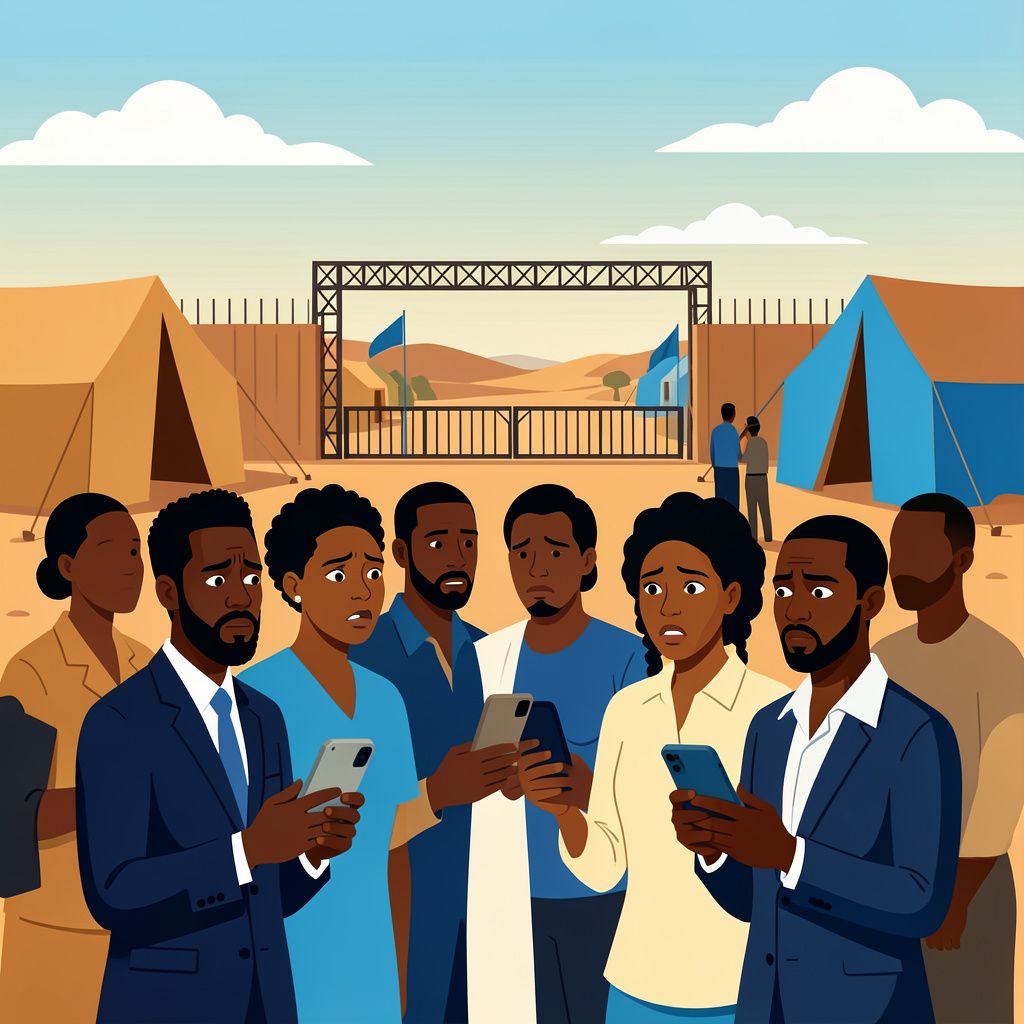
The shutdown of border consulates dismantles vital administrative channels and complicates border surveillance across sensitive migration corridors [1][6][8]. For regional refugee hubs in Kenya’s Turkana County, including the Kakuma refugee camp and the Kalobeyei integrated settlement, escalating hostilities between Sudan and Ethiopia threaten to stall voluntary repatriation frameworks and prompt fresh displacement inflows [GPT]. An increase in cross-border volatility risks placing additional strain on regional host communities and humanitarian infrastructure in Turkana, where resource distribution, food logistics, and local security arrangements remain intimately intertwined with stability across the wider East African corridor [GPT].
Bronnen
- www.aljazeera.com
- www.facebook.com
- www.instagram.com
- www.facebook.com
- www.youtube.com
- x.com
- www.tiktok.com
- www.bbc.com